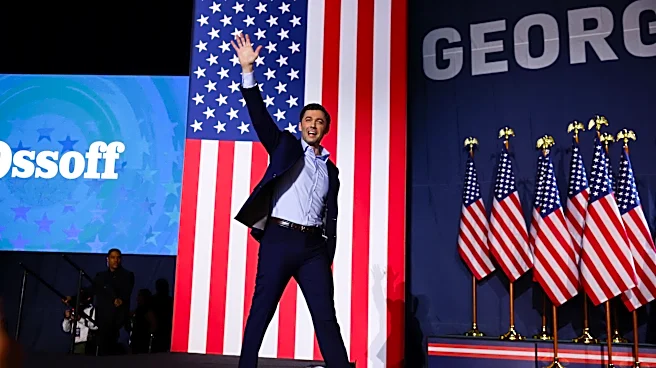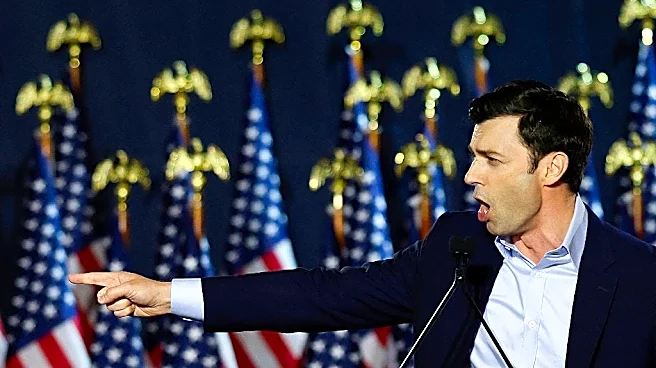



As election day approached, it seemed clear incumbent Democratic Senator Jon Ossoff was the favorite for reelection to the U.S. Senate.
Polling throughout the summer found Ossoff leading his opponent, Republican House Rep. Mike Collins, by anywhere from two or three points to double digits. Collins was plagued by a House ethics investigation, repeated alleged associations with white nationalists and white supremacy figures, and his close ties to the MAGA movement and a president losing support across the Peach State.
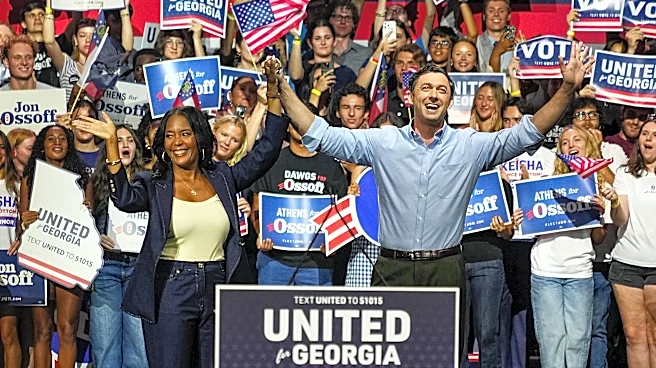
When election day finally came last week, Ossoff won his race by 19 points. He outperformed previous Senate winners, presidential candidates Kamala Harris and Joe Biden, and other popular Georgia politicians like Gov. Brian Kemp.
His win may not have come as a surprise, but his margin was unmatched when compared to other successful Democrats in Georgia's statewide races.
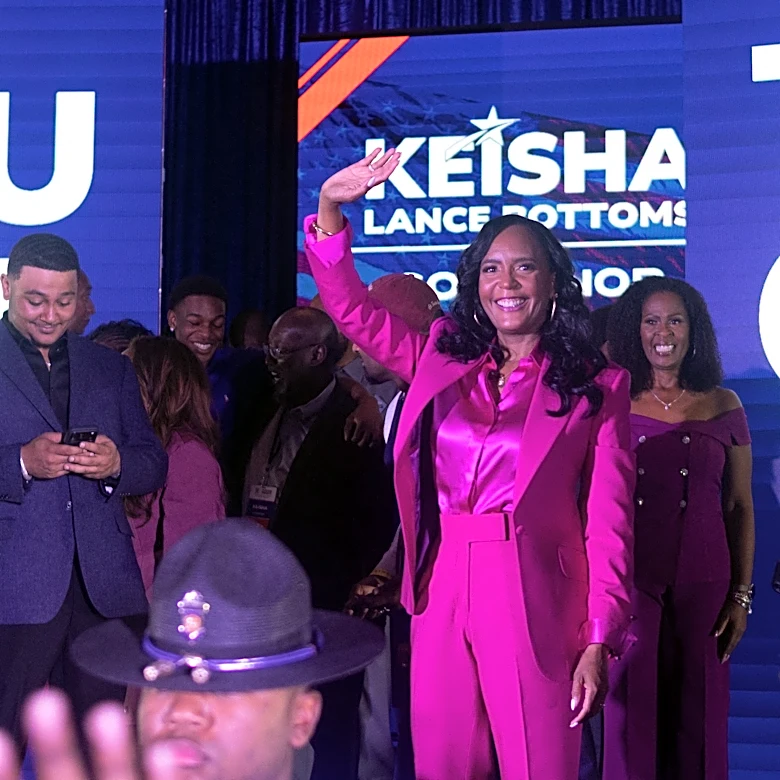
Keisha Lance Bottoms won the governor's seat for the Democrats by nine points. Democrat Josh McLaurin won the lieutenant governor's seat by 11 points, as did Penny Brown Reynolds in the race for Secretary of State. The race for attorney general was also won by about 11 points by Tanya Miller, another Democrat.
There were likely some split tickets that chose both Ossoff and Rick Jackson, the Republican candidate for governor, that added to his success. But, there was something much larger at play behind the massive Ossoff win — the voices of young voters.
Young voters make their voices heard in Georgia
According to election data, there were approximately 118,000 more Georgians under the age of 30 who voted in the 2026 midterms compared to 2022, many of whom voted Democratic. Some of these young voters were casting ballots for the first time now that they have come of age, but many more chose to vote in this election when they sat the last one out.
A 21-year-old Ossoff voter, who asked not to be identified, told USA TODAY on election day she didn't feel properly informed during the 2024 races, the first election she was eligible to vote, but was motivated to cast her vote this time at the Robert E. Fulton Library in Johns Creek on Nov. 3.
"I think that I was young, and so I was a little bit compelled by a lot of conversations that were happening online, like about Israel and Palestine, and so I didn't feel comfortable voting for (Kamala Harris) and I also obviously feel comfortable voting for Trump, so it felt like at that moment a non-vote was better," she said. "But honestly, if I could go back and vote, I totally would."
Overall, 553,166 voters under the age of 30 voted in 2026, a 27% increase from the last midterms. The trend started in early voting, and continued through election day.
In minority groups, like Black and Hispanic voters, that number increased by 55% and 164%, respectively. Roughly 67,000 more young, Black voters participated this cycle and roughly 40,000 more young Hispanic voters.
These young voters went 85 to 13 for Ossoff, according to NBC News, and increased the support for a Democrat from 22 points in 2022 to 72 points in 2026 among voters aged 18 to 29.
In a place like Clarke County, for example, the race went +57 for Ossoff, up from +39 for Harris in 2024 and +45 for Warnock during the 2022 midterms. Clarke County is home to the University of Georgia, as well as a large Black population.
Young voters were engaged in this election, but it doesn't guarantee support in 2028 for major Senate races like Rev. Raphael Warnock's reelection campaign, or in the presidential election, if there isn't action over the next two years.
"I guess it sort of set the tone for the future," the 21-year-old first-time voter told USA TODAY. "I think, more than that, I'm going to keep track on if they actually deliver their promises. I think just watching past elections, I've been sort of disheartened that the rhetoric is staying the same. That we should have hope and that there's change coming. But it's like, okay, now we've had a couple of candidates that have been elected, and where's the change? You know, so still holding out hope. But that's more, I think, a personal philosophy that anything the Democrats should be lent too much credit for."
Young voters often vote on recent actions from a candidate, and for a politician like Ossoff who is known for his constituent services and support from across the aisle, as well as his viral social media moments, this paid off.
Georgia presidential hopefuls will need young voters
Keeping young Georgia voters engaged will be essential in 2028, especially if there is a Georgia politician on a national ballot as well as the state races.
Ossoff has the momentum for a 2028 presidential bid. Early polling of Democratic primary candidates has him near the top, and show he could win the national election if he ran.
But, he has been adamant that he will serve his full six-year term in the Senate and has no ambitions to run for president in 2028, often citing the age of his two daughters.
Warnock, however, has been less clear about his ambitions for higher office.
In an appearance on CNN's State of the Union, Warnock told host Jake Tapper he would "make some news for you."
"Come 2028, I will be running for high office," Warnock said.
"High office meaning president?" Tapper clarified.
"I am very much focused on the midterms," Warnock answered.
Rumors have also been spiraling around current Georgia Gov. Brian Kemp, who will be out of his seat come January and who was being floated as a possible opponent to Ossoff before the Republican primary began.
His team confirmed to the Atlanta Journal-Constitution Kemp was seriously considering a 2028 presidential run, and his clear separation from the Trump Administration may work in his favor. Kemp, and his then-Secretary of State Brad Raffensperger, clashed with Trump following the 2020 election when the president claimed he won Georgia. They have publicly patched their relationship, but Kemp has kept Trump and the MAGA wing of his party at a distance from his governance in Georgia.
Rep. Buddy Carter, who ran in the Republican primary for Senate, told WJCL he would not be "surprised" if Kemp ran for president in 2028.
"I'm not surprised at all," Carter told the outlet. "I think Brian Kemp would make an excellent presidential candidate, and I think he would add a lot to the field. And certainly we would be proud in the state of Georgia to have him representing us."
One thing is clear for any presidential hopeful — you'll have to win over Georgia's young voters.
Irene Wright covers politics in Georgia as the Atlanta Connect reporter with USA Today’s Deep South Connect team. Find her on X @IreneEWright or email her at ismith@usatodayco.com.
This article originally appeared on USA TODAY: New voices turn midterms in Georgia. How young voters swung for Ossoff