



NEW ORLEANS – The Rev. Demetrese Phillips opened the meeting with a prayer, reminding the evangelists, Muslim, Baptists, Presbyterians, Mormons and nondenominational leaders that “social justice is part of our ministry.”
Phillips, the senior pastor at Historic St. James AME Church, told them they are experiencing a replay of the Civil Rights Movement now that Southern states have eliminated Black-majority congressional districts in the wake of the Supreme Court's decision in Louisiana v. Callais. And like in every social movement in American history, he added, faith organizations must play a role.
“It seems that we must come together once more in the same fashion that we did then to say God is involved in this, too, and our faith needs to lead
us through these moments. The church is the most important tool, especially in the Black community that we have, and it must be involved,” he said, as community members gathered in the sticky heat outside for a school supply giveaway at the oldest Black Catholic church in the city.

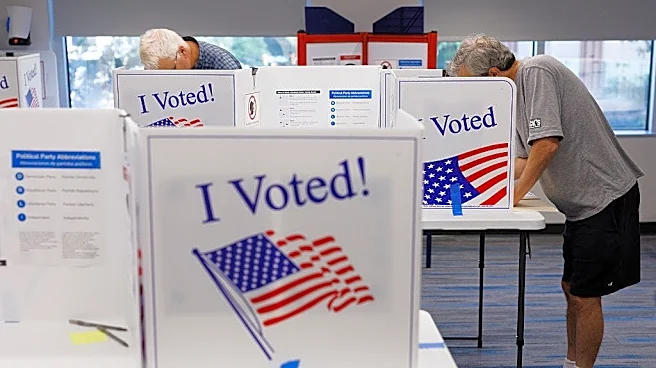
The multifaith effort is among hundreds nationwide – many serving congregations of color – aiming to turn out voters ahead of the midterm elections. Those elections will determine which party controls Congress during the final two years President Donald Trump is in office. If Democrats take even one chamber, they could halt legislation and funding the president wants and investigate executive branch actions, including the Iran War and mass deportations.
Conservative evangelical Christians have long been a dominant force in U.S. politics and overwhelmingly back the Trump administration and its actions. White Christian voters — particularly white evangelical Protestants — remain the most reliably steadfast Republican voting bloc and are expected to turn out in force this November.
The Faith & Freedom Coalition and other major conservative groups have launched multimillion dollar mobilization campaigns targeting evangelical and pro-life voters who normally vote only in presidential elections ahead of the midterm elections. Earlier this month, Focus on the Family – one of the nation's most prominent evangelical organizations – told its members: "Christian citizens have a moral duty and sacred responsibility to vote." It also said "many political issues today are moral issues," including gay marriage and transgender rights.
But increasingly, moderate and progressive Christians, Muslims, Jews and other faith communities are pushing back. They are saying it's time to remind the country of religion’s role in caring for the poor and the stranger, especially as segments of the Republican Party increasingly embrace Christian nationalism ‒ the belief that the secular government should favor Christianity or even merge with it.
The half a dozen religious leaders who spoke with USA TODAY for this article stressed they are not interested in seeing churches become branches of political parties. Instead, they want to encourage voters to think about what their religion calls them to do.
In the last two years, religious leaders have been arrested outside ICE detention facilities and the U.S. Capitol. They have also publicly pushed back against Trump administration actions they say have alienated denominations and are contrary to religious teachings.
Now, they've turned their eyes to the midterms seeking to bring out as many people to vote as possible.
Mainline and left-leaning faith groups seem to be more vocal about get-out-the-vote efforts for the midterms, said Ryan Burge, a political scientist at Washington University in St. Louis. Whether the effort will be enough to change election outcomes isn't clear, he said.
"I guess I'm just skeptical of the whole enterprise," Burge said.
Fewer Americans consider themselves religious than ever before, though the decline has leveled off, according to the Pew Research Center's Religious Landscape Study. The largest number of religious Americans are evangelical, followed closely by Catholics.
Many of the religious groups becoming more vocal represent churches that are already more likely to protest and work to protect immigrants or the LGBT community, he said. The average mainline Christian church isn't suddenly doing this, he said.
Nonetheless, houses of worship often organize "Souls to the Polls" efforts to transport people or act as polling locations. Many mainline parishioners, Burge said, wouldn't have a problem extending that to voter registration. He added they might think: "'Let's be good civic citizens, but let's not put our thumb on the scale for one side or the other.'"
'Peaceful, nonviolent presence for democracy'
The point right now is to build on the get-out-the-vote work religious organizations have always done, said Guthrie Graves-Fitzsimmons, vice president of programs and strategy at Interfaith Alliance, which works to counter the religious right.
"We are seeing a broad multifaith effort at both traditional get-out-the-vote efforts in non-partisan ways by houses of worship and religious organizations, but also paired with election protection work given the many threats to the electoral process itself right now," he said.
Interfaith Alliance will launch a 28-day nationwide bus tour from Omaha, Nebraska, Oct. 5. It will stop in states the alliance expects will face election security threats, drawing attention to what religious institutions are doing to get people to vote, Graves-Fitzsimmons said.
"We're really drawing attention and resources to what's happening locally," he said.
The group is also holding a series of virtual trainings for religious leaders for educating voters, monitoring polls and preparing in case federal law enforcement appears at them. Homeland Security Secretary Markwayne Mullin said U.S. Immigration and Customs Enforcement might enter polling locations in response to "specific threats" or to enforce a warrant.
"We're also seeing a huge mobilization of faith leaders and local faith communities that are ready and willing to show up, if there are threats like we're seeing..." Graves-Fitzsimmons said. "If there's a deployment of federal forces outside polling locations, there can be and should be a role for faith communities to be a peaceful, nonviolent presence for democracy."
Preparing religious leaders for what to do if elections are suspended or if voting machines or ballots are seized "is new territory for quite a few of us," said Rev. Traci Blackmon of Faith Out Loud!, an incubator for Black churches and social justice.
Blackmon's group has a large-scale "faithful non-compliance, non-resistance" training scheduled for early October in Atlanta. Leaders of all faiths, she said, will consider: "What can we do faithfully and lawfully? What does resistance for faith communities look like that is different than it may look for some other agitators? Not allowing the moment to change us, but demanding that we use our power to change the moment."
Faith Out Loud! is holding "Justice Revivals" nationwide. It will also bring Freedom Riders and their families across the South in mid-October to retrace the 1961 Freedom Ride through Virginia, the Carolinas, Georgia, Alabama, Tennessee and Mississippi, ending in New Orleans.
It is time for people of faith to have "conspicuous courage" especially if people are worried about seeing ICE or other federal law enforcement near the polls, Repairers of the Breach President and founder Bishop William J. Barber II told USA TODAY.
Barber, whose organization focuses on moral organizing for social change, kicked off his "100 Days of Voter Mobilization" tour on Sept. 19.
"We have to say we will not go alone and we will not be intimidated (into) backing up on this most sacred right," he said.
Along with the tour, Repairers of the Breach has an initiative calling for 1,000 marches to the polls across the United States ahead of Election Day. The group aims to mobilize 5 million low-wage voters, including at least 1 million Black men in the South and battleground states.
"We're going to march together to exercise the power of our voting," Barber said.
'This is not who we are'
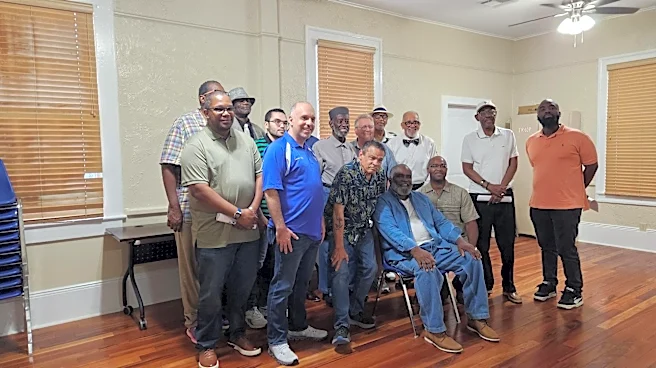
In a small New Orleans home that serves as an annex of St. Peter Claver Catholic Church, 13 Black, white and Arab men raised their voices to be heard over the air-conditioning. They talked about engaging college freshmen and young people who aren’t part of their congregations but whom they know. They discussed tactics for getting people to actually vote, not just register. They also talked about coordinating "church vans" to get everyone, regardless of faith, to the polls.
Their interfaith group was the brainchild of longtime community organizer Joseph Givens, executive director of Isaiah Institute of New Orleans.
“None of this works….unless there is an organizing ministry within that congregation making it happen,” Givens said. “Unity requires organization."
The group planned a Sept. 12 workshop to train an estimated 150 New Orleans faith leaders from churches, synagogues and mosques on how to turn their congregations into voter turnout machines. On Sept. 13, they gathered for an afternoon of multifaith prayers at St. Peter Claver Catholic Church.

Dwight Jarrett of Greater St. Stephen Full Gospel Baptist Church paused outside the building. Pink whisps of clouds clung to the sky as the sun set.
“People are going back to what our ancestors did in the beginning, which is organizing the churches, because that’s the number one people center in our communities," he said. "Even though people don’t practice religion as much as they did, it’s still the building block of overcoming our struggles."
He’s not surprised to see religious groups step forward in response to what is coming out of the White House.
“The policies that the current administration and the White House have set (are) so divisive, and that’s why you see all of the different congregations coming together and saying, 'No, it’s not going to work, this is not who we are,'” Jarrett said.
This article originally appeared on USA TODAY: Faith leaders organize to boost voter turnout ahead of midterms