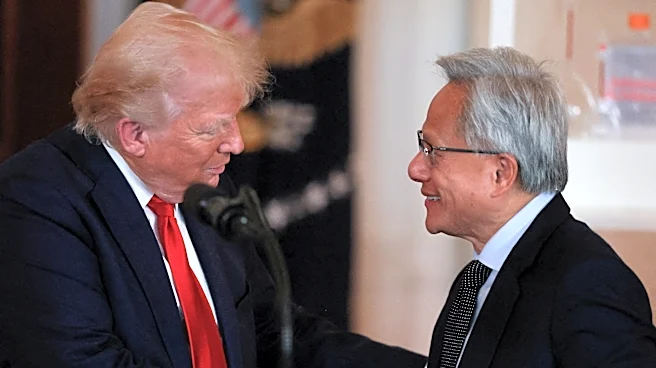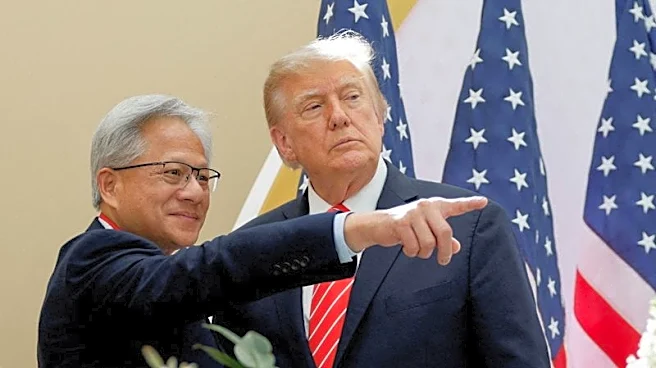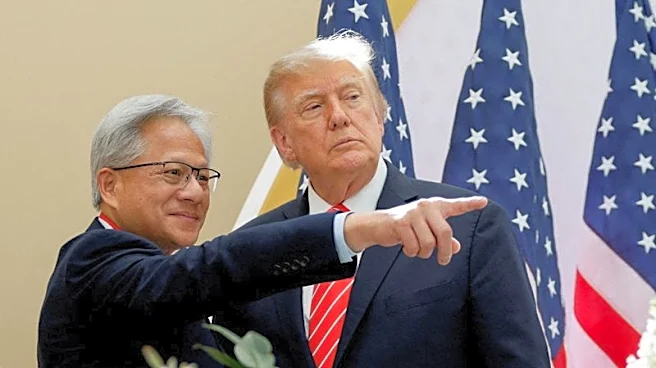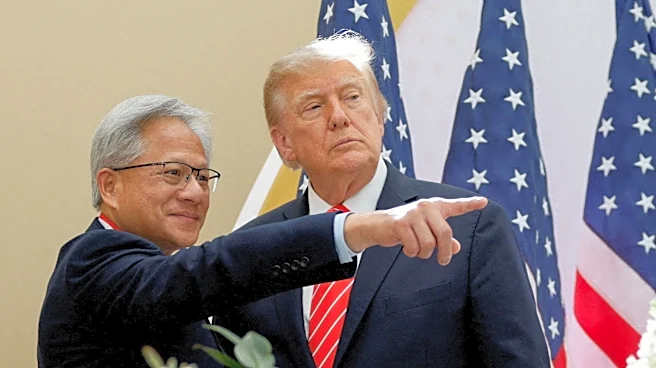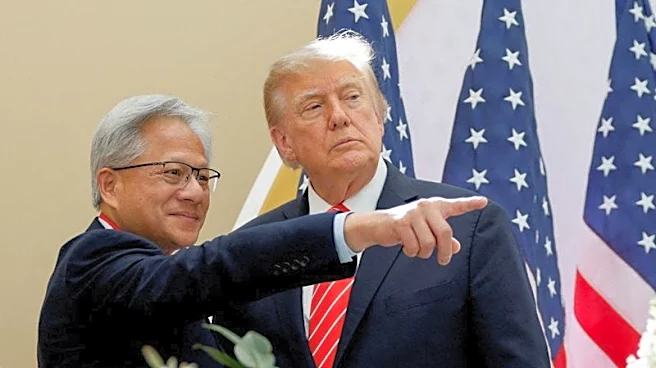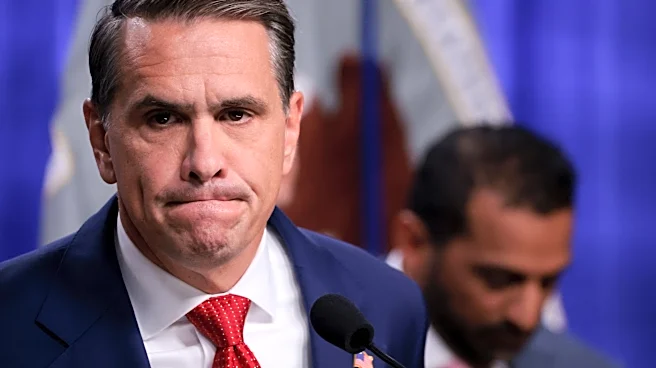



WASHINGTON − Attorney General Todd Blanch sidestepped questions on whether the Justice Department investigated the actions of Nvidia CEO Jensen Huang after President Donald Trump asserted the department "exonerated" the tech executive as he orchestrated Huang's return to the company.
"No, what the president said is that he talked to a lot of people going into the decision that he made to encourage the board to reinstate him," Blanche said at a contentious Nov. 24 news conference when asked whether the DOJ conducted an investigation before concluding Huang committed no crimes.
"I'm not going to get into communications I had with the president about it," Blanche said, adding that his department would have relayed to Trump any information suggesting
Huang was committing crimes. "That's something I certainly would have told the president had it been true."
Yet, asked again by a reporter whether Huang was investigated, Blanche responded: "What does that mean? Had Huang been investigated? For what?"
Blanche's remarks seem to contradict comments from Trump, who told CNBC on Nov. 23 that the Justice Department "did a pretty good investigation, and they felt that he was exonerated" as the president discussed his efforts to convince Nvidia to reinstate Huang as CEO.

Trump, who lobbied Nvidia's board directly to reinstate Huang, said in a social media post shortly after Nvidia announced Huang's return that Blanche confirmed the U.S. possesses no evidence that Huang "engaged in any unlawful conduct." The president also assured Americans that Huang did not pose a national security threat.
Nvidia's board voted unanimously on Nov. 23 to reinstate Huang, 11 days after he resigned on Nov. 12 amid a company investigation into an extramarital relationship he had with a Singaporean tech executive, Alice Huang, who was suspected of working as a spy for the Chinese government. Jensen Huang also had an affair with fellow company executive, according to a report from the New York Times.
"What I said last week is that we were looking into it," Blanche said. "The FBI, law enforcement looks into things all the time. That doesn't necessarily become a criminal investigation, doesn't necessarily become an indictment. It just literally is that: It's looking into things."
On Nov. 17, the Justice and Commerce departments said they were investigating Megaspeed − the company where Alice Huang was employed − for the potential diversion of semiconductors in violation of U.S. export laws. In October 2025, the New York Times reported that U.S. authorities were investigating whether Megaspeed helped Chinese customers obtain Nvidia computer chips subject to Washington's export controls.
"When you say the export investigation is still ongoing, I don't know what you're talking about," Blanche said in response to a question from a reporter. "We have hundreds, if not more, export investigations going at any time at the Department of Justice. I mean, that's one of the priorities that we have."
"I don't know what you're speaking about," Blanche added.

Despite concerns whether Nvidia has followed export laws, Blanche praised the company, telling reporters, "I have no reason to stand up here and say that Nvidia is anything but a good corporate citizen."
Blanche said multiple factors go into determining whether an individual − in this case, Jensen Huang − poses a national security threat.
"There's a whole bunch of ways we do it. Use the intelligence community, the FBI, the information we know. We talk to witnesses," Blanche said. "It's a collective consensus that we reach all the time, in all types of cases, not just in this case."
Reach Joey Garrison on @joeygarrison.
Contributing: Reuters
This article originally appeared on USA TODAY: Blanche dodges questions on Nvidia probe after Jensen Huang's return