




A reader, Jerry Larson, responded to a story we wrote recently about whether hybrid drivers save as much money as people think with limited fully electric driving capabilities saying drivers should consider the environmental benefits of hybrids and electric vehicle and not just the potential gas savings as they make their car purchases. We took a deeper dive to look at whether hybrids are as good for the environment as their supporters say they are
.If you have questions about anything you read in our coverage, email me at klaing@usatodayco.com, and I'll do my best to answer. You can also subscribe to our Cars newsletter here.
Larson said he taught meteorology for 17 years and brings that background to his car-buying decisions.
"For some of us,
saving money is a consideration," he wrote. "However, for many of us there is a much more serious issue to consider than just money."
Larson said that while buying a non-hybrid vehicle could save money, consumers should also consider their impact on the environment.
"Climate change is real," Larson wrote, adding that people should consider what they can do to reduce their environmental impact and carbon footprint
The USA TODAY Cars team looked at how American car shoppers view hybrids, and the environmental benefits of those vehicles compared to gas-powered and fully electric cars.
How much do American car shoppers care about the environment?
Fuel efficiency came closest to the environmental concerns Larson raised, ranking seventh behind durability, safety, affordability, driving comfort, performance and reputation in a recent Kelley Blue Book study.
"While durability and safety continue to be the top factors that influence purchase consideration among all shoppers, affordability and fuel economy have increased in importance in the past five years," Kelley Blue Book said of its findings.
Despite that, there's evidence American interest in hybrids has increased this year. But it appears to be more driven more by high gas prices drivers experienced in 2026 than the environmental benefits Larson cited.
Cars.com said hybrids now make up 12.2% of new vehicles for sale, up from 11.4% a year ago and 8% two years ago. Additionally, in the first half of 2026, 22% of shoppers said they would consider a hybrid vehicle, which was up from 20% in 2025, according to Kelley Blue Book.
In 2025, there were 13,929,600 non-plug-in hybrid vehicles and 1,765,700 plug-in hybrid vehicles registered on U.S. roads, according to the U.S. Department of Energy's Alternative Fuel Data Center.
How much do hybrids help the environment?
Hybrids are known for getting much better mileage than gas-powered cars, using less fuel than a traditional vehicle.
Most regular hybrids have small batteries that get power from regenerative braking, according to Edmunds, an automotive industry research group that also tests and reviews cars. That means drivers don't have to worry about hooking up to a charger at all.
Hybrid cars operate on battery usually for shorter, low-speed portions of the trip and switch to gas, when necessary, for longer, higher-speed trips. Some hybrid cars can get over 500 miles on a single tank.
Plug-in hybrid electric vehicles, or PHEVs as they are sometimes referred to, usually have a significantly larger battery pack that allows the car to be operated on electric power for stretches of time that can last about 40 to 50 miles, according to Edmunds. Plug-in hybrids have been seen as a compromise option for people who want to experience electric driving but are not ready to commit to driving a fully electric car.
I tested a Mazda CX-90 plug-in hybrid recently, and I found the options for electric driving to be limited. It took me two hours to fully charge the battery in one session.
With the battery fully charged, the vehicle said I had 310 miles of range overall, and only 27 miles of that range were on the battery.
Environmentalist groups say drivers who really want to boost the environment should probably go fully electric.
Katherine García, Clean Transportation for All director for the Sierra Club, said in a statement chiding automakers for prioritizing the development of hybrids over fully electric cars that non-plug in hybrid cars are still "combustion-powered vehicles that run solely on fossil fuels."
"Gas prices have surged around the world, and drivers are demanding affordable electric vehicles," she said. "Globally, we are seeing a massive shift toward electric vehicle adoption, but the U.S. is lagging behind."
Carmakers have said they're going to keep pumping out hybrids as long as consumers want them.
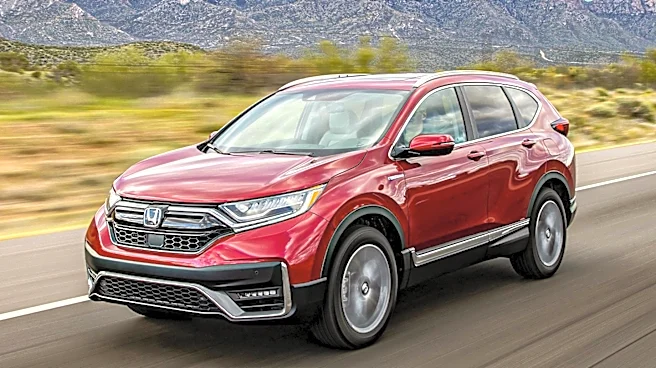
"Increasing sales of hybrid-electric vehicles is key to Honda's overall growth strategy," Honda said in a statement announcing the 2028 Honda C-RV will be "100% electric."
"With hybrid and SUV consideration at all-time highs, the 7th-generation CR-V is the first of several hybrid models Honda plans to launch in North America by 2030," Honda said.
Keith Laing is an automotive reporter on the National Trending Desk at USA TODAY. Contact Keith at klaing@usatodayco.com.
This article originally appeared on USA TODAY: Reader: Buy hybrids for environmental benefits. How much do they help?