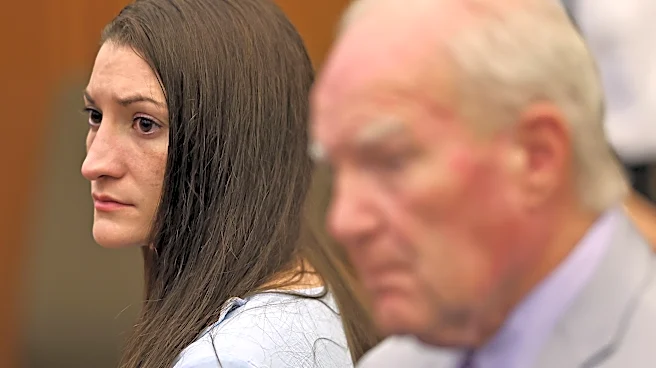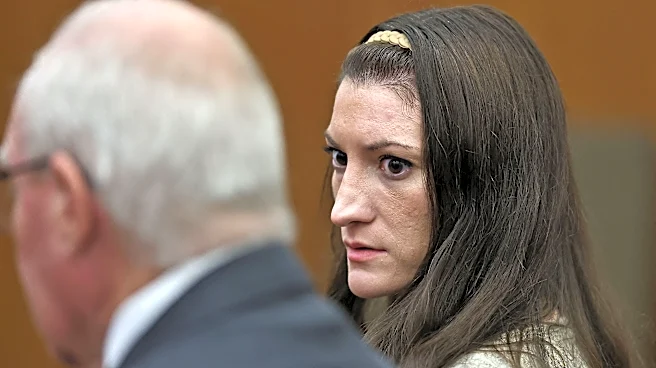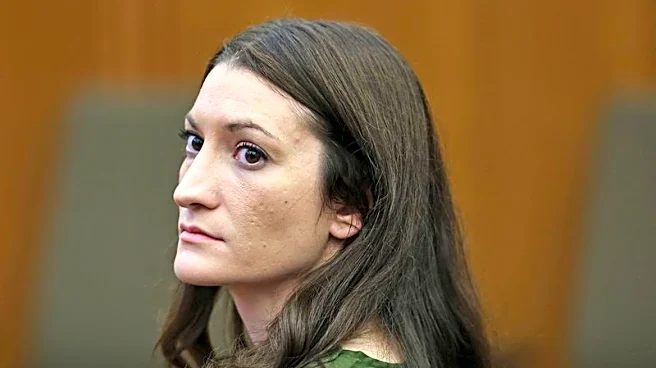





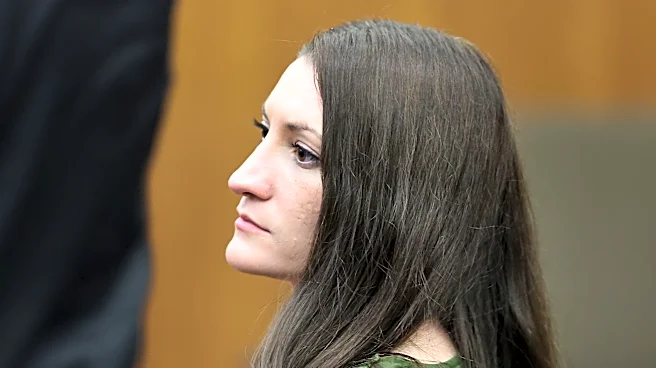
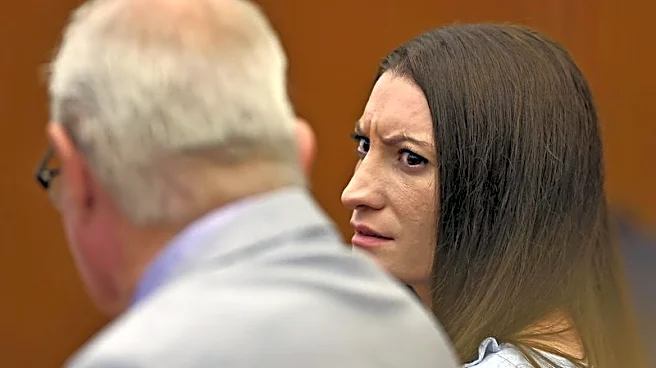
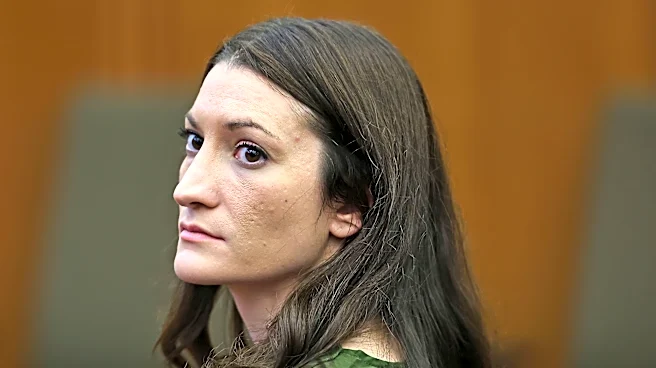
As the Lindsay Clancy trial has unfolded, other cases of mothers charged with killing their children who are arguing similar defenses also made their way through the court system.
Filicide, or the killing of a child by their parent, makes up about 2.5% of all homicide arrests in the U.S., according to Palo Alto University.
Clancy, a 36-year-old from Duxbury, Massachusetts, is charged with murder in the killings of her three children – Cora, 5, Dawson, 3, and Callan, 8 months – in January 2023.
Prosecutors allege she strangled them, then attempted suicide in a deliberate act, while her defense argues she is not guilty by lack of criminal responsibility – known as an insanity defense – because she was suffering from postpartum anxiety, depression
and psychosis at the time.
While Clancy's trial has garnered extensive media and public attention since it began in July, other mothers charged with killing their children who used or are using an insanity defense have also seen updates in their proceedings in recent weeks. Here's a look at those cases.
New York mom Dimone Fleming found not responsible for killing children
On Aug. 24, a judge in New York found Dimone Fleming, 26, not responsible by mental disease or defect in the 2022 killings of her two children, according to The New York Times and WABC.
Fleming was charged with first-degree murder in the deaths of Daishawn, 3, and Octavius, 11 months. They were found fatally stabbed and submerged in a bathtub full of water at a family shelter in the Bronx in November 2022, according to the outlets.
Psychiatric evaluations of Fleming conducted at the request of both prosecutors and the defense indicated that she was in a state of psychosis at the time, the outlets reported.
Tiffany Wichman, a Bronx assistant district attorney, told The New York Times that the prosecutors agreed to not take the case to trial because it would not serve justice. USA TODAY has reached out to the Bronx District Attorney's Office for comment.
In a statement to USA TODAY, Fleming's defense attorney, Jodi Morales, said this case and Clancy's "raise difficult questions about how we understand severe postpartum mental illness."
"I would be hesitant to draw direct comparisons between individual women. But these cases underscore why we need a legal system capable of looking beyond the horror of an event and carefully examining the mental illness that may have driven it," Morales said.
Fleming will now undergo additional psychiatric evaluations and has another court hearing scheduled for Sept. 18 on next steps.
Massachusetts mom Latarsha Sanders granted new trial in her children's killings
A month before Clancy killed her three children – and in the same courthouse where Clancy would later be tried – Latarsha Sanders was convicted of two counts of murder in the stabbing deaths of her two sons.
In February 2018, Sanders, then 43, fatally stabbed her sons, 8-year-old Edson "Marlon" Brito and 5-year-old La'Son Brito, in their Brockton, Massachusetts, apartment, according to court documents.

But more than three years after Sanders was found guilty of murder in December 2022, the Massachusetts Supreme Judicial Court ruled on Aug. 6 that she be granted a new trial.
Sanders, like Clancy, pleaded not guilty by lack of criminal responsibility. But the state's Supreme Judicial Court granted her a new trial after finding that the judge should have allowed Sanders' medical records admitted into evidence, according to its ruling.
During Sanders' December 2022 trial, Thomas Deters, a clinical neuropsychologist, testified that she was "grossly psychotic" at the time of the killings. Deters, who evaluated Sanders and reviewed her medical records, diagnosed her with "schizophrenia spectrum and other psychotic disorders," according to court documents.
Judge William Sullivan – the same judge in the Clancy case – presided over Sanders' trial. He denied the defendant's request to admit her medical records from after her arrest into evidence, which ultimately became the basis of the Supreme Judicial Court's ruling for a new trial.
"We hold that the exclusion of the defendant's relevant medical records relating to the diagnoses or treatment of mental illness constituted prejudicial error, and as a result, the defendant is entitled to a new trial," the ruling said.
USA TODAY reached out to the Plymouth District Attorney's Office for comment on the ruling.

Sanders' attorney, Robert F. Shaw Jr., said in a statement to USA TODAY that he is "extremely grateful" for the Supreme Judicial Court's ruling.
While acknowledging both the parallels and differences between Sanders' and Clancy's cases, Shaw also said he is "very gratified" about the recent public interest in mental illness and psychosis.
At the time that Sanders' case was tried, Shaw said, "there was limited public understanding of the profound mental-health issues involved."
"Perhaps the increased public discussion and awareness we are seeing now will lead to greater understanding and a greater willingness to consider these difficult issues fairly," Shaw said.
North Carolina mom Andrea Faust intends to use insanity defense
In North Carolina, Andrea Faust, 41, is charged with murder in the killing of her 3-year-old son and the attempted murder of her 23-month old son in February, according to court documents.
On Aug. 18, Faust's capital defender, Nicole Galinsky, filed a notice in Durham County Superior Court indicating she intends to use defenses of not guilty by reason of insanity and diminished capacity.
According to court documents, Faust has been held at Central Regional Hospital, a state psychiatric facility, for treatment since April. In a May report, the hospital said Faust was competent to stand trial.
A July 29 report from Dr. Adrienne Saxton said Faust was "laboring under a defect of reason from disease of the mind," and therefore "incapable of distinguishing right and wrong in relation to her acts."
In a statement to USA TODAY, Galinsky drew comparisons between her client's and Clancy's cases, saying that both women were "known to be loving, doting, responsible mothers who were worried about and caring for their children up until the very second they decided to kill them."
Galinsky said both Faust and Clancy were "struggling enormously with their mental health" and "seeking help from doctors who weren’t really taking their concerns seriously."
"Both of these cases highlight the failure in our society to take women and mothers seriously when it comes to their mental health. Both of these women advocated for themselves countless times and – for what? It got them nowhere," Galinsky said.
USA TODAY has reached out to the Durham County District Attorney's Office for comment.
Insanity or murder?
Although some mothers who killed their children have invoked the so-called insanity defense, it doesn't mean it will prevail over murder charges. Many prosecutors in these cases hope they don't.
The insanity defense has also long been seen as controversial. Many states implemented widespread reform of the defense – while others did away with it entirely – after John W. Hinckley Jr. was found not guilty by reason of insanity in 1982 for the attempted assassination of President Ronald Reagan the year before, according to research from the University of Southern California.
Prosecutors have argued that the Clancy case is not a referendum on maternal mental health, contrary to how it's been seen by some members of the public.
“This case is not about our mental health system and how it treats women. ... What's on trial here, what the issue is here, is what Lindsay Clancy did the night of January 24, 2023, and what her mental state was at the time,” Plymouth County Assistant District Attorney Jennifer Sprague said in closing arguments.
Prosecutors argued that Clancy misled her medical providers to seek out a "quick and easy fix" when she was feeling depressed and anxious. They also painted Clancy as controlling and meticulous, and suggested that she may have fabricated hearing an auditory hallucination, based on inconsistencies in the story.
Similarly, in the Sanders case, prosecutors emphasized her health history prior to the killings, noting that she did not have a documented history of mental illness, according to court documents.
Melina Khan is a national trending reporter for USA TODAY. Keep up with her on X @melinakh and Instagram @bymelinakhan.
This article originally appeared on USA TODAY: As Lindsay Clancy trial unfolded, so have these similar cases