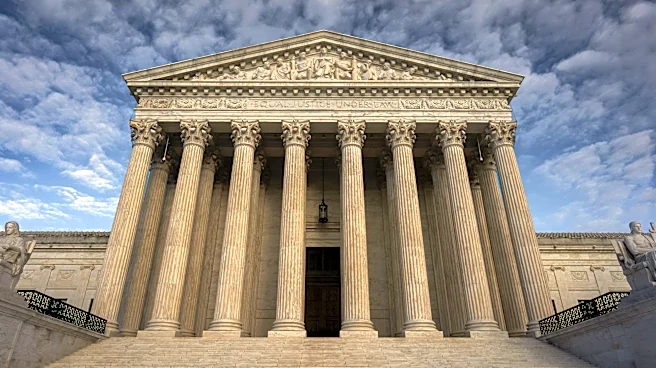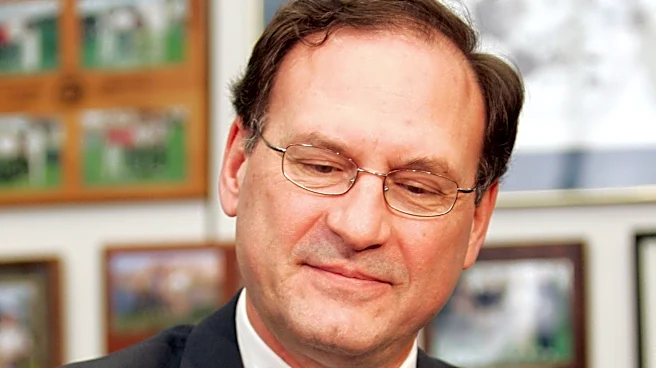



WASHINGTON – The blockbuster scoop jolted the nation's capital in June, just after the Supreme Court had handed down its final decisions for the term: Justice Samuel Alito was retiring.
Except he wasn't.
In the privacy of his chambers, how did Alito react to the inaccurate story, quickly retracted by National Public Radio?
“I was amused and puzzled,” Alito told USA TODAY in answers to written questions. “I wondered what had led to the erroneous report. And when the error was corrected, I wondered how many people were crest-fallen.”
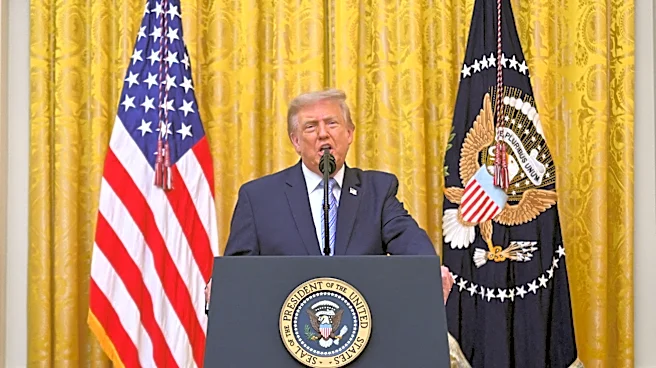
Weeks later, Alito − who at 76 is the court's second-oldest justice – publicly denied rumors that he will step aside anytime soon to give President Donald Trump the chance to further reshape the court with a fourth nominee.
Now Alito has written “So Ordered: An Originalist’s View of the Constitution, the Court, and Our Country,” published Oct. 6 by Basic Liberty. The book is an adaptation of past speeches that explain his approach to the law along with thoughts about “distinctly American” values and experiences – including what baseball can teach people about the law and life.

The lifelong baseball enthusiast and Phillies fan has previously said that growing up cheering for a largely losing baseball team affected his thinking. While some of his childhood friends outside Trenton, New Jersey, rooted for the Yankees, which dominated baseball in the 1950s, Alito and his best friend followed the Phillies.
“Why we made that choice I can’t say,” Alito said.
The team never came close to winning the National League pennant after 1950, the year he was born.
“The theory is that people who root for a team that consistently loses learn that life is not a bed of roses,” Alito explained to USA TODAY. “A certain amount of disappointment is to be expected, and that is a valuable life lesson.”
Alito responds to Jackson's criticism of the court
Alito, one of the court's most unflinching conservative jurists, has legions of both supporters and detractors.
As he recounts in his book, a few weeks after President George W. Bush nominated him to the Supreme Court, a baseball-sized chunk of marble fell from the building's front façade and landed on the steps. As Alito was taking the train from New Jersey to Washington the next day, he overheard a fellow passenger tell her seatmate that it was a sign that God was not pleased with the horrible Alito nomination.
“I didn’t interpret it quite that way,” Alito wrote.
Since his 2006 Senate confirmation, Alito has relentlessly moved the law and the nation to the right on issues ranging from abortion and religious liberty, to gun rights and voting rights.
And of the major Trump cases the Supreme Court decided in 2026, Alito and Clarence Thomas were the only justices to never rule against the president. Justice Ketanji Brown Jackson, one of the court’s liberals, has warned about the 6-3 conservative court looking too partisan and having different standards for evaluating appeals brought by the Trump administration.
“It is so important for the public to perceive us as neutral, nonpartisan,” Jackson said during remarks at a May legal conference that did not single out any of her colleagues. “We know that public confidence is really all the judiciary has.”

In a dissent last year, Jackson was even more pointed, writing that the court appears to have a rule that “this Administration always wins.”
Alito said he applies “the same legal standards regardless of which administration is affected.”
“I have never accused a colleague of basing his or her vote on partisanship, and I do not anticipate ever doing that,” Alito told USA TODAY when asked about Jackson’s comments. “I trust that Justice Jackson likewise did not mean to level such a charge.”
Faulting his colleagues for 'eschewing controversy'
Despite the lessons learned from being a Phillies fan, Alito has at times felt let down. In a biography published earlier this year − “Alito: The Justice Who Reshaped the Supreme Court and Restored the Constitution” – conservative author Molly Hemingway said Alito “has been disappointed by the lack of a sense of urgency in some of his colleagues about censorship and other threats to our constitutional order.”
Asked by USA TODAY for examples, Alito cited the court’s recent decisions not to hear challenges to admission practices at competitive high schools that he said appear to be a “blatant violation” of the court’s 2023 rejection of the use of race in college admissions.
Alito also named the court’s dismissing for procedural reasons cases about whether the Biden administration had leaned on social media platforms to unconstitutionally squelch conservative points of view and whether state abortion bans violate federal health law.
“Our job is easier and more pleasant when we deal with technical legal issues that do not involve us in heated public controversy,” Alito told USA TODAY, “but eschewing controversy is not a good reason to duck questions that richly merit our prompt review.”
'Honored' to have written opinion overturning Roe
Alito’s critics would say the court has tackled plenty of controversial issues. Exhibit A is the landmark decision he authored in 2022 that overturned Roe v. Wade and ended the constitutional right to abortion.
Alito said he was “honored to have the opportunity to write the opinion,” which “corrected an egregiously incorrect interpretation of the Constitution.”
Although Alito said he had anticipated an “intense reaction,” he never dreamed that the opinion would leak or that the justices who signed onto it would become targets for assassination. He also told CBS News that he lost friends over that ruling.

Especially in recent years, Alito told USA TODAY, serving on the court has meant “serious threats, harassment, vilification by political figures and the media, and subjection to spurious charges of ethical violations.”
Alito defended himself in 2023 for having flown to Alaska for a fishing trip on a private jet in 2008 that belonged to a hedge fund manager who repeatedly brought cases before the high court. In 2024, he rejected calls that he recuse himself from cases involving the Jan. 6, 2021, attack on the Capitol because of flags flown over his homes, which experts said were connected with false claims that the 2020 election was stolen.
“I fear that my younger colleagues and new appointees may have to deal with this new situation for years to come and potential appointees will have to consider what the situation would mean for their families,” he told USA TODAY.
A culture war warrior?
At his age, Alito told CBS News in a recent interview, he must think every year about whether it's time to retire. Alito said he decided against it this year because he thought he could still make a valuable contribution.
In 2016, before Trump’s three appointments gave the court its conservative supermajority, Duke Law School professor Neil Siegel wrotethat Alito had become “the primary judicial voice of the many millions of Americans who appear to be losing the culture wars, including in battles over gay rights, women’s access to reproductive healthcare, affirmative action, and religious exemptions.”
Alito said he “would not put it that way.”
“When our cases have concerned the issues he mentioned, my votes have been based on my understanding of the relevant law,” he told USA TODAY. “It is the duty of a Supreme Court justice to be a `voice’ for the Constitution and the laws, not for any constituency.”
This article originally appeared on USA TODAY: Justice Alito 'amused and puzzled' by false retirement report