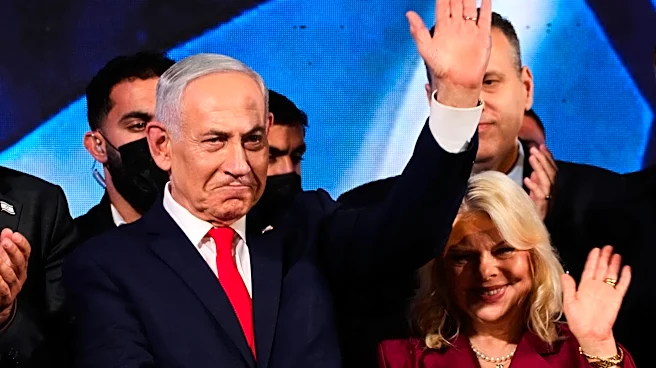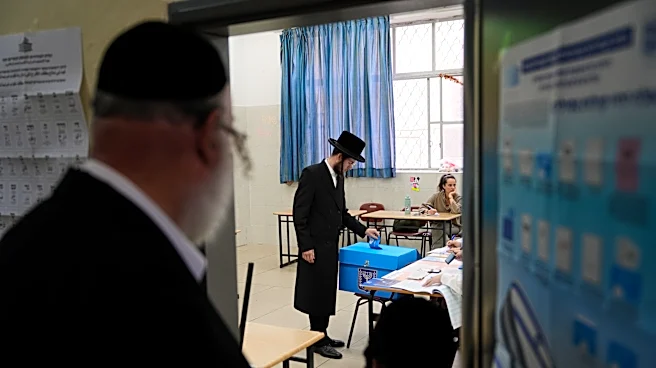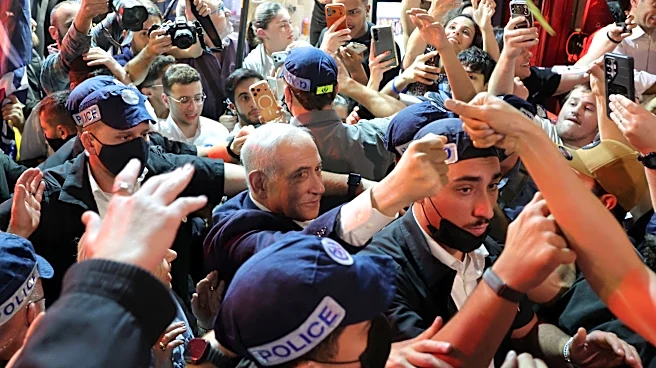




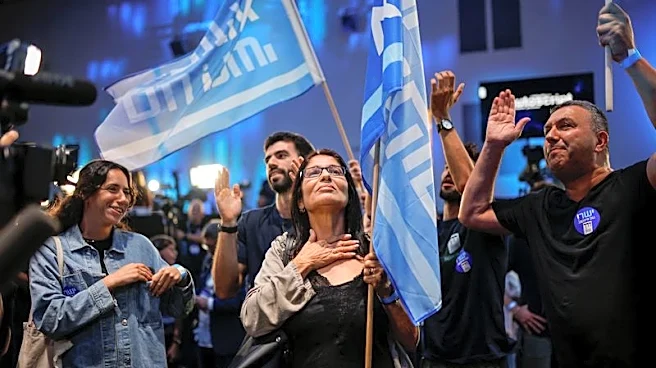
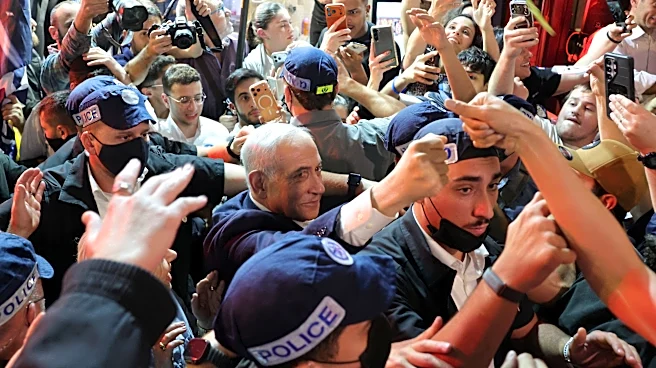

Israel’s parliamentary election on Oct. 27 ended without a clear winner after neither Prime Minister Benjamin Netanyahu nor Gadi Eisenkot, the former head of the Israel Defense Forces, failed to secure a majority in the Knesset.
The results, which will not be finalized until Oct. 29 at the earliest, could lead to weeks or even months of political gridlock in Israel. Netanyahu and Eisenkot will soon begin negotiations with the other political parties as they seek to assemble a majority coalition and seat a new Knesset.
Israeli exit polls – which have not always matched the final results – showed Netanyahu’s religious right-wing coalition had a slight edge over Eisenkot’s opposition bloc, both both fell short of the 61 seats needed to form a majority
in in the 120-member Knesset.

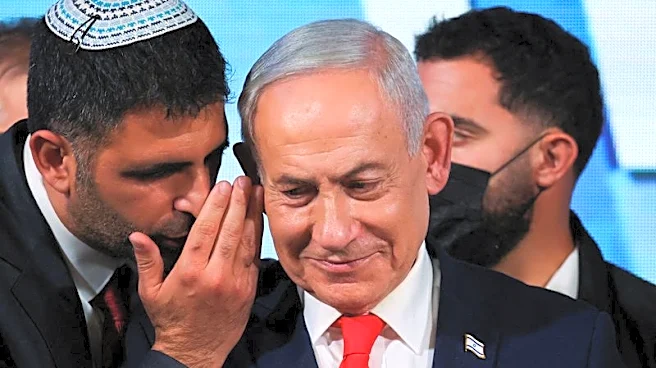
The election, Israel’s first since Hamas’ Oct. 7, 2023 attack, was widely viewed as a referendum on Netanyahu, the country’s longest-serving prime minister. Netanyahu was blamed by critics for security failures that preceded Hamas’ attack and faced intense scrutiny over his role in several long-running corruption scandals.
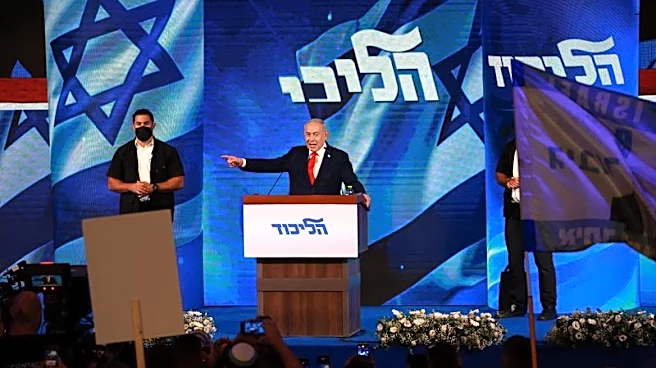
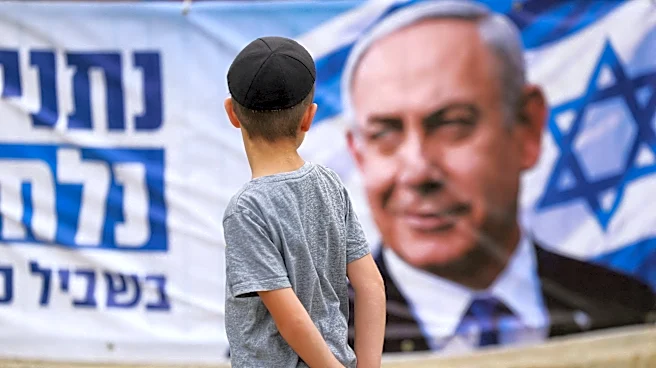
U.S. President Donald Trump endorsed Netanyahu ahead of the election and called on Israeli voters to support his right-wing political party Likud. Netanyahu widely publicized the U.S. president’s endorsement in the days leading up to election.
Likud is expected to be the largest party in the Knesset, according to Israel’s Central Elections Committee. Eisenkot’s Yashar! party is expected to be the next largest in parliament.
Trump claimed credit for Netanyahu’s strong performance in a post on social media.
“When President Trump endorsed Bibi Netanyahu, the whole tide turned, and now, rather than a decisive defeat for a Great Prime Minister, it looks like a big come-from-behind stalemate, or even a WIN for Netanyahu,” he wrote.
Who will be Israel’s next prime minister?
Netanyahu and Eisenkot are the two leading candidates to serve as Israel’s next prime minister even as they both face an uncertain path to securing a majority.
For now, Netanyahu will remain in office as a caretaker prime minister until a new Knesset is seated or Israel holds new elections.
Netanyahu may have the advantage when it comes to leading a new government. He is the ultimate political survivor in Israel and Likud looks set to be the largest party in the next Knesset. Netanyahu could offer to form a unity government with Eisenkot or seek to peel away some of the other parties that make up the Eisenkot-led opposition bloc.
Eisenkot has ruled out forming a government with Netanyahu, but he may be forced into the partnership for the sake of Israel’s national security if the war against Iran escalates.

Trump, who wants Netanyahu to continue leading Israel, has repeatedly suggested that the United States could resume major military operations against Iran after the U.S. midterm elections on Nov. 3.
Eisenkot may struggle to lead a government in Israel unless he agrees to an alliance with Israel’s two major Arab parties, Ra’am and the Joint List, which achieved a historically strong result in this year’s election.
Many Jewish Israelis consider a government that includes Arab parties to be unacceptable. Netanyahu faced accusations of Islamophobia and political fear-mongering from his critics ahead of the election.
After Ra’am and the Joint List’s strong showing on Oct. 27, Netanyahu and his party Likud baselessly accused the Arab parties of stealing the Israeli election.
Without providing evidence, Netanyahu wrote in a statement on social media that the "elections in the State of Israel were stolen by Arab parties that support terrorism and the elimination of the Jewish state through serious criminal offenses of bribery, threats, violence, forgeries, and the use of prohibited software to mobilize voters."
While Eisenkot has not explicitly ruled out the possibility, the leaders of two of the parties in Eisenkot’s bloc have ruled out working with Ra’am and the Joint List.
Miki Zohar, a member of Likud who serves as Israel’s minister of culture, said in a post on X that if Eisenkot’s coalition forms a government with the Arab parties, “it will be the end of their political careers within a very short period of time.”
What will happen next?
Once the election results are finalized, Israeli President Isaac Herzog will meet next week with the leaders of Israel’s various political parties.
It is Herzog’s job to determine which political leader has the best chance for forming a government and becoming the next prime minister. Then, he will appoint that person to begin negotiations to achieve a majority coalition in parliament.

The candidate selected by Herzog to lead Israel’s next Knesset will have 28 days to negotiate a coalition. Herzog can also grant an additional 14-day extension to that timeline. That means that Netanyahu could remain as caretaker prime minister for weeks if not months.
If the first candidate fails to achieve a majority coalition, Herzog can name a second candidate and the 28-day clock would reset. However, there is no possibility of a 14-day extension the second time around.
If no one can muster enough support to form a government, the Knesset is dissolved and a new round of election will be held.
Herzog said on Oct. 28 that he hoped the leaders of Israel’s political parties would keep “an open mind” and do their best to avoid another election.
This article originally appeared on USA TODAY: Who won Israel’s election? What’s next for Benjamin Netanyahu