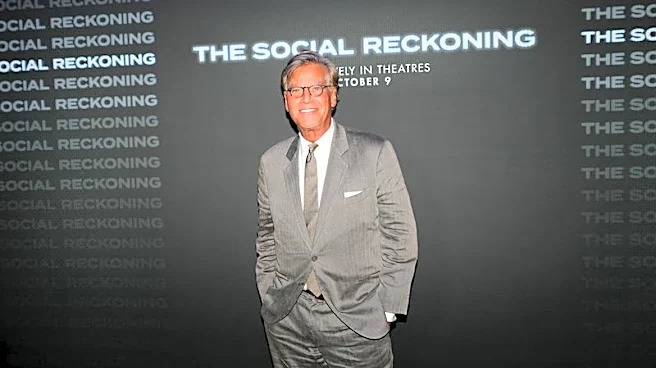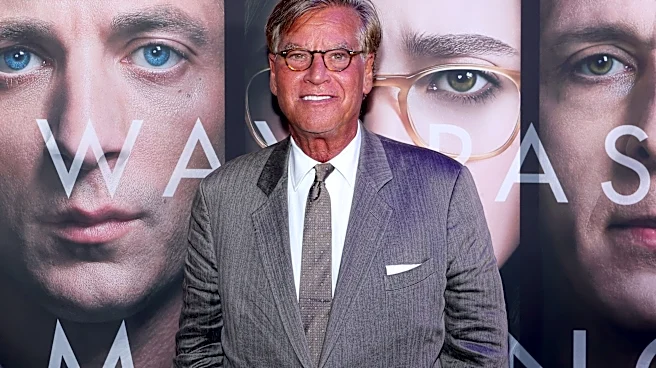







NEW YORK – When Aaron Sorkin wrote "The Social Network," the Oscar winner saw Mark Zuckerberg as someone "you rooted for" to a certain degree. But a lot can change in 16 years.
"The Social Reckoning" (in theaters now) finds "The West Wing" creator revisiting Facebook more than a decade after the 2010 film about the platform's origins. With that earlier movie, Zuckerberg was "a kid I could kind of identify with," Sorkin, 65, says. "That's when Facebook was a cool idea. That's when Facebook was a way of keeping in touch with people who you went to school with."
Cut to 2026, and the billionaire is "now the head of the largest media company in the world," Sorkin says. "And making terrible decisions."
movie and TV recommendations right in your inbox

Those decisions are at the core of "The Social Reckoning," which depicts whistleblower Frances Haugen (Mikey Madison) leaking internal Facebook documents to Wall Street Journal reporter Jeff Horwitz (Jeremy Allen White), revealing that the company was aware of ways its platform can cause harm.
Jeremy Strong's Zuckerberg is even colder and more uncaring in "The Social Reckoning" than Jesse Eisenberg's portrayal in the original. He rudely rushes an employee through an important presentation and refuses to sacrifice even a small amount of engagement to make the platform a healthier place. But there are glimmers of empathy: In one scene, Zuckerberg remarks he is aware of what the public thinks of him and notes his wife and children also have to see this hatred.
So does Sorkin have sympathy for Zuckerberg?
"Yes, I do, and I have no wish to poke Mark in the eye," he says. "I am a father, and so I can understand that. That line is there just to remind an audience that's been looking at a very robotic character that [he] is not a robot."
Sorkin was never particularly interested in returning to the subject of Facebook. But things shifted after hours of conversation with the real Haugen, who met with Sorkin ahead of the release of her memoir. The writer began to see a story in her journey as a whistleblower.
"I met Frances Haugen in a period of epic writer's block that I was having for more than a year," he says. "I banged my head against the wall. I had no ideas."
But rather than make Zuckerberg a main character again, Sorkin was more interested in a journalism thriller like "All the President's Men" or "Spotlight." It wasn't even a sure thing that Zuckerberg would be in the film, and Sorkin ultimately turned him into a supporting character.
Zuckerberg is seen in a subplot where he rehearses for testimony before Congress. In one scene, he prepares to answer questions about Section 230, a law that says social media companies aren't liable for content posted on their platforms.
This, Sorkin argues, needs to change.
"Until the owners of internet platforms are legally responsible the way the rest of us are, then there won't be a change," he says. "Things will stay this bad. Things will get worse. The house is on fire right now."

The movie went through a rigorous vetting to avoid legal action from Facebook, according to Sorkin, who finds this ironic, given that the film explores Facebook's decision not to fact-check political ads.
The studio "hired an outside law firm just to handle the legal vet on this movie – a movie about a company unwilling to do same thing," he says.
President Donald Trump is an important off-screen presence in a climactic scene where he is referred to as "the president" and "him." Sorkin wrote around the name because it was "a distraction," and he feared there would be people who "would have been with the movie that whole time, and now [think], 'Is it a red, blue thing?' " In another scene, Sen. Bernie Sanders is referred to only as an unnamed progressive candidate, which Sorkin says was also an effort to avoid dating the movie.
"I don't like things that are ripped from yesterday's headlines," Sorkin says. "I want them to be timeless."
"The Social Reckoning" only covers events up until 2021, and it ends with a triumphant feeling after the publication of the Facebook Files. But "have things improved since then?" Sorkin asks. "No." In August, Meta reached a $16.68 billion settlement resolving claims that Facebook and Instagram are harmful to kids, but Sorkin doesn't see this as a major step forward.
"Someone who knows a lot more than I do about this stuff said it's a terrible problem that just got 3% better," Sorkin says. "What will make a big difference is if laws are passed. The problem is that tech oligarchs are donating to the campaigns for the people who would otherwise be passing those laws."
"The Social Reckoning" is arriving in theaters just less than a month before the midterms, and that timing isn't a total coincidence: Sorkin felt it was important for the film be released before the election.
"I didn't think we'd be in the mood if it came out in December or a year from now," he says. "We'd be fatigued from all of the arguing."
The writer and director is "not so arrogant," he adds, to "think I can affect an election. But I wouldn’t mind if it did."
Contributing: Dana Taylor
This article originally appeared on USA TODAY: Aaron Sorkin wants Facebook reform, warns the 'house is on fire'