



From the highs of her acclaimed Hollywood career to the lows (see “Cats”), Judi Dench is telling all in a new memoir.
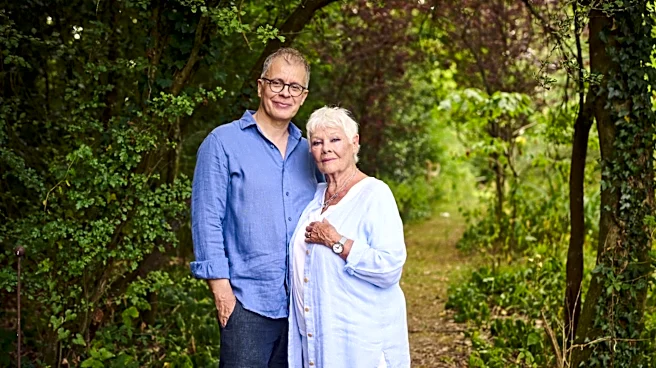
“Is It Too Late to Make a Run For It?” (out Nov. 3 from St. Martin’s Press) is an as-told-to style memoir, bringing readers into a wide-ranging conversation between Dench and actor Brendan O’Hea. If you’ve ever wanted to pepper the acclaimed British actress with burning questions, here’s your chance. The pair reminisce on everything from Dench’s upbringing in York to her affinity for animals to her favorite directors.
Here’s what she said about aging in Hollywood and how her vision loss impacts her career.
Judi Dench opens up about vision loss, aging in Hollywood
Dench holds many honorifics – Dame, Oscar winner, Tony winner – but don’t call her a national treasure. She writes, “Loathe
it. Makes me sound like a dusty old relic that’s been stuffed away in the back of the cupboard, along with some dinosaur fossils and a broken Roman shield.”
At 91, Dench isn't keen slow down, saying she wants to be “one of those women who throw themselves out of aeroplanes when they’re a hundred.
“You have to contend with people asking, ‘When are you going to retire?’ or, ‘Isn’t it about time you put your feet up?’ No, it bloody well isn’t. ‘Retire’, ‘vintage’, ‘old’ – let’s banish those words,” Dench writes.
Dench worries that if she stops acting, she’ll “never start again.” But she has been candid about the toll of age-related macular degeneration on her career, telling BBC Radio 4: "I can't be on stage. I can't do a play anymore. I can't do a film anymore.”
The eye disease mostly affects people over 50 and makes it difficult for them to see ahead of them, according to Cleveland Clinic. People with the condition do not suffer from complete blindness, as the medical center noted, and their peripheral vision is intact. Dench’s mother also had the disease, she disclosed to O’Hea.

Dench has been managing her worsening eyesight by leaning on friends and family, she says. But it’s irrevocably changed the way she approaches her career.
“I’ve had to find a different method of learning lines because even with the script blown up, I struggle. It’s made me realize I have a photographic memory, and so not being able to see the pattern of words on the page makes things really difficult. Friends now help and, provided I’m given enough time in advance to prepare, I can somehow muddle through,” Dench writes. “Then once I’m on the film set, as long as somebody warns me about the cables and points out the furniture, I’m able to cope. It’s just something you learn.”
Around the house, Dench has also had to give up being a pet owner. She writes that she misses having cats and dogs running around. She’s also unable to read and has a difficult time seeing the TV. She gave up painting.
But Dench is maintaining a positive attitude, joking about her new lifestyle changes with O’Hea in the memoir.
“I once popped a Bananagram tile in my mouth thinking it was white chocolate, and unwittingly ate the parrot food (which is delicious, by the way),” Dench writes.
Contributing: Taylor Ardrey
Clare Mulroy is USA TODAY’s Books Reporter, covering buzzy releases, chatting with authors and diving into the culture of reading. Find heron Instagram, subscribe to our weeklyBooks newsletter or tell her what you’re reading at cmulroy@usatoday.com.
This article originally appeared on USA TODAY: Judi Dench reveals how vision loss has forced her to change her life, acting career