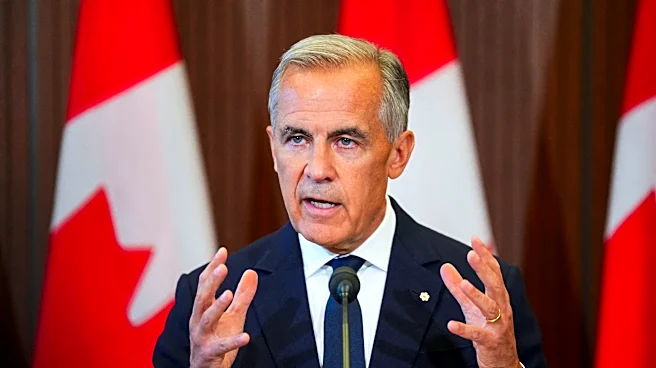









A trade war between the U.S. and Canada escalated this week after talks between the two countries collapsed.
President Donald Trump said on Aug. 24 that he would double tariffs on automobiles and car parts imported from Canada to 50% on Jan. 1. The announcement came days after 50% tariffs on around 5% of other Canadian goods including dairy, wine and hockey sticks took effect on Aug. 22. Canadian Prime Minister Mark Carney also said Canada would implement retaliatory tariffs in September.
Travelers planning to visit America’s neighbor to the north may be wondering what the heightened tensions mean for their trips. The good news is, probably not much.
Here’s what to know.
Are the US-Canada borders still open?
Yes. The borders remain open and tourists do not need a visa for stays under
180 days, according to the U.S. State Department.
U.S. citizens can enter Canada using their passport book or card, or NEXUS card. The latter offers faster processing for pre-screened travelers, according to Customs and Border Protection.
Will tariffs make my trip more expensive?
Not necessarily.
“There's no direct causation I can see caused by this trade negotiation between the U.S. and Canada, because it's mainly about the manufacturing goods and the agricultural goods,” Jungho Suh, Assistant Professor of Management in the Department of Management at the George Washington University School of Business, told USA TODAY.
He did not expect the recent escalation to have any direct impact on the cost of trips for U.S. travelers. While Suh acknowledged “uncertainty” around the outcome, he said many companies in the sector had prepared themselves for “impactful macro external market environment change for multiple years since the post-pandemic era.”

“So the current negotiations between the U.S. and Canada, and the tariff issue, all these things are not new factors from the companies’ perspective,” he added.
The impact is primarily on imported goods, and "won't matter too much" for the service sector.
Even if costs go relatively unchanged, however, consumer sentiment has been impacted by the countries’ strained relationship – particularly when it comes to inbound Canadian travel. Some Canadians are avoiding the U.S., citing reasons including Trump expressing interest in making Canada the 51st state and recent detainments of tourists.
The U.S. has had just over 6.5 million visitor arrivals from Canada this year as of May, down 9.3% year over year, according to the Department of Commerce’s National Travel and Tourism Office. There were roughly 4.2 million fewer visitor arrivals from Canada in all of 2025 compared with the previous year, a 20.9% drop.
U.S. outbound visitor departures to Canada, meanwhile, were down 4.7% in 2025 at 13.4 million, the first decline since 2020 when the COVID-19 pandemic began, according to data the International Trade Administration previously shared with USA TODAY.
Nathan Diller is a consumer travel reporter for USA TODAY based in Nashville. You can reach him at ndiller@usatoday.com.
This article originally appeared on USA TODAY: Americans traveling to Canada may be wondering about one thing