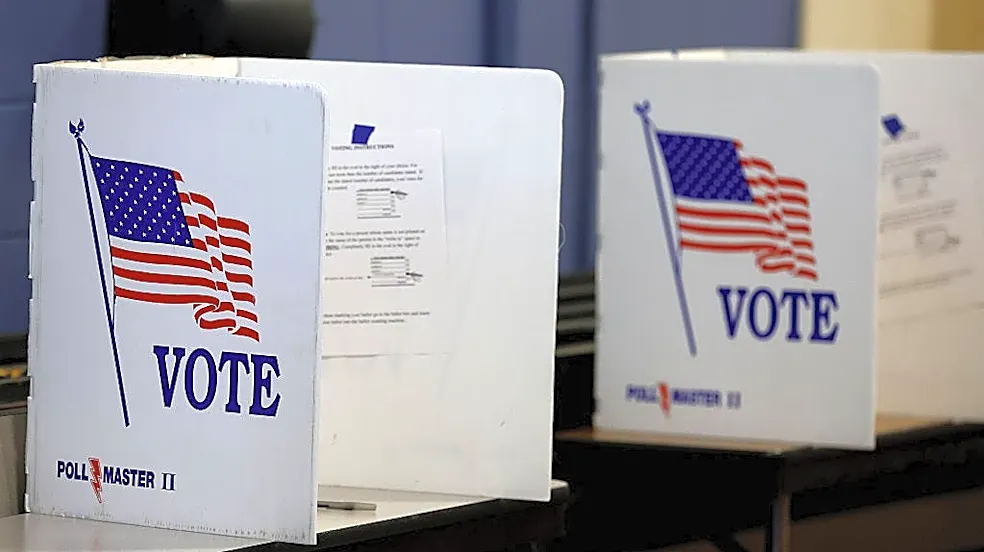

WASHINGTON – The Supreme Court said New Hampshire can fully enforce a ban on voters using student IDs as a form of identification at the polls next month, a win for the Republican Party's effort to tighten
voting procedures.
The court on Oct. 22 agreed to pause a lower court’s ruling that a student ID is among the forms of identification that may be considered by poll workers if the voter lacks an approved government-issued ID.
The state's U.S. Senate race is among the contests that will decide whether Republicans keep control of that chamber after the midterm elections. The Republican National Committee had backed the state's unsuccessful emergency appeal to the Supreme Court.
New Hampshire, controlled by Republicans, is among several states that have banned registered voters from using a student ID to verify their identity at the polls. A voting-rights group challenged the change as discrimination against younger voters and as an unconstitutional burden on their right to vote.
A federal judge in New Hampshire declined to block enforcement of the law as the case is litigated.
But the judge also said the new law had not changed the fact that a poll worker may accept or reject a student ID as a valid form of identification on a case-by-case basis through the state’s "safety-valve" provision.
New Hampshire Secretary of State David Scanlan asked the Supreme Court to intervene.

Scanlan, a Republican, said the judge's Oct. 2 order injected uncertainty into the state’s voting procedures less than three weeks before the election. He also said the judge wrongly interpreted the state's law.
Coalition for Open Democracy, the group challenging the law, said the judge correctly concluded that state officials failed to identify "any security or integrity concerns specific to student ID cards and why they are unique among other non-governmental forms of identification" that are allowed on a case-by-case basis.
The judge also found that the change had already kept one student from voting and could affect more because young voters may not have the government-issued IDs that are automatically accepted.
In the brief and unsigned opinion, the Supreme Court pointed to its previous rulings that federal courts should not alter rules on the eve of an election.
Justice Ketanji Brown Jackson was the only justice to publicly disagree with that decision. She said the federal judge had not changed the rules but only corrected the secretary of state's misinterpretation of them.
"I respectfully dissent because − even, and perhaps especially, when an election is looming − I would not disturb aclearly justifiable federal-court order issued to ensure that the public receives accurate information about a State'selectoral processes," she wrote.
This article originally appeared on USA TODAY: Supreme Court sides with GOP in New Hampshire student ID voting fight