


The autopsy of Erica Fox, the 55-year-old ocean swimmer and co-founder of the local open-water swimming group Kelp Krawlers, revealed that she was killed by a single ferocious shark bite that fractured her pelvis and severed a major artery, leading to her drowning off the Monterey coast in late December.
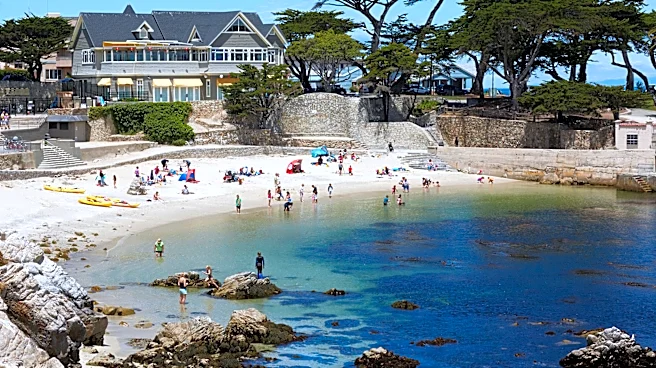
The report, which was obtained by the Monterey Herald, provides insight into what led to Fox's disappearance and the shark attack on Dec. 21 near Lovers Point in Pacific Grove.
The Santa Cruz County Sheriff-Coroner’s Office confirmed in the autopsy report that Fox died from “sharp and blunt force injuries and submersion in water due to a shark attack.”
The report did not reveal how large the shark bite was, but it did note that there appeared to
be a semicircle injury that extended from her right knee, both of her thighs and her abdomen, according to the Monterey Herald. Additionally, her wetsuit and swimsuit were torn in the area of her apparent injuries.
This follows accounts from witnesses that reported a large splash offshore and, moments later, what appeared to be a shark breaching with a human body in its mouth before disappearing beneath the waves.
“Based on witness statements, we believe a shark was involved,” said Pacific Grove Police Commander Brian Anderson in December of 2025.
Fox was reportedly returning with more than a dozen swimmers as part of a Kelp Krawlers swim when she was suddenly attacked and disappeared.
Authorities searched for Fox for more than 15 hours with an exhaustive multi-agency effort before ultimately suspending the operation on Dec. 23. Emergency crews were comprised of the Pacific Grove Police Department, Monterey Fire Department, and U.S. Coast Guard, which deployed boats, aircraft, drones, and divers, and covered more than 84 square nautical miles, with no trace of Fox.
Several days later, on Dec. 27, Fox's body was found about 25 miles away from Pacific Grove in Santa Cruz on Davenport Beach.
Fox's husband, Jean-Francois Vanreusal, told the Monterey Herald that she enjoyed swimming in the open ocean and was a seasoned swimmer, competing in the Alcatraz swim over 19 times.
“The only comfort I find is that Erica was every Sunday here, excited to go in the water,” Vanreusal told the Monterey Herald. “She really passed in the place she loved.”
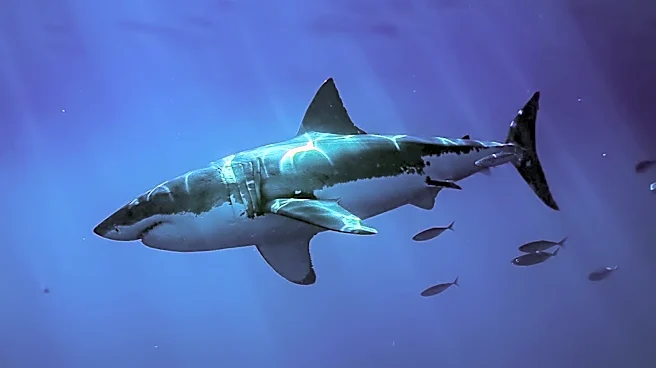
Fox's death has raised questions regarding the safety of the area, especially for those who swim inside Northern California’s infamous Red Triangle, one of the world’s most active great white shark zones.
Stretching from Bodega Bay to Big Sur, the Red Triangle’s cold, nutrient-rich waters attract seals and sea lions—prime prey for great white sharks. This concentration of marine mammals makes the region one of the most active shark habitats on Earth. Lovers Point, a favorite among swimmers and kayakers, sits squarely within this zone.
Chris Lowe, a professor of marine biology at California State University, Long Beach, and director of the university's Shark Lab, told USA TODAY in an interview that more shark sightings don't correlate to a greater risk to swimmers and surfers.
"Our data suggest no, but it depends on the species of shark. So far, juvenile white sharks seem to show no interest in people despite 100s of encounters each week," Lowe said.
Since 1990, the California Department of Fish and Wildlife has recorded ten fatalities related to shark attacks, with nine of them being attributed to white sharks in California waters.
USA TODAY reporters Roseann Cattani and Natalie Neysa Alund contributed to this article.
Noe Padilla is a Northern California Reporter for USA Today. Contact him at npadilla@usatodayco.com, follow him on X @1NoePadilla or on Bluesky @noepadilla.bsky.social. Sign up for the TODAY Californian newsletter or follow us on Facebook at TODAY Californian.
This article originally appeared on USA TODAY: Autopsy gives insight into how California woman died in shark attack