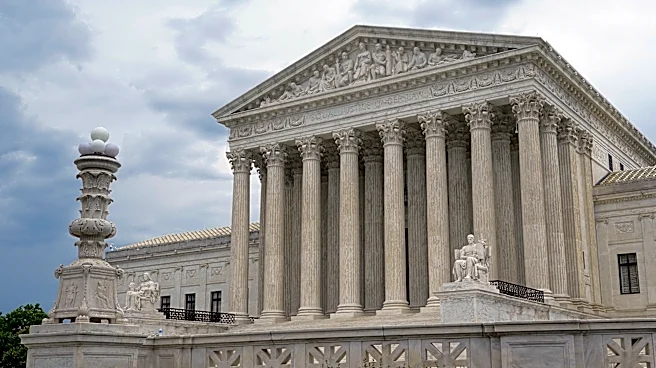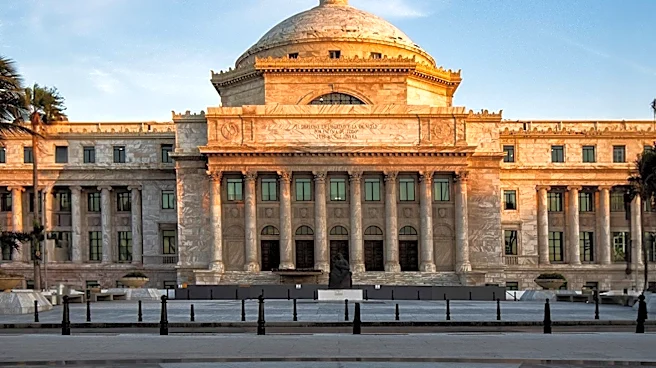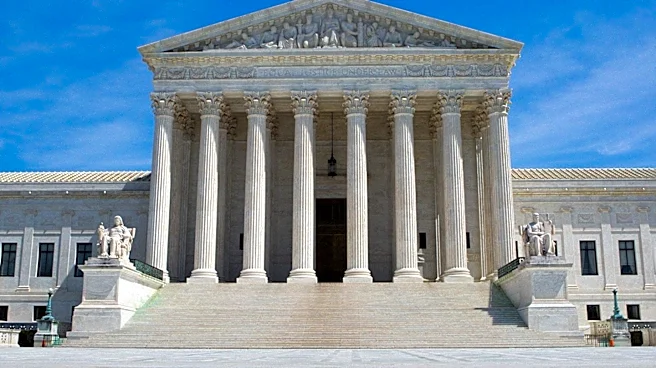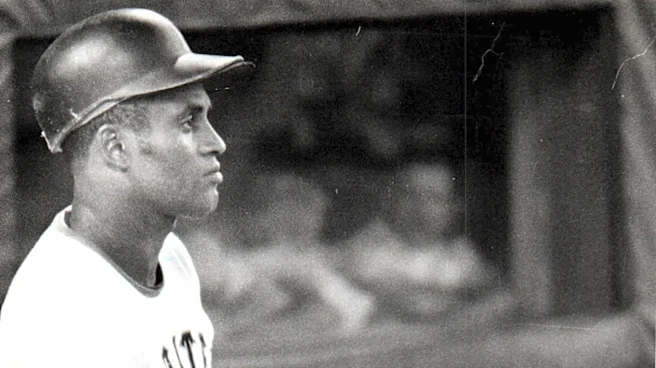

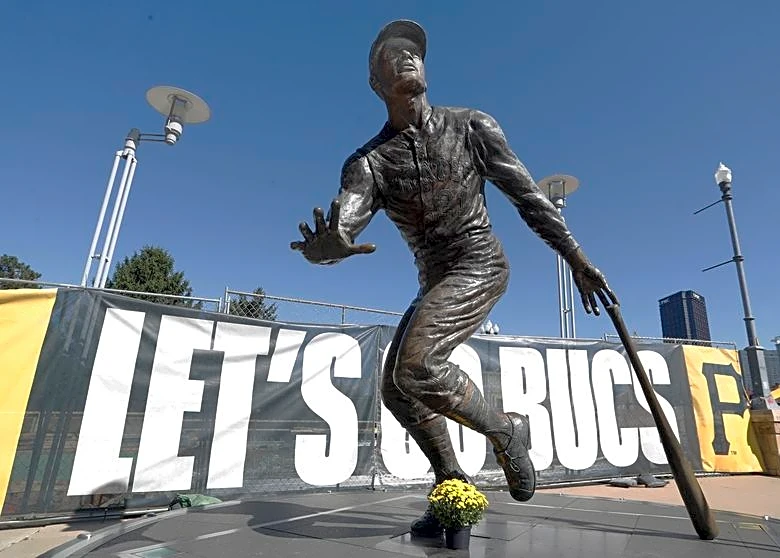




WASHINGTON – Supreme Court Chief Justice John Roberts always said he wanted to “call balls and strikes” in resolving cases, but the high court threw out a dispute about Puerto Rico putting the image of the late baseball legend Roberto Clemente on its license plates.
Clemente’s native Puerto Rico chose to recognize him in 2022 for the 50th anniversary of his death with commemorative license plates. The adornments included his image, his number 21 from playing the Pittsburgh Pirates and his 3,000 career hits.
But his children opposed the honor because license-plate fees of $21 and $5, which raised a combined $15 million, went to the U.S. territory rather their businesses promoting his legacy. The fees came during an economic downturn, at a time
when the territory was recovering from a bankruptcy.
The court declined to hear the case without explanation.
“These laws shocked the Clementes,” Clemente's children said in their filing, “particularly when many people in Puerto Rico were going through hard economic times.”
The children – Roberto Clemente Jr., Luis Roberto Clemente and Roberto Enrique Clemente – asked the Supreme Court to find that Puerto Rico took a valuable asset from the family in violation of the Fifth Amendment of the Constitution.
But lower courts rejected the family's claims. A U.S. District Court dismissed the children’s case by finding that Puerto Rico was immune from such lawsuits. The 1st U.S. Circuit Court of Appeals also ruled that the territory was immune and that the Clementes couldn’t sue under the Fifth Amendment for intangible property such as a trademark.

Lawyers for Puerto Rico Gov. Pedro Pierluisi-Urrutia argued that none of the issues the Clementes raised were worth hearing. The lower-court decisions followed the Supreme Court’s precedent and there was no conflict among the lower courts, the lawyers wrote.
"Neither question warrants this Court’s review," the lawyers wrote.

Clemente’s image remains valuable because he was among the best players to ever take the field. He died Dec. 31, 1972, in a plane crash in a humanitarian mission to Nicaragua after an earthquake.
He was a two-time World Series champion – the second time as most-valuable player in 1971 – and a 15-time all-star outfielder for the Pittsburgh Pirates.
Clemente’s career batting average during 18 years was .317 with 3,000 hits, 1,305 runs batted in and 240 home runs. The National Baseball Hall of Fame inducted him posthumously in 1973, after waiving a five-year waiting period.

Roberts famously positioned himself as an umpire in legal disputes, ready to call balls and strikes but not to take a position on offense or defense.
“I will be open to the considered views of my colleagues on the bench, and I will decide every case based on the record, according to the rule of law, without fear or favor, to the best of my ability, and I will remember that it’s my job to call balls and strikes, and not to pitch or bat,” Roberts told senators at his 2005 confirmation hearing.
This article originally appeared on USA TODAY: Supreme Court won't 'call balls and strikes' in Roberto Clemente case