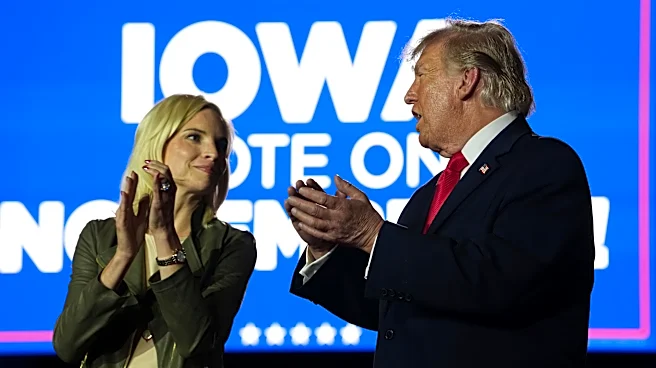




In part because he is such a totalizing personality, our landscape of political opinion produces few nuanced views of President Donald Trump. Right-wing commentators have praised him as a divinely appointed shield for the righteous, and critics have condemned him as the very incarnation of malice and corruption.
In the aftermath of the most monumental political defeat Trump and the GOP have suffered since 2020, Republicans in particular need to take on a certain nuance toward Trump that acknowledges the reasons for his rise in the GOP without recommitting ourselves to the sins of Trumpism.
One of the more useful assessments of the president has been commentator Victor Davis Hanson’s tragic-hero persona. In this telling, Trump is a profoundly flawed
figure uniquely situated to accomplish some profoundly necessary things.
However, like the Ethan Edwards character at the end of the classic John Wayne epic "The Searchers," Trump is not destined to be celebrated. The future does not include him.
Republicans must plan for life after Trump

Whether Trump precisely fits this archetype is debatable, but Hanson’s metaphor serves a useful purpose in framing the choice that lies before the GOP and the conservative movement following the decimation of the midterms and the cratering popularity of the president.
“Tragic heroes ... are not intrinsically noble,” Hanson wrote in National Review. “Much less are they likable.”
Of course, many Republicans not only still like but love the president, and they believe there is genuine nobility in Trump. He would not have been the dominant political figure of the past 10 years were it not so.
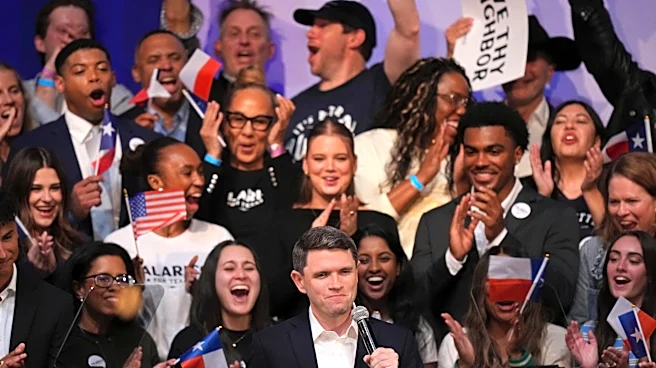
Yet the relationship between Trump and the Republican Party as a whole has always been inwardly fraught. Long before the defections of erstwhile champions such as former Fox News host Tucker Carlson and former Rep. Marjorie Taylor Greene of Georgia over the Epstein files and the war in Iran, before many Trump supporters likely swung over to Democrats Adam Hamilton in Kansas and James Talarico in Texas, the conscience of more traditional Republicans and conservatives was challenged by the president in areas that go well beyond policy.
That has produced a small but visible faction of Never Trump Republicans and former Republicans who have been among the president’s most resilient critics since before his first term. Now the dynamic matters more as its numbers include the greater part of the GOP.
Many Republicans had doubts about Trump all along
As we reach the nadir of his political fortunes, let us remember: Trump never earned the support of a majority of Republican voters in 2016. His 46% vote share was weaker than that of any GOP presidential nominee in the modern era.
In 2017, only 43% of Republicans rated him positively on honesty, knowledge and temperament – a figure notably similar to his share of primary support.
When Trump returned to office in January 2025, 55% of Republicans and Republican-leaning independents believed him to be ethical – a high figure for him. A year later, that had fallen to 42%. The floor on Republican assessments of Trump’s character, which was never high, has been sinking.
So why did most of us Republicans vote for Trump in three general elections, and why have we overwhelmingly approved of his policy performance for most of his time in office?
Even now, roughly 70% to 75% of Republicans approve of the president. That is relatively low, but it is still a large majority.
The reason is, in the eyes of many Republicans, previous Democratic and Republican administrations had delivered American society to the brink of collapse in many ways.
On immigration, an interminable influx of illegal crossings threatened to drain resources and alter the demographic composition of the country for good. That flow has been largely halted through the political will of the Trump administration.
Whatever the shortcomings of the immigration enforcement inside the country that followed, the immediate problem of the porous border has largely been addressed.
The diversity, equity and inclusion complex seemed a permanent, ideological and oppressive fixture of American institutional life to most Republicans and to many Democrats. It is now largely dismantled.
For years, most Republicans have viewed a nuclear Iran as a major threat to American security. As unpopular as the war may be, it reflects Trump doing what many Republicans felt needed to be done to ensure Iran could no longer pose that threat to America or Israel.
Trump had the courage of others' convictions
In Hanson’s metaphor, such accomplishments are born of the boldness of the tragic hero in the face of a civilized order too genteel and sclerotic to protect itself. In other words, for Republicans, the vice of Trump’s recklessness sits right next to the virtue of his boldness.
Such, as Hanson writes, is the “ancient role of the crude, would-be savior who scares even those who would invite him in to solve intractable problems that their own elite leadership could not.”
There are long debates in the GOP about the merits of Trump’s policies, and about whether the scorched-earth style of leadership he and the party under him employed was necessary to win those victories. We will agree and disagree with each other, hopefully in good faith, as the legacy of the Trump era becomes clearer with time.
What we cannot disagree about is what the Republican Party of Abraham Lincoln has always known, even when the Republican Party of Donald Trump has forgotten it: “A house divided against itself cannot stand.”
The house Lincoln had in mind was not the Republican Party, but the Union. The preservation of the Union in a time of greater division than ours was the first great priority of the GOP, and Lincoln begged north and south to remember that “we are not enemies, but friends.”
Post-Trump, the GOP must become a uniting force
If we are still the party of Lincoln, and if this is still the conservative movement of Ronald Reagan, then the unity of the country must matter to us. The leadership we set forth in the next presidential cycle and beyond must vie for the moral high ground and make the case for the GOP as the steward of civic comity in America, in a way that is credible not only to the American people, but to ourselves.

The Democratic Party, with much friction and turmoil, has undertaken its own internal debate along these lines, wrestling with the legacy of “wokeism,” cancel culture, and the moral and policy failings that rightly cost it the trust of much of the country.
Its victory in the midterms was not just a reflection of the decline of Trump’s popularity, but of the fact that Democrats learned their lessons. They ran good candidates who built big tents, not ideological scolds who scared voters. The Democratic Party has recovered.
Now Republicans must choose another way. We can reclaim the mantle of Abraham Lincoln, Dwight Eisenhower, William F. Buckley and Ronald Reagan without disavowing whatever Donald Trump might have done right.
America is a city on a hill, but it can only be this if Republicans lead the way in ensuring that, as Lincoln said, Americans are “again touched, as surely they will be, by the better angels of our nature.” And we can only do that by being touched by our own.
John Wood Jr. is a former Republican nominee for Congress, former national ambassador for Braver Angels, host of The KINGdom Project on KBLA 1580 in Los Angeles and founder of The OmniAmerican Society. He lives in Los Angeles with his wife and three children.
This article originally appeared on USA TODAY: Trump served his purpose. Now the GOP needs a new direction | Opinion