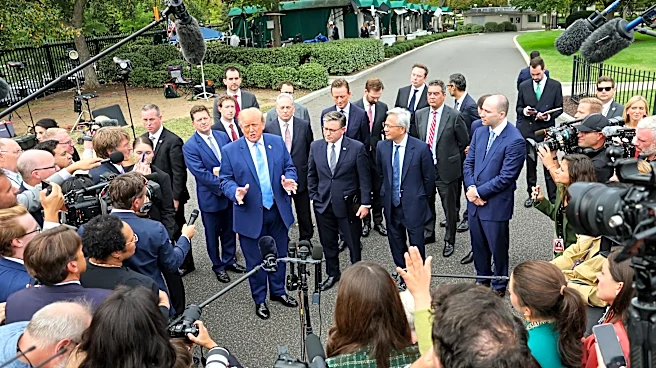





On Sept. 26 in downtown Washington, DC, hundreds gathered for Data After Dark: A Pro-Data Center Party.
Among them were protesters, three of whom I saw rush the stage hours later to deliver largely inaudible rants.
One thanked the crowd for “using all of our water,” according to a video
shot from a better vantage point than my own. She then flipped the audience double birds. One attendee reportedly advised her to "go on a diet."Shouts of “USA! USA!” and booing drowned out the protesters.
Organizer Jonas Du, a writer for Pirate Wires, first conceived of the event as a house party. Public interest was overwhelming. So the event, cohosted by R Street Institute fellow Ed Tarnowski and Young Voices CEO Casey Given, moved to PubKey, a “bitcoin bar” in Penn
Quarter. By the time the doors opened at 8:30 p.m., more than 1,000 people had RSVP'd on Partiful.
Why did I go to a pro-data center party?

I went because I support building data centers, and because I was curious what a pro-data center party would look like. Would it be held inside a data center? (Sadly, no, though one attendee reportedly said his "mom and dad met at a data center," a touching tribute to the power of compute.)
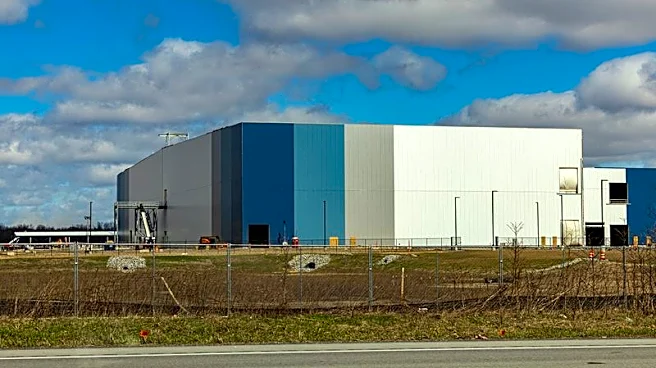
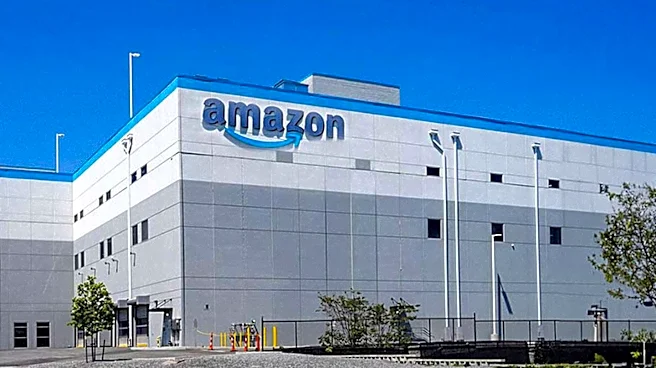
Data centers are buildings that house information technology equipment such as servers and routers. Those servers host websites and apps, run cloud services such as email and online banking, and power messaging apps like WhatsApp and Facebook Messenger. If you've ever Googled something, a data center found you the answer.
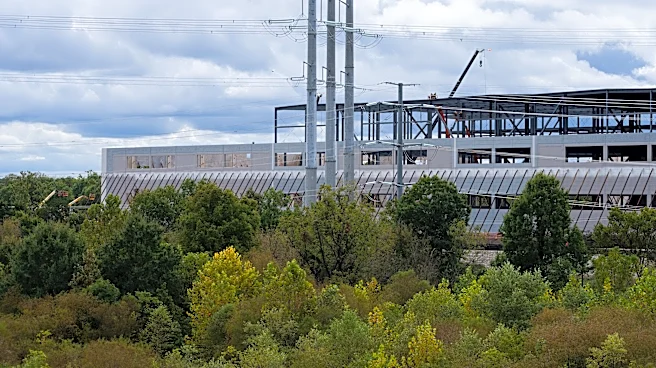
There are more than 3,000 operational data centers in the United States. Most skeptics don't object to data centers themselves, just to building new, bigger ones. The average data center covers 100,000 square feet; hyperscale centers can sprawl across 10 million.
Artificial intelligence is driving the boom. Critics point to water use, a problem that closed-loop cooling, already in some Oracle facilities, goes a long way toward solving. About 45% of U.S. data centers use it, and Microsoft and OpenAI have signaled they're likely to follow.
Critics also cite strained power grids and noise. And large data centers tend to be windowless and plain – that is to say, not especially attractive.
The right response to these concerns is innovation.
All technologies come with corresponding problems. Around the turn of the 20th century, one American cartoonist depicted electricity as an "Unrestrained Demon." In the 1920s, many city dwellers condemned motorists for trampling the rights of pedestrians. In neither case did America abandon the technology. It solved for the public's fears instead.
An America without cars or electricity might appeal to some, but it would almost certainly be poorer and weaker on the world stage.
Halting data center construction could do subtler damage, especially with the United States racing China on AI. China is investing billions in data centers. Chinese state media and individuals linked to the Chinese Communist Party have ties to anti-data center activism in the United States, and Chinese-origin accounts are reportedly stoking anti-data center sentiment on American social media.
Data centers can also be a boon to the towns that host them. Thanks to tax revenue from a Meta data center, some teachers in one Louisiana school district are receiving bonuses of more than $50,000 each.
Plenty of journalists showed up at the party, many of them, I suspect, lured by the promise of multiple open bars. There were themed cocktails: the "SMR-tini," the "Closed Loop Spritz" and the "Loudoun County Iced Tea." There was a generative AI photo booth, a live DJ and a jazz trio in the bar's basement speakeasy. A poster read "Virginia is for Servers," a play on the state's tourism slogan.
Also in attendance were think tank staffers, engineers, attorneys, White House officials and defense industry workers. The Washington Sun spotted "the owner of a bitcoin mining operation" and "the parliamentarian of Rhode Island's Republican Party."
Still unsure about AI? You might want to attend this kind of party
Most attendees I spoke with had heard about the party on X. Some came just to observe. Nearly all, it seemed, knew they were on the 20% side of an 80-20 issue and were thrilled to mingle with people who agreed with them. The mood was optimistic, even defiant.
As for the 80%: An Instagram post about the party, liked more than 30,000 times, drew hundreds of snide comments. The top one, with more than 8,000 likes, asked: "These people just want the world to end, no?"
Another popular commenter said that if every attendee died in a freak meteor strike, they'd "prob(ably) smile."
A recent New York Times/Siena poll found that 61% of likely voters oppose building data centers to support artificial intelligence. Opposition was highest among voters under 30 – the age group that made up a large share, if not most, of the partygoers.
Partygoers knew exactly how the public sees them. One attendee told me, deadpan, that yes, his goal was to build both the Terminator and HAL from "2001: A Space Odyssey."
Detractors on X were more measured. They cast the attendees as nerds (fair enough), out-of-touch Beltway insiders or smug Zoomers, none of whom did anything to turn the tide of public opinion.
A single party is unlikely to solve a nationwide PR problem. Nor, as far as I can tell, was that ever the goal. Remember, Du originally planned to host it in his house.
There's value in socializing with people who share your views, especially when those views are being attacked and when they bear directly on policy.
Later in the evening, Du argued that leadership on AI can't happen only on X; it has to happen at in-person events like this one. "This is a competition," he said, "between people who fear the potential of the future and people who believe in the potential of the future."
Besides, issue-themed parties are hardly foreign to Washington. Neither are corporate sponsors (Gizmodo's attempt to paint the party's corporate ties as untoward notwithstanding). On the day of the party, Du publicly announced the party's sponsors, which included the Manhattan Institute, the Bitcoin Policy Institute and Strata, a modular data center start-up.
Toasts began a little after 10 p.m. Strata founder and CEO David Meyer urged the crowd to "hear and respond to both enthusiasm and reasonable concerns."
Journalist Jasmine Sun stressed public education. People "understand a car factory, they understand a chip factory, they understand solar panels," she told the party. "People do not understand yet what AI is or why it's happening to them."
Co-host Tarnowski made the case for techno-optimism. "We need to defeat this pessimism plaguing Gen Z," he said. "And here tonight, we are going to be optimists. … We can make the world a much, much better place for our kids and for the future."
Still skeptical of a pro-data center party? You may soon have the opportunity to attend one for yourself.
Cohost Given told the crowd that he hopes to "take this party on the road" in 2027: “New York City, San Francisco, Miami, Austin, LA. We want to help take it off the ground all across the country. So let’s make this a start of a movement.”
I'd recommend going, even if you're squarely on the other side (just don't storm the stage). You may find that data center supporters are sincere in their advocacy and bear the public no ill will.
Or you might just have fun. Du, Tarnowski and Given threw a good party. My one complaint: the conspicuous lack of dancing. The main dance floor was nearly empty. In the speakeasy, one man seemed determined to make up for it all by himself. He was very good.

Natalie Sandoval is an opinion fellow with the Intercollegiate Studies Institute. She graduated from Columbia University in 2024 with a degree in English. Prior to this role, she worked as an opinion columnist at the Daily Caller, where she focused on politics and cultural commentary.
This article originally appeared on USA TODAY: I went to a data center party because I know you're curious | Opinion