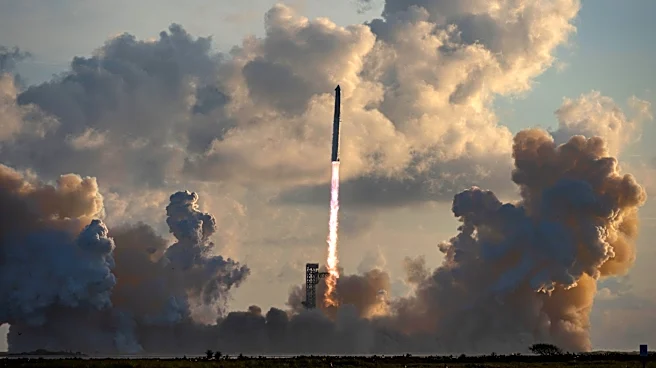









Every time SpaceX's massive Starship rocket has gotten off the ground in 2026, it was on a flight that either began or ended in a significant milestone.
It started in May, when tech mogul Elon Musk's commercial spaceflight company introduced an upgraded Starship prototype that is intended to be the design that becomes operational. Then in July, the upper section of the rocket landed intact in the Indian Ocean, allowing SpaceX for the first time to recover a Starship vehicle that had flown in suborbital space.
Most recently at the end of September, SpaceX's most ambitious flight test to date from South Texas saw Starship climb high enough to reach (and fly in) orbit for the very first time.
Now, SpaceX is looking to pull off yet another major first
with the world's largest rocket during its next flight test, announced for Friday, Nov. 13.
The objective is not only to have Starship's booster return to the launch site – as SpaceX has pulled off three times so far – but also the upper stage of the rocket that flies in space. The feat, which SpaceX has never before attempted, involves catching the vehicle at a giant tower equipped with powerful metal arms.
Here's what to know about SpaceX's next Starship launch, including when it is and what to expect.
SpaceX announces Starship flight 15. When is it?
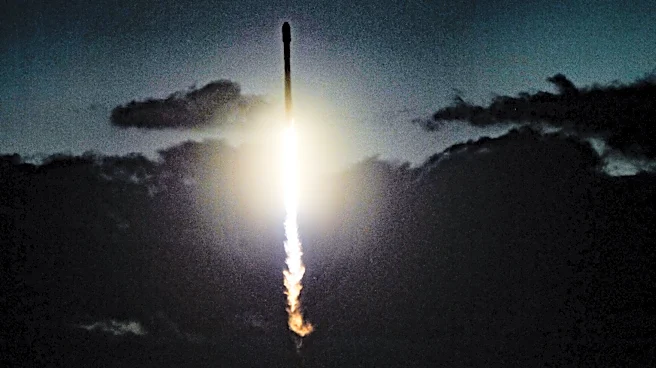
SpaceX is working toward a Friday, Nov. 13 launch of its massive Starship rocket, the company announced. The launch window opens from 5:45 to 7 p.m. ET, with the rocket getting off the ground at SpaceX's Starbase company town and headquarters in Texas near the U.S.-Mexico border.
Because the mission would be Starship's 15th flight test since April 2023, SpaceX refers to it as "flight 15."
SpaceX to attempt 1st Starship dual catch
SpaceX is planning for the upper stage of its Starship rocket to reach orbit for the second time in a row.
Once the lower stage booster, known as Super Heavy completes its job and separates from the upper stage, SpaceX then expects that vehicle to reach an altitude of more than 170 miles high. While Starship has the potential to circle Earth as many as 14 times during a mission stretching for 22 hours, SpaceX teams have the option to carry out an early water landing at a pre-determined location if something goes wrong.
The upper stage will also help deploy 26 more of SpaceX's next-generation Starlink internet satellites before SpaceX attempts to return it to the launch site for the first time ever. As the upper stage makes a controlled descent through Earth's atmosphere, a giant tower equipped with mechanical arms known as "chopsticks" will "catch" it, allowing for SpaceX to potentially reuse the vehicle on a future flight.
SpaceX's announcement, made Saturday, Nov. 7 in a post on social media site X, included a computer-generated video illustrating what the maneuver could look like if successful.
Starship is preparing for catch
— SpaceX (@SpaceX) November 7, 2026
Flight 15 is targeting to launch as early as Friday, November 13, pending regulatory approval → https://t.co/K5XRci6bnw pic.twitter.com/WS2xGLjVsx
If that maneuver sounds familiar, it's because SpaceX has already caught its Super Heavy booster back at the launch site three times since October 2024. SpaceX will also attempt to catch the booster at the launch site for the first time since March 2025.
"If successful, this will mark the first full recovery of an orbital launch system and a breakthrough moment in making Starship a reliable, rapidly reusable rocket," SpaceX said on its website.
What is Starship? World's largest rocket bound for moon, Mars
SpaceX is developing Starship to be a fully reusable transportation system, meaning both the rocket and vehicle can return to the ground for additional missions.
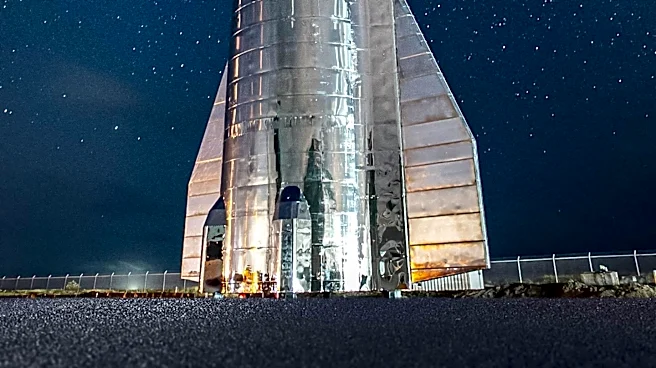
Reaching 407 feet tall when fully stacked, Starship is regarded as the largest and most powerful launch vehicle ever developed. The rocket is composed of both the 236-foot lower stage booster known as Super Heavy that provides the initial burst of thrust at liftoff, and a 171-foot upper stage that flies in orbit.
Musk's vision has long been for Starship to be an interplanetary vehicle that takes humans to Mars, where they can establish a self-sustaining colony. While the world's richest man has indicated that SpaceX will focus on building a lunar city first, the company has already announced a human-led expedition to Mars' orbit – though it has not set a target date.
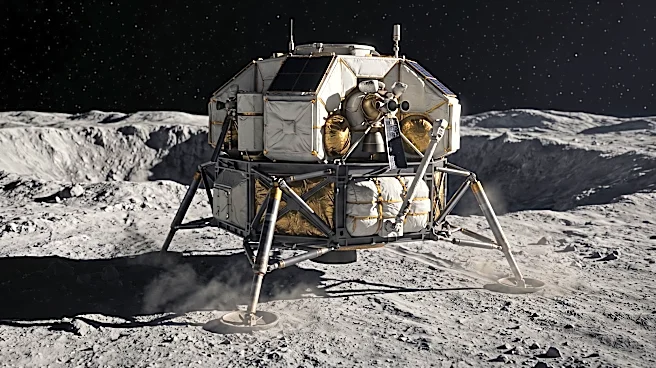
SpaceX is also under contract with NASA to develop a lunar lander configuration of its Starship, known as the Human Landing System, to ferry astronauts to the moon under the U.S. space agency's Artemis program.
Starship reaches orbit in major milestone
Starship's most recent test flight on Sept. 28 marked the first time the upper stage of the rocket reached orbit in more than three years of testing.
Shortly after liftoff, the Super Heavy booster separated from the upper section of the rocket for a water landing in the Gulf of Mexico, renamed in the United States under executive order as the Gulf of America.
The upper-stage, designated as Ship 41, then went on to fly in orbit during a mission that ended after about three hours with a splashdown in the Pacific Ocean, SpaceX wrote in a mission recap. Landing in a nose-up position, the vehicle – which SpaceX had no plans of recovering – tipped onto its side and ignited in a large fireball.
During the mission, Starship also deployed 26 next-generation Starlink satellites one by one at an altitude of about 161 miles high. They were expected to raise their orbits and begin serving customers weeks after deployment, SpaceX said.
Eric Lagatta is the Space Connect reporter for the USA TODAY Network. Reach him at elagatta@usatodayco.com
This article originally appeared on USA TODAY: SpaceX aims to catch Starship for 1st time on flight 15. Here's when