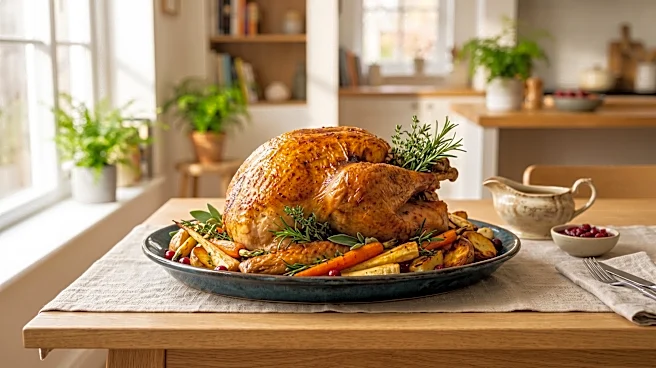






It’s time to talk turkey. And when we talk turkey, we talk turkey brine.
Before my job editing here at USA TODAY Food, I was for many years a food writer and editor at The Journal News and lohud.com in Westchester and at The Record and NorthJersey.com in Bergen County, New Jersey. I was also an OG food blogger — I launched sourcherryfarm.com
in 2006; it has a rich archive, but I haven't updated it in years.Food has long been a passion of mine — and my approach to brining has evolved over the years.
What has also evolved is the food world's attitude toward brining. Proponents (and there seem to be fewer and fewer of them every year) believe that plunging a bird into salted water makes the meat more moist and somehow solves the problem of cooking
dark and light meat simultaneously. Opponents argue that it is it a big hassle and it does little to make the turkey taste better — and may in fact make it soggy.
Nevertheless, if you're intent on brining, I have experience with three different methods, and I have advice for which one will work best for you.
And if you don’t want to try any of these? Get yourself a Kosher turkey. It comes brined already.
Wet brining your Thanksgiving turkey

A recipe for wet brine was among the first I posted on my food blog back in the day. The recipe — it’s more of a ratio, really — is ⅔ cup salt and ⅓ cup sugar to 2 quarts of water. This always works and is flexible enough to allow for innovation. Once I discovered it, I made the most flavorful turkey of my life. Up until then.
I have a brining bucket, a food-safe plastic tub with a lid, and I measure the salt and sugar into the bottom of it, then stick it under the faucet.
As the water fills the bucket, I whisk — vigorously. That way the water gets double the amount of agitation, helping the salt and sugar to dissolve quickly. Many recipes recommend heating the water to dissolve the salt and sugar. But then you have to let it cool before you can pour it over your turkey — or else it’ll cook it. I don’t have time for that.
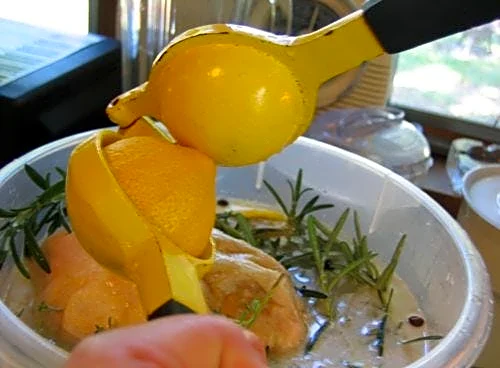
After the salt and sugar have dissolved, add any other flavorings to the water. I like zesting lemon into it, and squeezing in the juice. Other suggestions: juniper berries, red pepper flakes, black peppercorns, rosemary, thyme, oranges, honey, bourbon, maple — whatever suits your pleasure. I put half the herbs in the bottom of the brining bucket, then put the bird on top, then the other half on top and squeeze a bit more lemon juice on it all.
Weight with a plate, cover and wait. You will have truly delicious turkey. Every single time.
The wet brine recipe: ⅔ cup salt and ⅓ cup sugar to each 2 quarts of water.
The bottom line: A bucket big enough to hold your turkey is a pain to store safely. Unless you have the room (an extra fridge, maybe?), move along to the next two methods.
Dry brining your Thanksgiving turkey
The year I discovered The Judy Bird, I had the most flavorful turkey of my life. Up until then.
The recipe, which calls for dry brining, comes from the late Judy Rodgers of The Zuni Cafe in San Francisco. The restaurant is known for its incredible roast chicken, and the technique that Rodgers came up with (salting the birds a few days before roasting them) is easily applied to turkey. Basically instead submering the bird into a bucket of water, you brine with salt alone.
Use 1 tablespoon for each 5 pounds, and start 2 to 3 days before you cook it. Salt inside and out. You can add herbs or spices to the mix. The original recipe calls for bay leaves.
Put the turkey in a big sealable plastic bag and refrigerate for 3 days. Every now and again, check on the turkey and massage it. The night before Thanksgiving, take the bag off and let the turkey sit uncovered on a sheet pan or platter in the refrigerator. Before cooking, let it sit on the counter for about an hour to come to room temperature. Slip some herbs under the skin if you like (I would), and then roast as usual. I love dry-brining, and do it with my chicken all year round (but in a simpler manner, as you’ll see below).
Russ Parsons, who originally brought the Judy Bird to light with his article in the Los Angeles Times, put it this way: “Dry-brined turkey is, if anything, even more remarkable. While turkey sometimes can be dry and bland, after dry-brining, the meat is moist and flavorful. And in an improvement over wet-brining (which I enthusiastically practiced for several years), the texture of the meat stays firm and muscular, with none of the sponginess that can result from added moisture.”
The dry brining recipe: 1 tablespoon for each 5 pounds, add herb and spices that appeal to you.
The bottom line: If you're new to dry brining and need step-by-step instructions, this is the method for you. Be prepared, though: it takes 3 days.
Just salt the darn bird
Today, my brining method is much simpler. All I do is oversalt.
Seriously. That’s all you need to do. Use more salt than you think you should, and you’ll get a delicious turkey. (Or chicken. All these methods work for chicken, too.)
I pick up my turkey from the farmers' market on Wednesday morning. I salt it. A lot. Pour a mountain of salt into the palm of one hand and then use the other to sprinkle salt over every inch of the bird. Inside, too.
Then I put it in the fridge on a sheet pan fitted with a wire rack. Leave it uncovered.
On Thursday morning, I wipe off the excess salt — and some of the moisture on the skin that the salt has pulled out of the meat. I season with orange zest and juice.
If I’m feeling fancy, I’ll make an herb butter — thyme, rosemary and sage put through the mini processor and then blended with room temperature butter — and slip some of it under the skin of the breast and thigh. If I’m not, I throw the herbs and a few lemons into the cavity of the bird. I roast as usual.
After years and years of cooking Thanksgiving turkey — this was the first time I didn’t use a recipe.
Now, I never do. And every year, I say it's the most flavorful turkey of my life. Up til then.
The 'Salt the Darn Bird' recipe: Salt. Lots of salt.
The bottom line: If you're a confident cook, trust yourself and just salt the darn bird.
This article originally appeared on USA TODAY: I've been brining turkeys for years. My advice on different methods