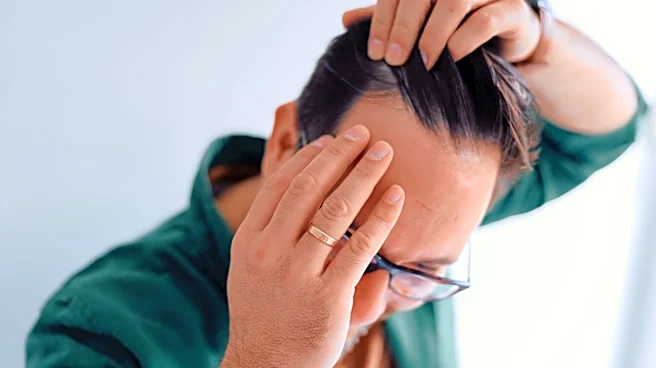







Few physical changes are as distressing as noticing your hairline receding, your part widening or a once-full head of hair becoming noticeably thinner.
After all, our hair is often closely tied to identity, self-image and confidence, so losing it can take an emotional toll. Research has found that hair loss can negatively affect self-esteem, social interactions and overall quality of life, making even gradual thinning much more than a cosmetic concern.
While many of us associate hair loss with aging, it can occur at almost any age and for many reasons. "Hair loss" also isn't a single condition. There are several different types, each with its own patterns and treatment options.
Here's what hair loss is medically defined as, why it happens and what you
can do to prevent it, slow it or even reverse it.
What is alopecia?
Alopecia is "the medical term for hair loss," notes Dr. Jason Nagata, a practicing physician at UCSF Benioff Children's Hospital in San Francisco. It can affect the scalp, eyebrows, eyelashes or other parts of the body, can be temporary or permanent and may develop slowly over many years or appear quickly over the course of months or weeks.
The most common type of alopecia is androgenetic alopecia, better known as male- or female-pattern baldness. "By the time we hit 50, about half of men and around a quarter of women have dealt with some version of it," says Dr. Ilan Shapiro, medical director of health education and wellness and a physician at AltaMed Health Services in California.
Another well-known form of hair loss is alopecia areata, an autoimmune condition that causes patchy hair loss and can sometimes progress to complete scalp or body hair loss. "This type affects nearly 7 million people in the United States," says Nagata, "with about one in five cases occurring in children."
Other forms of alopecia include telogen effluvium, traction alopecia and cicatricial alopecia, also known as scarring alopecia.
Symptoms vary depending on the type of hair loss but commonly include gradual thinning, a widening part, a receding hairline, excessive shedding, round bald patches or the loss of eyebrows and eyelashes.
What causes hair loss?
The cause depends on the type of alopecia, "but most of the time, it's genetics," says Shapiro. "That's the pattern baldness we see in families."
In such inherited pattern hair loss, he explains, genetics and dihydrotestosterone (DHT), a hormone derived from testosterone, gradually shrink hair follicles as we age. As follicles become smaller, they produce finer, shorter hairs until they eventually stop producing visible hair altogether.
In alopecia areata, a person's own immune system mistakenly targets healthy hair follicles, though Nagata says that researchers are still working to understand exactly why this occurs.
In the case of telogen effluvium, hair loss often follows a major physical or emotional stressor that can cause an unusually large number of hairs to prematurely enter the resting (telogen) phase of the hair growth cycle before shedding several months later, often leading to sudden, diffuse thinning across the scalp rather than isolated bald patches. Common triggers of this type of hair loss include childbirth, surgery, severe illness, high fever and significant emotional stress.
Other possible causes of hair loss that Shapiro points to include nutritional deficiencies, such as low iron, zinc, protein or vitamin D, as well as thyroid disorders, polyendocrine metabolic ovarian syndrome, or PMOS (formerly called polycystic ovary syndrome or PCOS), smoking, and certain medications. These include some chemotherapy drugs, blood thinners, antidepressants, acne medications and blood pressure medications.
Behavioral and styling habits can also contribute. "Certain hairstyles that pull tightly on the hair such as tight braids, ponytails or extensions can also lead to hair loss over time," adds Nagata. "This is known as traction alopecia."
Is alopecia treatable? Is alopecia preventable?
Many forms of alopecia can be treated, though results usually depend on the underlying cause and how early treatment begins.
Two of the most established treatments for inherited hair loss are topical or oral minoxidil and oral finasteride, which "together can help slow hair loss and sometimes promote regrowth," says Nagata. "Other forms of alopecia may be treated with steroid injections, antifungal treatments or newer immune-targeting medications for severe alopecia areata." For those struggling with the latter type of hair loss, "newer medications called JAK inhibitors are changing the game," says Shapiro.
Depending on the diagnosis, Nagata says some patients may also be candidates for hair transplant surgery. This typically involves either transplanting individual hair follicles from denser areas of the scalp into thinning areas (follicular unit extraction, or FUE), or removing a narrow strip of scalp from the back of the head so follicles can be separated and transplanted individually, known as follicular unit transplantation, or FUT.
While not every type of hair loss can be prevented, healthy lifestyle habits may also reduce the risk. Eating a balanced diet with adequate protein and key nutrients, avoiding smoking, limiting excessive heat styling and harsh chemical treatments and managing chronic stress may all help support healthy hair growth.
It's worth seeing a healthcare provider or dermatologist as soon as you notice meaningful thinning or loss, "and if you're losing hair in patches, shedding suddenly or seeing redness or flaking on your scalp," advises Shapiro. "Same thing if hair loss shows up alongside fatigue, weight changes or skin issues as that's usually a sign something else is going on."
This article originally appeared on USA TODAY: Why you're losing hair, and what can actually help