








Pittsburgh is one of the top cities for owning a furry companion, and with Halloween fast approaching, it's important to keep your pet's safety a top priority. Halloween can bring extra risks for dogs and cats as trick-or-treaters, candy, costumes and unfamiliar decorations change the normal routine at home.
Dog trainer Shannon Walker, CEO and founder of Northwest Battle Buddies, said pet owners can take steps before festivities begin to help keep animals safe and comfortable. Walker, who foundedMan's Best Friend Dog Training in 1997, recommends creating a quiet space for pets, securing Halloween candy, choosing costumes carefully and keeping animals indoors.
Northwest Battle Buddies is a nonprofit that provides service dogs to combat veterans
with post-traumatic stress disorder.
Give pets a quiet place away from Halloween activity
Before trick-or-treating begins, Walker recommends putting pets in a quiet room away from doorbells, visitors and other activity.
A dog that is already crate-trained can use its crate as a retreat. Owners can provide favorite toys, fresh water and treats if appropriate. Soft music also can help mask noise from outside.
Introducing pets to Halloween decorations gradually can give them time to investigate unfamiliar objects on their own instead of being pushed toward something that frightens them.
Keep Halloween candy away from pets
Candy and sweets should be stored where pets cannot reach them. Chocolate, gum and products containing xylitol, a sugar substitute, can be toxic to animals.
Children should not share their Halloween candy with pets. Walker recommends creating a separate area where children can sort and eat their candy without leaving it within reach of animals.
Pet owners also can keep the ASPCA Animal Poison Control Center number, 888-426-4435, readily available.
Signs that a dog may have swallowed something causing an obstruction or perforation can include vomiting, loss of appetite, lethargy, abdominal pain and changes in bowel movements. Walker advises seeking veterinary care immediately if those symptoms occur.
Symptoms associated with pancreatitis can include vomiting, diarrhea, loss of appetite, lethargy, abdominal pain, fever, dehydration, weakness and a hunched posture.
Vomiting, diarrhea that may contain blood or mucus, loss of appetite, lethargy, dehydration and high fever can be signs of Salmonella or E. coli infection.
Watch candles, cobwebs and small decorations
Halloween decorations also can create hazards for pets.
An excited dog or curious cat could knock over a lit candle. Walker recommends using electric or battery-operated candles as an alternative to open flames.
Rubber and plastic Halloween decorations, including spiders, skeletons and skulls, may contain small pieces that pets could chew or swallow.
Fake cobwebs can pose entanglement and ingestion risks. Swallowed synthetic fibers can cause gastrointestinal blockages that may require veterinary treatment.
Choose pet costumes for comfort, not appearance
Before dressing up a dog or cat, owners should consider the animal's temperament and tolerance for clothing.
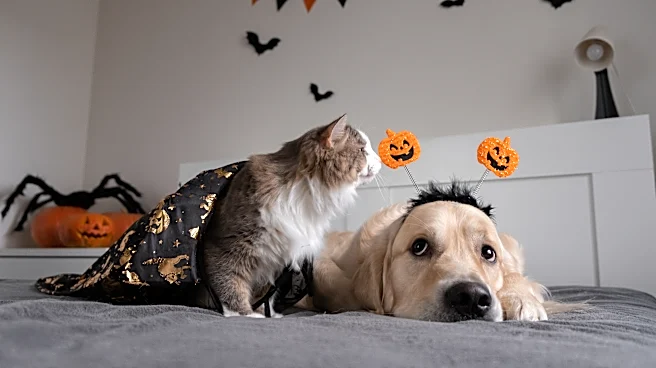
Simple, lightweight options such as capes or bandanas may be less restrictive than full-body costumes. A costume should allow an animal to move normally and should not contain accessories that could snag or irritate its skin.
Masks and elaborate headpieces should be avoided because they can obstruct a pet's vision or interfere with its senses.
A tucked tail, downcast ears, excessive panting or attempts to shake off a costume can indicate discomfort. If those behaviors appear, Walker recommends removing the costume rather than forcing the pet to continue wearing it.
Keep dogs and cats indoors
Pets should be brought indoors before Halloween activity intensifies.
Doorbells, trick-or-treaters and unfamiliar sights and sounds can frighten animals, potentially prompting them to try to escape.
Owners should make sure pets are wearing identification tags with current information. Pets that are microchipped also should have up-to-date registration information to improve the chances of being reunited with their families if they become lost.
Talk with a veterinarian about severe anxiety
Owners of dogs that experience extreme anxiety during holiday activity can consult a veterinarian about calming supplements or medication.
Walker recommends asking a veterinarian about possible side effects based on a dog's breed, age, weight and health history along with proper dosage and how long a supplement is expected to last.
This story was produced by reporter Gabby Sartori, [gsartori@usatodayco.com], with the assistance of Artificial Intelligence (AI). Journalists were involved in every step of the review, editing and publishing process. Learn more at cm.usatoday.com/ethical-conduct.
This article originally appeared on USA TODAY: Halloween safety tips for Pittsburgh pet owners