


WASHINGTON – The Supreme Court's decision to block the U.S. Postal Service from restricting mail ballots in the midterm elections marked a significant loss for President Donald Trump, but his administration and Republican Party have won most of the cases that reached the high court that will help determine control of Congress.
Already this year, the justices sided with the administration in a handful of redistricting cases that could boost Republican chances for holding their slim majorities in Congress. The court also sided with Republicans in a pair of campaign-finance cases dealing with broadcast advertising rates and party spending.
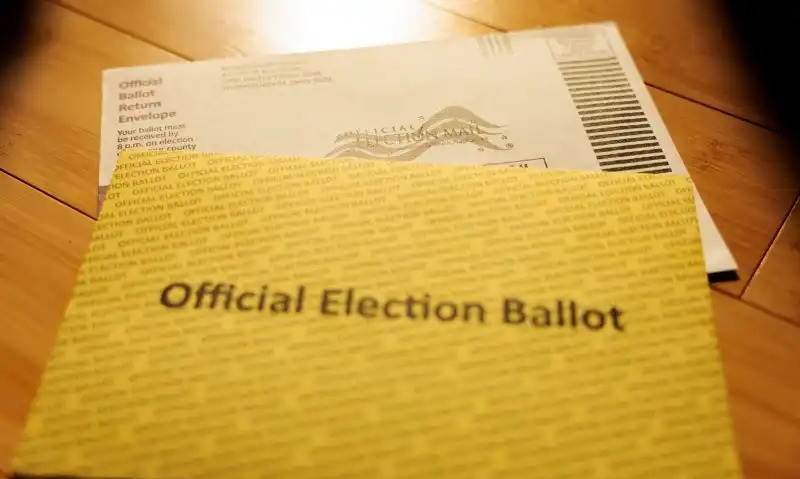
But the Supreme Court on Sept. 14 refused to allow the U.S. Postal Service to restrict mail-in ballots. The
administration had sought to require states to provide voter lists to the Postal Service, to check for fraud before delivering them, but lower-court judges blocked the policy in three cases.
"The government is unlikely to succeed on the merits of its challenge to the District Court's preliminary injunction," the court said in its brief, one-paragraph order.
The justices also ruled against the administration in how congressional maps were drawn in California and Missouri. And the court allowed states to have grace periods to count mailed ballots, which Trump personally campaigned against.
Here's how the Supreme Court's election-related decisions stack up for the midterms:
Trump administration demanded state voter lists through Postal Service
The court battles over state voter lists have been numerous and contentious.
The Trump administration has fought in dozens of cases to force states to provide the federal government with their voter lists. The administration's goal is to confirm the citizenship of voters by comparing their names against a Department of Homeland Security database.
But the Justice Department has lost 23 lower-court cases trying to force states to turn over the voter lists. The Constitution says states control the times, places and manner of holding elections for Congress. Judges have criticized the database, called Systematic Alien Verification for Entitlements (SAVE), as unreliable for that purpose.
Against that backdrop, the Postal Service adopted a policy requiring states to provide their voter lists, to compare with the database and confirm which mail ballots to deliver. If the states don't provide the lists, the Postal Service could refuse to deliver ballots. A whistleblower warned the system could "derail the midterm elections."
District Court judges in three decisions in Massachusetts and DC have blocked the policy. The administration then asked the Supreme Court to overrule them.
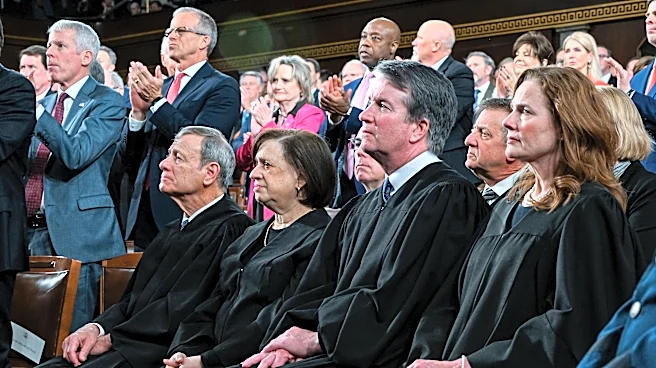
But the majority kept in place a block on the policy from U.S. District Judge Indira Talwani in Massachusetts. The factors needed for obtaining emergency help from the high court "do not favor" lifting the block, the Supreme Court wrote in an unsigned opinion.
"This decision is a big victory for voters this midterm election season," said Kristen Clarke, general counsel for the NAACP, which filed one of the lawsuits against the policy, and a former assistant attorney general for civil rights. "The Supreme Court rightly rejected an effort that would have made it harder for millions of Americans to participate in our elections. Mail voting is safe, secure, and deeply rooted in our nation's history."
Justice Samuel Alito, joined by Justice Clarence Thomas, disagreed with the court's decision. Alito noted that the court previously called claims in the case a "Hail Mary pass" that "rarely succeeds."
Trump called the ruling "another bad decision" from the court that would make the country a "laughing stock." Trump – who appointed three of the nine justices, none of whom sided with him on mail ballots – said decisions on mail ballots, tariffs and birthright citizenship were "not the people I interviewed to serve."
"This Supreme Court is bullied and cajoled by the Radical Left into making decisions that have set America back at least a hundred years," Trump said on social media.
In a separate pending case, Solicitor General John Sauer asked the Supreme Court on Sept. 8 to lift a court order that blocks states eager to check their lists from using Social Security numbers to search the database.

Republicans won cases across the South to redraw congressional maps
Partisan fights erupted in states nationwide over redrawing congressional maps for the 2026 midterm election. That’s because Republicans hold narrow majorities in Congress – 218 to 214 in the House and 53-47 in the Senate – and both sides are looking for advantages.
But the Supreme Court approved Republican maps in in Louisiana, Texas and Alabama. The decisions could add five GOP seats in Texas among a 38-seat delegation, one of the six seats in Louisiana and one of seven seats in Alabama.
The key ruling came in the Louisiana case, which basically allowed partisan map-drawing so long as the lines weren’t drawn for racial reasons. Because Democratic and Black districts largely overlap in the South, the decision was considered a setback for challenging maps that dilute Black votes because states could defend the maps as diluting Democratic votes.
Democratic attempts to redraw maps in Virginia and New York were thwarted in the courts.
In the Old Dominion, where Democrats had hoped to pick up four seats, the state Supreme Court blocked a new map and the U.S. Supreme Court refused to intervene.
In the Empire State, where Democrats aimed to pick up one seat, a state court allowed a new map to avoid diluting the voting power of Black people and Latinos in New York City. But the Supreme Court stepped in and kept the previous map for the 2026 election.
Two redistricting cases went against the administration’s position.
In California, the justices allowed a new map that could hand Democrats five more seats in the 52-member House delegation.
In Missouri, the high court – twice – blocked a new map that aimed to add a Republican seat.
The state Supreme Court had ruled that the map must be approved by voters in a November referendum before it can take effect. U.S. Supreme Court Justice Brett Kavanaugh, who handles emergency appeals from Missouri, rejected a request from state officials and the Republican Party to intervene.
The Missouri secretary of state, Denny Hoskins, argued the state constitution doesn’t allow ballot measures over redistricting. At his request, U.S. Chief District Judge Stephen Clark temporarily blocked Missouri from using the GOP map. But the justices swatted aside that order, too, without explanation.

Campaign finance wins for GOP
Two cases that reached the Supreme Court dealing with campaign finance favored Republicans.
In one case, the justices scrapped a 50-year-old rule that capped how much political parties could spend in coordination with candidates. Congress approved the rule in 1974 as part of the response to the Watergate scandal. The Supreme Court upheld it in 2001.
But Vice President JD Vance and Republican campaign arms of the Senate and House challenged the rule.
Kavanaugh wrote for the 6-3 majority that the rule violated the First Amendment's free-speech protections. Both parties can now "participate more freely and compete more fully in the political process," he wrote.
The other finance case dealt with the lower ad rates that campaign ads enjoy on radio and television.
Under federal law, states are required to offer their lowest rates to "any person who is a legally qualified candidate for any public office in connection with his campaign."
The Federal Communications Commission went a step further in March, saying that political parties should get the same rates as candidates. Lower courts ruled against the agency, saying the law applied to candidates.
But the Republican Party challenged the ruling. The high court, in an unsigned opinion, allowed the FCC policy to go into effect.

In GOP loss, states keep grace period to count mail ballots after Election Day
Mail ballots have become a flashpoint in the election, even as state election officials say the ballots favored by the elderly, disabled – and Democrats – are trustworthy. Trump has argued mail ballots are easy targets for fraud, even as he votes by mail himself.
One of Trump’s pet peeves is the "red mirage," which describes how voting that seems to favor Republican on election day can tip Democratic as votes are counted in the following days. But Trump’s own campaign aides have told him the phenomenon is common and not necessarily a sign of fraud.
The Republican and Libertarian parties each challenged a Mississippi law that allows the counting of ballots postmarked by Election Day to be counted if they arrive up to five days later. The Justice Department joined the case on the side of the parties.
But the Supreme Court ruled that federal law hadn’t blocked states from designating grace periods.
"The question today is not whether requiring ballots to be received by election day is a good or bad idea; the question is whether the idea has made its way into the United States Code," Justice Amy Coney Barrett wrote for the 5-4 majority.
This article originally appeared on USA TODAY: Trump lost on mail ballots. Is the Supreme Court rejecting him?