

"This is just what happens when you invest in women's sports."
That was the message Golden State Valkyries guard Tiffany Hayes declared to the world when her team won the WNBA Finals last month in only their second year of existence.
Amber Luther, senior principal at architecture design firm Populous, had a front row seat to the Valkyries' ascent.
"Saw it coming," she told USA TODAY Sports of helping develop the team's facilities from the ground up and the success that came with it.
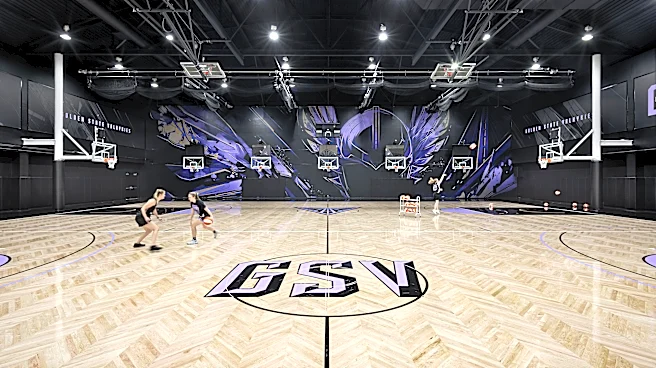
Golden State is a prime example of utilizing sponsorships in women's sports to maximize performance, revenue and storytelling for a team, specifically through training facilities. Between the Sephora Performance Center in Oakland and their locker room area at the Chase
Center, the Valkyries are among the teams setting the standard.
Luther and Populous senior architect Avi Greene were part of the creation of a white paper called "Designing Training Facilities for the Next Era of Sponsorship in Women’s Sports," analyzing how the facilities are a tool for teams in a new sports landscape. It was published on Nov. 12, sandwiched between when the Valkyries won their first WNBA title and when the Kansas City Current earned their first NWSL championship this past weekend.
"We're noticing a huge difference in what sponsorship means for men's teams, or has historically meant for men's teams, and what it means for women's teams," Luther said, noting that there's only a 9-11% overlap of men's and women's sports fans, "... that means there's net new market or reach for women's sports that's not been tapped."
"Women's sports has always had to innovate out of necessity," Greene added in the joint interview, "but now we finally have the opportunity to innovate out of opportunity. ... We women have always had to be creative, especially in women's sports when we haven't been afforded the capital investment."

Denver Summit FC paves the way in training facility funding
One of the facilities highlighted in the study and that Greene pointed out as an example of creativity is Denver Summit FC's CommonSpirit Performance Center. The NWSL team joined the league this year and smashed its attendance record when they played their first match at the Denver Broncos' Empower Field at Mile High with 63,004 fans in the stadium.
For their training facility, the Summit did something unique by utilizing CommonSpirit Health's naming rights deal to secure funding for the building. A lot of what's inspiring about the current women's sports landscape is how executives, brands and other partners are investing off belief and values in a way that goes against the grain of traditional financial institutions.
"It's interesting just looking at different vehicles that you can use to actually get these facilities built in the first place," Greene said, "and part of that is if you look at just like a regular bank loan, you have to prove concept to be able to acquire a loan like that. But when it comes to sponsorship and the ability to underwrite a facility, it's basically that sponsor, that partner investing at risk in the philosophy and the values that that team instills, and so that's something a bank is never going to do."

Unlike men's sports sponsorships, which rely heavily on broadcast numbers and therefore make stadium naming rights one of the most valuable assets, women's sports focuses more on digital engagement and storytelling. This is why the day-to-day aspect of a training facility offers more value.
"So often I feel like women's sports is measured against the same metrics that men's sports have been measured against, and when you do that, you miss certain things that make women's sports unique and valuable," Greene said. "And so that's one of the things that I think this paper really drives home is instead of the traditional broadcast exposure as that metric for value measurement, we're now looking at engagement and how that translates.
"When you're dealing with a game day venue, we're talking about a handful of games throughout the year, depending on the sport. When we're talking about a training facility, it becomes a 365-day opportunity because even when the team is off season, we're talking about a short couple of months usually, but even so, you have your front office, your coaching staff. You still have a presence there, and so that's one of the more interesting points to just kind of think about in terms of this context is that now opens up a whole realm of possibilities that are different."


Populous also worked on a prominent training facility in men's sports: Compass Minerals National Performance Center for MLS club Sporting Kansas City. The venue gained popularity this summer becauseit was the headquarters for Lionel Messi and Argentinaatthe 2026 World Cup.
"A lot of things that we're talking about in this paper, while it's specific to women's sports, I do think that it has relevance and can be a driving model for all sports moving forward," Greene said. "And that one is a really great early example of the kind of community involvement, but also the team value and sponsor value that was brought to that facility."
The training facility opened in 2018 and features five pitches, which is massive by industry standards. It also has hydrotherapy pools, outdoor pools, cold and hot tubs and saunas in what Luther calls "an ecosystem of of recovery."
"There were just little pieces of it related to features of the building that I think made it unique and authentic for the time to the place it was in," she said.
Authenticity key to successful sponsorship deals in women's sports
"Authenticity" is a key word in the study. Luther and Greene pointed out how the paper emphasizes that the team's performance is the main product at the end of the day and it is essential for a team to ensure that all its partnerships organically align with the ultimate goal of winning. This means making sure that sponsorship placements are intentional, not cluttered, and that athletes are not distracted.
"You can still have those amazingly authentic spaces without being overpowered by branding," Luther said.
Greene added some thoughts on how a team can find that sweet spot, embracing the many elements of an athlete's day-to-day routine, including nutrition, wellness and beauty. Sponsorships become much more than logos plastered on a wall.
"Anything that you could find along the natural, I'll say, kind of daily path of an athlete that can tie into a sponsorship, those are going to be the ones that work best with the athlete and with the function of the training facility," she explained, "but also be the ones that are the most authentic in what they're trying to do."
Unrivaled is a league that the study said is doing a good job of embracing organic sponsorships that actually help players perform. Their deal with Samsung covers several aspects of the game, including a recovery lounge at the Miami training facility that features hyperbaric chambers and massage setups, and providing Galaxy technology to the social media team to create digital content.
A training facility that stands out for its intentionality is Kaiser Permanente Performance Center, which Populous designed and houses both the NWSL's Portland Thorns and WNBA's Portland Fire. Unlike many women's sports facilities, which retrofit a men's facility that is no longer in use, this building was purpose-built from the ground up utilizing player input.


Golden State Valkyries exemplify successful infrastructure for women's sports team
Going back to the Valkyries, the team has expertly utilized its Sephora sponsorship for the naming rights of its Oakland training facility and for digital content and in-game promotions like gift bag drops.
Luther recalled being part of the Populous team approached to work on retrofitting the former Golden State Warriors training facility at the request of Joe Lacob, who owns both franchises. She said early on, the direction was mostly from the ownership group saying, "We're doing this."
Then, Jess Smith joined as team president and Ohemaa Nyanin came on board as general manager and got the ball rolling even more. Sephora's deal as a "founding partner" was announced in April of 2025, a month before Golden State's first WNBA season tipped off. The Valkyries' success is proof of how locking in early and for the longterm is the winning formula in women's sports sponsorships.
"(Smith and Nyanin) were being very thoughtful and intentional about creating a brand that supported community and then driving that home with the sponsorships that they ultimately took on," Luther said. "I mean, not even a year later, it was about 10 months when that Sephora deal got inked, and it really did help them propel their training facility to be something. And to me, that was just a sign. Like this is the right time. These are the people to do it. They're doing the right thing early."
Luther appreciated how the front office put their money where their mouth was.
"Never was there a question about, 'Well, that's a little too expensive,'" she said. "It always came back to: Is it going to support the players' performance? Are we going to be able to attract and retain the best players in the W?"
With the team consistently selling out Ballhalla, becoming the first women's sports franchise to earn $100 million in annual revenue, and winning its first WNBA title, it's paying off.
Luther said that the NWSL and WNBA have seen sponsorship deals grow "by almost 20 percent in the past year."
"It's just skyrocketing."
This article originally appeared on USA TODAY: Why are training facilities so important for women's sports teams?