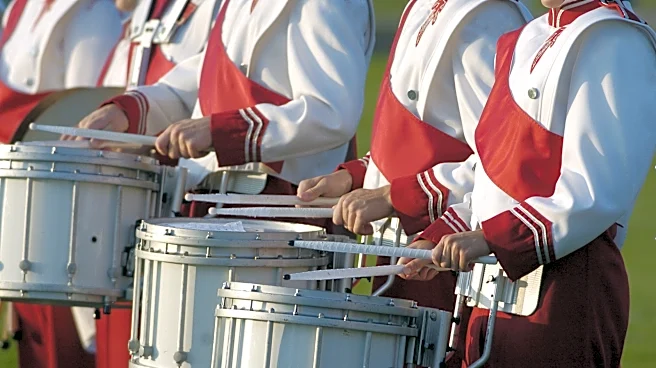







Tubas and bass drums are heavy. Marching band competitions are like a full cardio workout. So why, in most contexts, is marching band not considered a sport?
Marching band opportunities for kids usually start in high school and continue through college
. Most fall into the performing arts departments at their organizations or schools without the classification, including the benefits, of being deemed an official sport.Here’s why, according to experts.
Why marching band isn’t a sport
The National Federation of State High School Associations (NFHS) supports high school marching bands by providing educational resources, safety guidance, judge training and activity standards used by state high school associations across the country. While NFHS does not directly operate marching band competitions,
its policies and best practices help shape how school-based marching band programs are administered and supported nationwide.
“The NFHS does not classify marching band as a sport because it considers marching band a performing arts and music education activity rather than an athletic competition,” says Jordan Morey, manager of communications and media relations at NFHS. “While marching band requires significant physical conditioning, teamwork and skill, the NFHS places it under its performing arts programs because its primary purpose is musical and artistic performance.”
So, the performance isn’t classified as a sport because its main purpose isn’t athletics, but music.
The athletic requirements of marching band
Though it’s not a sport, it still offers a substantial physical workout and athletic requirements in some situations. By some accounts, marching band training can come with military-like precision and both mental and physical requirements. The stamina required to rehearse and perform shows that involve pivoting, marching, carrying large instruments, running, and more can burn more calories than an elliptical workout.
And for professional drum corps, such as Drum Corps International, their website shares members should be prepared for five to six hours of “intense physical exercise” daily, urging participants to train ahead of time before touring: “You cannot expect to go from couch potato to marching star,” or injuries will prevail.
So, while the jury is still out on the topic, marching band members might protest if you assume they aren’t athletes. And they just might be right.
This article originally appeared on USA TODAY: Why marching band isn't exactly a sport