



Like just about anything these days in college sports, recruiting can be a nightmare experience for athletes and parents. Brian Cruver experienced it firsthand with his son Carson, a quarterback who eventually committed to Florida Atlantic and is now at Kentucky.
"It's just the most inefficient, painful, opaque process you could imagine," he told USA TODAY Sports. "Other parents we knew on our kids' teams going through it, none of us figured out how it all worked until it was over. So you go through it for years, and then you're finally like, 'OK, now I know how this works.' It's like too late."
A tech entrepreneur, Cruver wouldn't describe himself as a sports guy. But he knew something needed to change in recruiting to streamline the process.
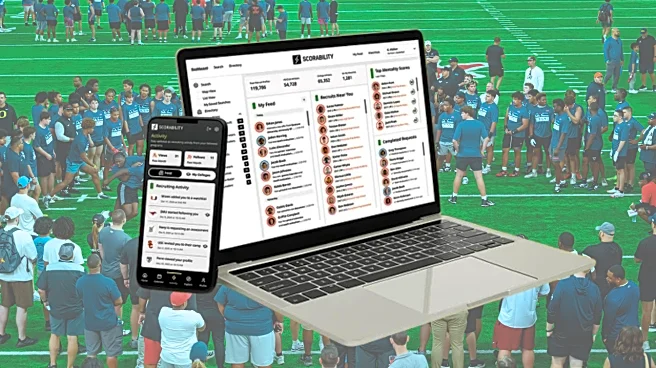
So in 2023, he and longtime friend Brett Andrew created Scorability, a database where college coaches can see everything there is to know about an athlete — from game tape and stats to transcripts and personality traits — and connect with them, all for free.
Think of it as LinkedIn for college sports.
The platform has taken off, with thousands of programs across the country using it. Now Scorability is launching a new subscription called Scorability Advantage, USA TODAY Sports exclusively reports, giving players and parents more insight into their recruitment. The standard product remains free, but Cruver sees Advantage as another opportunity for aspiring college athletes and their families to take more ownership of the process.
"It's the goal is to become recruiting," he said. "That's kind of happening right now as as all the pieces come together."
Scorability takes off
In a world where high school athletes are evaluated and rated in countless ways, Cruver knew the platform needed the approval of one group in particular to succeed: the people who would actually be coaching these prospects.
"If the college coaches aren't in there using it, it's not worth anything," Cruver said. "That first year was all about building a platform for the college coaches first, where they could discover and evaluate and start to engage with these athletes and solving for their inefficiency."
The strategy worked. Coaches got on board, and as more programs joined, athletes followed, along with high school and club coaches.
As of November 2026, 4,600 college programs — from junior colleges to Division I — across eight sports are using the system. Cruver said more than 1.2 million athletes are in the database, and in October alone, roughly 470,000 connections were made between high school athletes and college coaches.
"It's kind of growing like wildfire," he said.
That growth led to the launch of Scorability Advantage, which costs $199 per year. Cruver understands that seeing another price tag attached to recruiting can make parents groan, especially when they're already spending significant amounts of money on their children's athletic pursuits.
He stresses that being recruited through Scorability will remain free, and not having the subscription won't hurt a player's chances of getting noticed. Coaches can't tell which athletes are subscribers and which aren't.
Instead, Advantage provides "the extra bells and whistles," intended to save families time by cutting through some of the confusion and helping athletes identify the programs that might be the best fit.
Athletes can see which programs have searched for them, viewed their profile or added them to a watchlist. They can also select target schools and signal their interest to those programs. Other features include guidance on recruiting coaches, information about interested teams and access to measurables from camps and combines.
Scorability Advantage is available for football, men's and women's basketball, men's and women's soccer, baseball, softball and women's volleyball.
The goal is to continue adding features. Cruver acknowledges the company still has plenty of work to do to make the product more polished. It just needs more time to build.
Based in Austin, Texas, the company has expanded its workforce and plans to continue growing as it tries to bridge the gaps in the recruiting process.
"We're building exactly what we wish we'd had," Cruver said.
This article originally appeared on USA TODAY: His son’s recruiting was a nightmare. So this dad decided to fix the system