

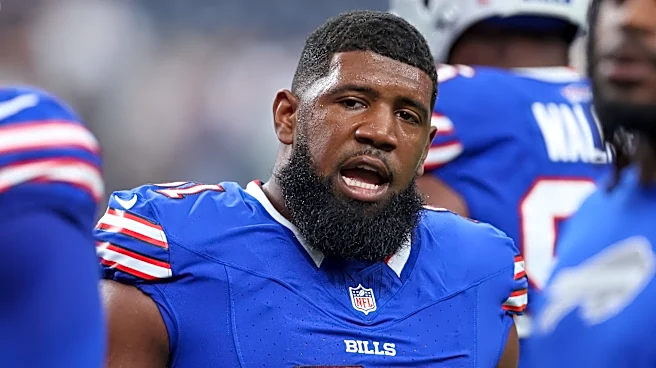

Damar Hamlin is looking back to a time before you might remember him.
“I've been through a lot of tough things as a kid,” the Buffalo Bills safety says. “The awareness of what I was experiencing was always at the forefront of who I am. I've always kind of built up the capacity to deal with things.”
His father was incarcerated when Hamlin was a boy. He had to avoid the “knuckleheads,” as he calls them, the peers from his hometown of McKees Rocks, Pennsylvania, who he felt would drag him down from his goals. He aligned himself with people in high school – Central Catholic in Pittsburgh – who wanted to go to college and be successful in life. He made it, despite more distress in college.
When he got to the NFL, his life changed forever.
“Just going
through my toughest moments of adversity, when I decided that I wanted to play again, it was not an easy journey,” says Hamlin, 28. “It was not as easy as I thought it was going to be.”
He spoke easily and thoughtfully during a video call, reflecting not only on his comeback just over three years ago from cardiac arrest on the field, but a perspective that has carried him long before it.
“I've always had a unique approach to how I dealhernia
t with the mental game of sports and my own self,” he says, “outside of my adversity of having the entire world watching me go through something very traumatic and then having to navigate it from 0 to 100 all the way back in front of the entire world.”
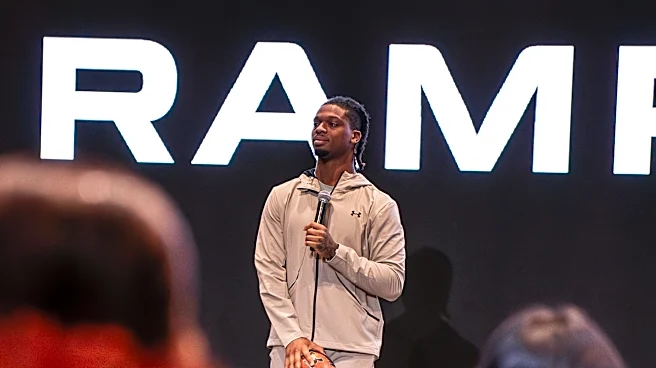
Hamlin was speaking from Under Armour’s headquarters in Baltimore, where he talked to local students who play sports about managing their mental health. He is the athlete ambassador for the apparel company’s Protect This Mind initiative, which seeks to help young athletes strengthen support networks and build lifelong mental wellbeing skills.
Hamlin has developed them first hand through unimaginable trauma but also in knowing we don’t have to feel alone as we go through it.
“I think the strongest athletes, or the strongest people, aren’t because they’re just more well equipped humans than the rest of the world,” Hamlin says. “I think they are the strongest people because they have learned and they know that asking for help is an essential part of thriving in this world.”
Hamlin spoke with USA TODAY Sports about how mental wellness and support has helped uplift him throughout his life and how we can use it to power our young athletes.
It's OK to strive for perfection, but we need to ease ourselves away from that standard
During his interaction with the kids in Baltimore, Hamlin got a question from a basketball player about advice for high school students who feel pressure to be perfect.
“I love that you feel the pressure to be perfect,” he said. “I know it's not a good feeling, but that pressure is only going to keep making you chase greatness. It's only going to keep pushing you forward and keep bringing out the best version of yourself. So don't run from that pressure.”
Instead, we need to learn to manage expectations when life changes. Hamlin always had lofty goals for himself, in and out of sports, set by the examples of his parents, Mario and Nina. Life was far from perfect, but he felt the support of their close knit group.
“My mom and my dad (were) my entire support system,” he says. “I lost my dad to incarceration for a lot of years, and my mom worked a lot. I got to see my parents just truly sacrifice for the things that they love, which became a big piece of who I am and a driving motivator for me to be able to become who I am today.”
He has spoken about losing friends growing up to violence and his father’s prison sentence for selling drugs. He remembers “struggling with that mental battle of like if I'm doing enough, if what I'm doing is gonna get me where I want to go, just not knowing and not really having the answers or no one to tell me the answers. No one around me who has done what I've wanted to do in any kind of fashion.”
His work with Protect This Mind provides youth athletes with wellness tools through a resource hub, including a Be There Certificate program created by Jack.org in partnership with the Born This Way Foundation.
According to a press release Under Armour shared with USA TODAY Sports ahead of its Oct. 29 release, 110,000 individuals have completed the free online mental health course, with 94% reporting they feel better able to support someone experiencing mental health challenges and 90% reporting they feel better equipped to take care of their own mental health.
A positive first step in taking control of your journey, Hamlin says, is giving yourself some grace. For example, he told the kids, he was highly recruited out of high school, but had three surgeries related to sports hernia issues his freshman year of college.
“It takes time to get back to yourself,” he told the group of athletes. “I know that might be tough because when you're in high school, you’re truly on a limited clock as far as like eligibility and things like that, but you weren't out there just flowing like everybody else.
“Dealing with what I went through,” he continued, switching to his NFL career, “I knew it was going to take time for me to be the same player, and I still don't feel like I'm the same player that I was. But I just continue to show up every day with what I got.”
Lean on your teammates, and they can lean on you
Jan. 2, 2023, is a Monday night where you remember where you were as a sports fan. Hamlin went into cardiac arrest on the field after making a tackle as the Bills played at the Cincinnati Bengals.
Bills medical staffers administered CPR to Hamlin, and reported the following morning his heartbeat was restored on the field. He was taken to the University of Cincinnati Medical Center while the game was suspended and later postponed.
He methodically worked his way back, from speaking with his family to sending social media posts to visiting his team to returning to play the following season.
Hamlin says he learned in college about the importance of camaraderie to build a team and how that brotherhood can carry you through life.
Another pillar of Protect This Mind is peer-to-peer support, a connection he has most deeply felt with the Bills.
“Just going through my toughest moments of adversity, when I decided that I wanted to play again, it was not an easy journey,” he told USA TODAY Sports. “It was not as easy as I thought it was going to be, days where I didn't simply just didn't want to play football, didn't want to work out. I wanted to be far away from the facility but leaning on my teammates, and seeing my other teammates go through their own journeys of adversity, whether it be different injuries, different things of that as such, I was able to not feel alienated, kind of how like the rest of the world was making me feel.
“So I was able to lean on my teammates, going through their own adversities to help get through my own.”
There might be people in your locker room who need emotional support, but are hesitant to ask. Be the one to take the initiative, which, Hamlin says, might inspire someone else to come forward.
“Sometimes asking for help can be looked at as a weakness, and it can be looked at as you put yourself out there, which may be frowned upon from some people who are more shy or things of that nature,” he says. “But honestly, asking for help can be the difference in anything.
“Some people struggle with grades or, on the mental health side, people deal things that they might not want to speak on, but just asking for help you never know who else is experiencing what you're experiencing.”
It's OK to have anxiety. Here are ways to manage it
Our world, and society, is full of expectations, even from young ages when we play sports. Hamlin feels them as a player.
“I do have anxiety before a game,” he told one of the kids in the audience, “feeling like I gotta stand up to be that player or I gotta show that I gotta be this type of player, and show that I have to set example for everybody. That's a lot of stress.”
We can pause and find relief and trust, Hamlin says, in the preparation we have for games, but we can also learn our own mental safe spots to recharge in between.
Under Armour plans to expand coach education resources working with the Positive Coaching Alliance and introduce a Mental Rest Day Pledge. It encourages coaches to prioritize recovery for athletes and create time and space to care for their mental well-being.
On those days, Hamlin says, he used to do extra work to try and keep up with the veterans.
“You never fully arrive, but I do feel like I have a good grasp on who I am as a pro and what my job description is," he says. "So now my rest days (are about) doing things that make me feel like me, talking to my mother, talking to my father, getting involved with my little brother's life, staying family oriented and just getting some rest.”
He also likes to decompress with TV and finds other ways to use his time productively.
“I spent some time in Tokyo over the last 2 years and just to see the difference in cultures, of how we live and how they live, showed me that we spend so much time simply just distracting ourselves,” he says, “and those distractions can wear you out in the long run because you’re not spending the quality time that you need to get you the furthest mentally. Anytime I spend time overseas, I try to bring back the mentality of the people, because it's beneficial.”
Wherever you go, whatever you do, you can take something you find helpful to your life and create your own strategy for mental rest days.
Know that you are never alone in your struggles
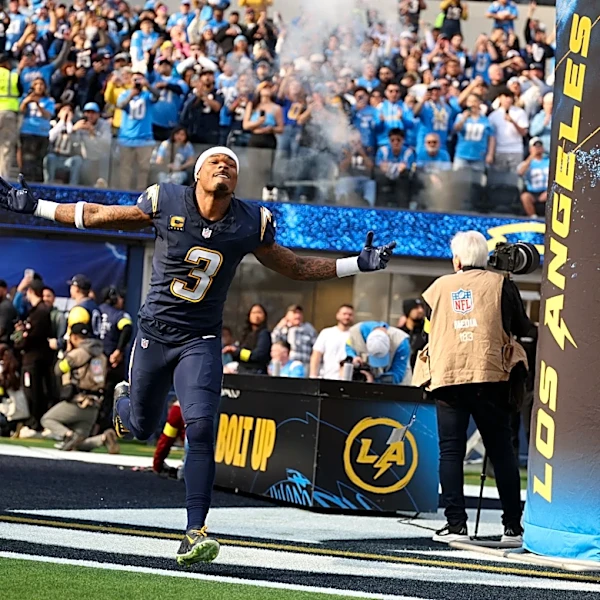
Hamlin recently was tagged on a video by Russell Wilson, remembering when the quarterback and Chargers safety Derwin James, both wearing Hamlin’s No. 3, met at the 50-yard line for a pregame coin toss the weekend after Hamlin was hospitalized.
“To see that hit the other night and just see him drop to the ground, it was devastating to watch 'cause that could be any of us,” Wilson said at the time.
As in Cincinnati, players hugged kneeled and embraced. It was a moment that reminded us that sports, even at its highest levels, is a shared experience.
“It was so much outpouring of love outside of those four walls I didn't even get to experience and I'm still learning today,” Hamlin says. “It’s stories I love hearing and just thankful and grateful to be at the center of a moment that (brought) so many people together and all the right things. I think the world has its way of pulling us apart naturally, so to be at the center of something, bringing people together is pretty cool to me.”
Today, Hamlin, who is in his sixth NFL season, is embracing his role as a mentor to his brother, Damir, 11, and to young athletes everywhere.
It’s a role we can take on when we become more experienced, whether it be in middle school, high school or well beyond. It’s one of the lasting effects sports can have on us, no matter how far we reach.
Under Armour says Hamlin will continue to stay involved with Protect This Mind alongside the work of the organization’s Project Rampart, which seeks to improve kids' academic outcomes through their sports experiences.
He says he wants to be remembered most as a teammate when we think of his NFL career. When he is asked about the legacy of Damar Hamlin, he flashes a wide smile.
“I've always wanted to have a legacy that led me to be somebody more than just what I could do in a helmet,” he says. “I always had a caring, giving heart. So I think I just want my legacy to be someone to be remembered that I cared about trying to make this world a better place at a simplistic level.”
Steve Borelli, aka Coach Steve, has been an editor and writer with USA TODAY since 1999. He played baseball in high school, rowed in college and spent 10 years coaching his two sons’ baseball and basketball teams. He and his wife, Colleen, are now sports parents to a college and high school baseball player. For his past columns, click here.
Order his "Youth Sports Survival Guide" for athletes and parents here.
Got a question for Coach Steve you want answered in a column? Email him at sborelli@usatoday.com.
This article originally appeared on USA TODAY: How Damar Hamlin is using his inspiring comeback to help kid athletes