





Editor's note: This column is part of Changing Minds, a USA TODAY Opinion series. Ahead of the November midterm elections, we talked with people who changed their political beliefs after years of seeing things a certain way. We'll publish their stories over the next few days.
I remember the moment I realized my politics were different from my parents’.
We watched "The Daily Show with Jon Stewart" most weeknights growing up in our progressive Detroit household. As a kid, I laughed along without thinking much about it. Then one night he did a segment on gun control and something didn't sit right. The show went after the most extreme pro-gun positions it could find – the easy targets – while the stronger arguments on the other side went unaddressed.
I didn't say anything, but I noticed.
After that, I started noticing more. Unfair representations of conservative positions. Double standards applied to Fox News that didn't apply to other networks. I bit my tongue because I didn't yet have the framework to push back, but I started reading, and the more I read, the more I found myself agreeing with the other side.
In the years that followed, I went from quietly skeptical to staunchly conservative. That trajectory is rarer than the opposite – most kids drift left of their parents, not right – but I'm proof that it happens, and there are many reasons why.
Ben Shapiro, Edmund Burke were stepping stones on my path to conservatism

I wasn't one of those kids who was always interested in politics. I cared about hockey and video games. My parents never forced their views on me – "The Daily Show" and NPR were always on, but they let me find my own way, something I'm grateful for.
My first exposure to conservative ideas came from watching Ben Shapiro videos on YouTube. I was on my first laptop, watching him debate left-wing college students, and he was methodically taking apart positions on guns, immigration, abortion, the economy – positions I'd absorbed without ever really examining them. He's not a perfect vessel, and it's a somewhat embarrassing origin story. But it was the first time I'd heard the ideas I grew up with actually challenged head-on.
While I didn't suddenly change my mind on all or even most of these issues, I began to see a lot of truth in the conservative arguments he presented.
The more I learned, the more my views hardened. And the more my views hardened, the more I wanted to argue about them. I loved to argue as a kid, and politics gave me plenty of material. The problem is nobody in my family was thrilled about debating a 16-year-old who had read a few pages of Edmund Burke. That led to more than a few unnecessary fights and a whole lot of wasted time.
Political discussions in my household always started civilly. But I couldn't let things go. I remember being sent to my room from dinner once because I kept reviving a debate over gun rights long after everyone else was done with it. That topic in particular led to more than a few shouting matches. But I've come to be grateful for those fights. They taught me early how to disagree with people and still love them.
My ability to disagree civilly with my own family prepared me for all sorts of uncivil disagreement when I went off to college. I was a loudmouth conservative on my progressive campus. I didn't chase after hostility, but I saw college as a place to test out my still-developing political beliefs through debate and persuasion.

Unfortunately, some of my progressive peers didn't see university the same way.
I dealt with all sorts of nastiness stemming from my political beliefs. I received countless hateful messages on social media and rude comments in person. "You're a f------ fascist," I once heard right outside my campus job in the fall of 2020. Friends of mine were shunned by peers or deemed bigots for sticking by my side. My girlfriend at the time was even forced out of her sorority over my loud support for, of all things, Amy Coney Barrett's confirmation to the U.S. Supreme Court. People she considered longtime friends couldn't accept that she was with someone whose views they disagreed with.
Those negative experiences, though frustrating at the time, prepared me for my current career. It's a lot easier to ignore lunatics on the internet when you've already been berated in person on your way to class.
I'm a traditional constitutional conservative, which doesn't exactly make me popular with either wing of American politics at the moment.
Despite the pressure from both sides, I like to think that each of those experiences – from realizing I didn't quite believe what my parents did, to learning the foundations of conservatism, to a combative college experience and finally to becoming a conservative columnist – has kept me principled throughout my journey.
Why it's more common to lean left of your parents
We all like to think we're free thinkers, and to an extent, we are. But parental politics matter – you can see it in the data. Significant majorities of children end up close to their parents politically, regardless of party. My own journey – from a progressive family to conservative columnist – is the exception that makes me want to understand the rule.
The children of Republicans are more likely to become Democrats than the opposite, and that always made sense to me. Young people are more idealistic and open to new ideas by nature – they've grown up in a different era, with different technology and different cultural reference points.
G.K. Chesterton once described a fence standing in the middle of a forest with no obvious purpose. A progressive, seeing no reason for it, tears it down. A conservative goes and finds out why it was built first. That instinct – to understand before dismantling – is what I believe separates the two temperaments more than any single policy.
Those who loathed my beliefs throughout college seemed unable to imagine why someone would defend the fences. Kids don't have the life experience to understand why things are the way they are. So they see traditions, laws and social norms as arbitrary barriers rather than accumulated wisdom. That changes as you get older – you start to understand why the fences were built.
That instinct to tear down what seems pointless is alive and well in my generation, Gen Z, which is why there are so many progressive children of conservative parents. What's rarer is someone like me, who came out the other end more concerned with preserving tradition and institutions than my parents were.
Some might think it's a shame to differ with your parents on something so fundamental. I don't see it that way. Sure, it leads to disagreements. But there's something uniquely familial about learning to navigate your differences – and still show up for dinner.
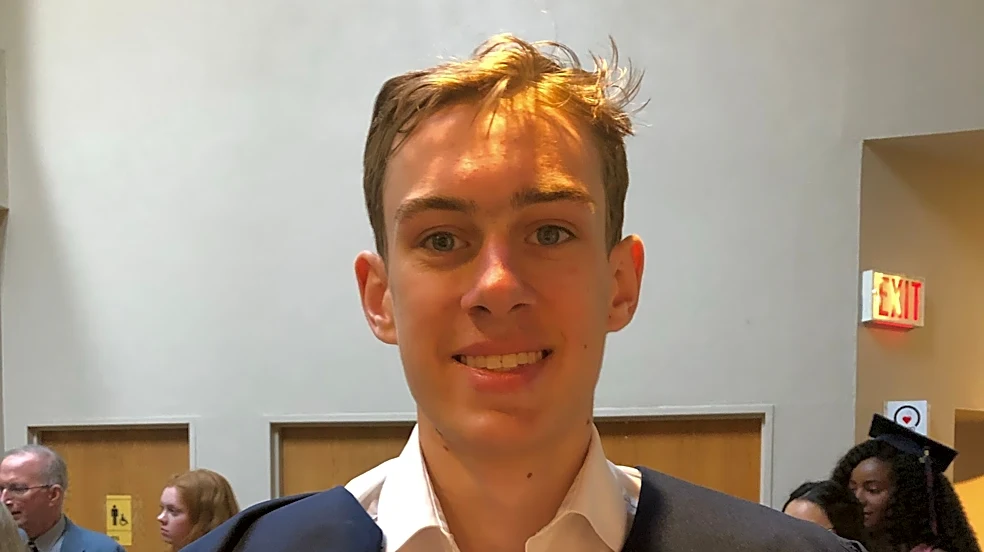
Dace Potas, a law student, is an opinion columnist for USA TODAY. Follow him on X: @DacePotas
This article originally appeared on USA TODAY: I grew up progressive. I became a conservative. Here's why | Opinion