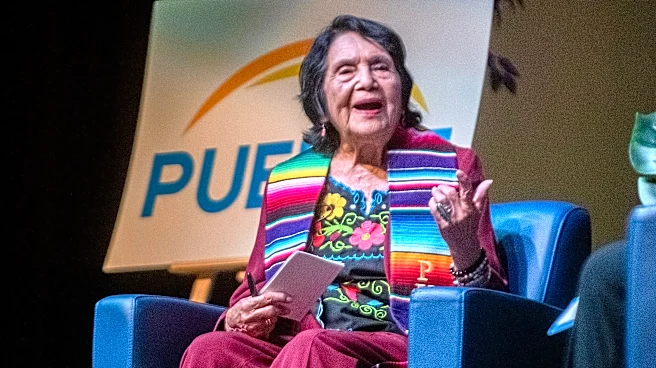





California will honor the late labor and civil rights leader Dolores Huerta by hosting a lie-in at the California State Capitol in Sacramento on Monday, Nov. 16, during which the public can pay their respects from noon to 6 p.m.
Huerta, who died of cancer on Oct. 28 at her Bakersfield home, will have her casket resting in the first-floor Capitol Rotunda.
Before the public viewing, organizers invite the public to join a processional march for Huerta. Folks planning to join the march are told to gather at Crocker Park, at 211 O Street in Sacramento, before 11 a.m., then march to the Capitol.
The march, along with the vehicle procession, will run from 11 a.m. to 11:30 a.m., as participants gather in front of the Capitol’s West Steps. The public will be
able to watch Huerta’s casket arrival and the ceremonial entrance to the Capitol.
"The impact Dolores Huerta made on the state and this nation was immeasurable," said Senate President pro Tempore Monique Limón in a statement on Nov. 5. "She was a national leader in the fight for workplace rights and an inspiration to millions of workers across the country."
How to watch Huerta memorial at the Capitol
For those who cannot attend the lie-in in honor of Huerta, the Dolores Huerta Foundation announced it planned to livestream the memorial on its YouTube channel.
In addition, CBS News Sacramento announced that it would be streaming the he procession and gathering at the Capitol.
Who was Dolores Huerta?
Starting in the early 1960s, Huerta worked to win fair wages, dignity and a voice for California farmworkers.
She grew up in Stockton, organized farmworkers in the San Joaquin and Coachella valleys, and helped lead the grape boycotts that brought national attention to conditions in California's fields. Huerta co-founded the organization that became the United Farm Workers with Cesar Chavez.
The movement they built helped fundamentally change the relationship between California growers and the workers who harvested the state's crops. Its campaigns ultimately helped pass the landmark California Agricultural Labor Relations Act of 1975, which established collective bargaining rights for farmworkers.
Huerta also became closely identified with two words that stretched far beyond California's farm fields: "Sí se puede," or "Yes, we can."
By the time of her death at age 96, her influence extended from the Central Valley labor camps to Sacramento, Washington, and a new generation of activists.
President Barack Obama awarded her the Presidential Medal of Freedom in 2012. The Bakersfield-based Dolores Huerta Foundation, which she founded in 2002, continued her work through grassroots organizing and civic engagement.
The foundation held a sold-out celebration of her 96th birthday in Los Angeles in June 2026. Huerta died on Oct. 28 at her home in Bakersfield. A spokesman for the family said the cause was cancer.
Huerta's impact on generations of California families
Both legislative leaders paid tribute to Huerta's impact on farmworkers and their families. In a statement, Rivas said, "Generations of California families live with the freedoms and opportunities she helped them secure."
Rivas grew up in a farm-working family outside Hollister where his grandfather worked at Almaden Vineyards. Rivas and his brother grew up in farmworker housing, cared for by their single mother and grandparents, who emigrated from Mexico in the 1960s in search of the California Dream, according to the speaker's biography.
As a child, Rivas watched his grandfather stand side by side with Dolores Huerta and the UFW in the fight to win fair contracts for farmworkers.
"Dolores negotiated my grandfather's first union contract at Almaden Vineyards," continued Rivas. "She brought to that bargaining table what she brought to every fight: The conviction that farmworkers deserved fair pay, dignity and a say in the conditions under which they worked."
He added: "She spent her life helping people discover what they could win when they stood together."
Remembrances will continue in Bakersfield on Thursday, Nov. 19, and Friday, Nov. 20, with a public rosary and vigil on Thursday, followed by an interfaith memorial service and afternoon celebration of life on Friday at the Dignity Health Convention Center.
This article originally appeared on USA TODAY: How to watch Dolores Huerta's memorial at California's State Capitol