





BRUSSELS – The United States sent a questionnaire to NATO allies asking whether they have been "publicly supportive" of the Trump administration's foreign policy priorities.
But the United States' top diplomat to NATO said it's not a loyalty test and won’t necessarily lead to a reduction in troops in countries that refused to join the Iran war.
The survey the Pentagon sent to allies, which USA TODAY obtained, is part of a force posture and basing review that will determine how many of the roughly 80,000 U.S. soldiers stationed in Europe remain there.
Some questions about defense spending targets and weapons production are straightforward. Others are more ideological.
One asked whether the nation has been "publicly supportive of US foreign policy
priorities" in Europe, the Middle East and the Western Hemisphere. Another question asked whether allies have "formally endorsed" the Trump administration’s vision for a revamped NATO, in which European nations are primarily responsible for their own defense.
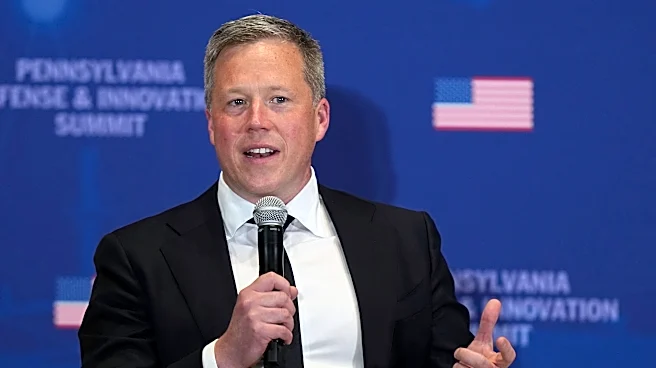
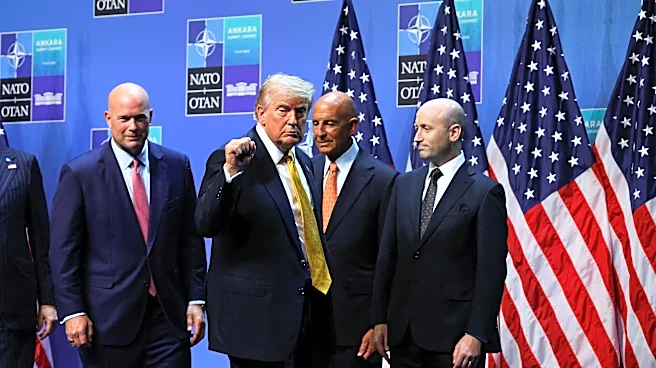
"None of those questions suggest loyalty or fealty to the United States. It's just asking, are you a capable ally that's working together with the United States of America and what's your commitment going forward to working with the United States of America?" U.S. Ambassador to NATO Matt Whitaker told USA TODAY.
President Donald Trump is known to demand absolute loyalty from his political allies, and critics of the survey say it comes with an implicit threat: nations that refuse to conform to the administration’s viewpoint in writing could see U.S. bases in their countries phased out and American troops yanked amid fears of a Russian attack.
The administration says that's a mischaracterization. The questionnaire is just one piece of information, and the first part of a conversation with allies, Whitaker said.
Spain, which did not allow the United States to use its airspace for the Iran war, and Italy, which barred U.S. warplanes from landing at a naval installation in Sicily, are among the countries that could be affected. Trump has repeatedly criticized both nations and the United Kingdom.
The survey specifically asked "what, if any, restrictions has the country placed on U.S. access, basing, and overflight" rights and whether nations are "willing to reduce or eliminate" those limitations or amend existing military agreements.
"I think this gives them a chance to have that conversation about going forward. If we come up with another situation like that, what is your policy? How are we going to process this?" Whitaker said.
US accused of conducting a 'loyalty test'
The administration says the force posture review is a natural next step now that NATO nations have increased their defense spending, in response to an aggressive, decade-long push from Trump and Russia’s full-scale invasion of Ukraine.
European allies and Canada collectively increased their defense spending by $139 billion in 2025. That represents a 20% increase over 2024, according to NATO. Allies have also committed to spending 5% of their annual GDP on defense and defense-related expenditures by 2035.
"We're going to keep a close eye on allies who are not doing that, and who say 'no,' or 'maybe' or 'wait and see' when it matters most," Pentagon Chief Pete Hegseth warned on June 18. "It's a review that some countries will fail, and others will pass with flying colors."
The administration subsequently sent allies a questionnaire, saying responses would be used to help Pentagon leaders work up an analysis of different force posture and basing options. Responses were due Aug. 28.

Bloomberg was first to report on the questionnaire. Al Jazeera also published parts.
USA TODAY also reviewed the survey, which had more than three dozen questions.
Former U.S. officials and defense experts told USA TODAY they’d never seen or heard of the Pentagon sending European countries a questionnaire as part of a force posture review before.
"This has turned the whole process on its head," said Julianne Smith, the U.S. ambassador to NATO under former President Joe Biden. "Loyalty has never, in my mind, been one of the factors that the United States has looked at."
Being in an alliance, Smith said, is "not about saluting everything that the United States does."
Smith said the survey's wording left allies wondering how they were expected to respond.
"Most of them are shocked that they received a questionnaire of this kind," she said. "They wonder whether or not they were sent it by accident."
One European diplomat told USA TODAY it read like a checklist. The person said they were not offended – but the survey seemed political and became a distraction.
Pentagon considers its options
Elbridge Colby, the U.S. under secretary of war for policy and the Pentagon's third-ranking official, is leading the process.
Colby vocally pushed for reduced American support for Ukraine and Europe to prioritize China in 2024 and has repeatedly clashed with GOP lawmakers, including House Armed Services Chair Mike Rogers. The Alabama Republican accused Colby last year of misleading him about a troop reduction in Romania.
Former House Intelligence Chairman Mike Turner, R-Ohio, blasted Colby’s testimony at a March hearing as "gross" and "disingenuous" during a heated exchange on the United States' commitment to NATO.
Colby is receiving input from the National Security Council at the White House, Whitaker, and the State Department. At least four options will be presented to Hegseth by Nov. 6 to consider. The final decision will be made by Hegseth and Trump.

One of those options, Whitaker indicated, is to leave troop levels and base locations the same.
Colby declined to tell reporters what the other options were during a visit to NATO’s headquarters on Aug. 27. But he brought up the use of countries' airspace and a desire for predictability from allies, which he said was not always the case when it came to fighting Iran.
He said the United States was basically asking its allies: "What are you prepared to offer?"
Whitaker said he'd heard from other ambassadors that they had a better understanding of how the process would work after meeting with Colby.
"I was there in several bilateral meetings with our allies where they were gladly delivering their questionnaire," Whitaker said. "They see it as a very serious document, and I have not heard a single concern about any of the contents."
Allies fear US will make deep cuts
Congress prohibited the United States from yanking most of its troops out of Europe last year. But some experts and critics of the administration say the language in the legislation is loose.
"They have not handcuffed the administration. All they have done is place hurdles in front of the administration," said John Deni, a research professor at the U.S. Army War College.
The administration is required to keep at least 76,000 troops on the continent – unless it can demonstratethat it consulted with Congress and NATO allies and provide an assessment of the effect on U.S. national security, alliance readiness, and basing relocation costs.
Critics of the administration and even some allies worry that the Pentagon will try to cut below the mandated floor.
"What recourse does Congress have if the administration decides to drop to, say, 60,000 or 50,000?" Smith, who was Biden’s ambassador to NATO, said. "It's unclear to me whether or not they will adhere to that or whether or not they care."
Asked whether the Trump administration might try to go below 76,000, Whitaker was noncommittal.
"I don't forejudge what's going to happen," Whitaker told USA TODAY. "I think right now it's not mature enough in kind of the decision-making – and not even decision-making, but in the calculations – to know where that number's going to land."
The administration could lobby Congress to keep the language out of a future defense authorization act, Deni said. But that's a trickier proposition given the NATO alliance maintains deep, bipartisan support.
"I doubt that Congress will approve, at this critical moment, reduction in force structure in Europe when Putin is more dangerous and threatening than ever," Sen. Richard Blumenthal, D-Connecticut, told "Face the Nation" on Aug. 30.
European allies are right to be concerned that the Trump administration is looking for ways to make cuts, experts say.
The United States has already said it would pull 5,000 forces out of Germany, some 700 from eastern Europe, and has quietly removed at least 500 troops from Estonia within the last year. The Pentagon also said it would cancel a brigade combat rotation to Poland. Trump announced days later that he was reversing course and sending an additional 5,000 troops there in May.
"I think the Europeans should take the concerns seriously that there are likely to be fewer U.S. troops and less U.S. military capacity on the conventional side in Europe in the future than there has been in the past," Council on Foreign Relations President Michael Froman said.
European allies should prepare themselves and make the necessary reforms and investments to assume responsibility for a greater portion of their conventional defense, Froman said.
Troop reallocation a possibility
Another option the United States could exercise is redistributing forces in Europe. Some countries within the NATO alliance are openly angling for more.
"We are talking about several bases, several locations where American soldiers would be permanently stationed in Poland," Polish Deputy Defense Minister Paweł Zalewski told reporters on Aug. 27 in Brussels, where he pitched Colby at NATO’s headquarters.
Poland leads the way in defense spending as a percentage of GDP, followed by Baltic neighbors, Lithuania, Latvia and Estonia, which all share a border with Russia.
But moving bases from countries in Western Europe like Spain or Italy would be costly, people familiar with the discussions argued. Geographically speaking, it may not make sense to reallocate troops from those countries to eastern Europe, because those bases don’t serve the same function.
Cristian Terheș, a conservative member of the European Parliament, argued that some changes may be warranted.
"Much of the U.S. force posture in Europe still reflects Cold War realities, even though NATO’s primary security challenge in Europe is on its eastern, not western, flank," Terheș, who's Romanian-American and represents Romania in parliament, said.
"The United States can therefore move forces from Western Europe to Romania, Poland and the Baltic states, strengthening deterrence while freeing up forces and resources for other strategic priorities around the world," he said.
A European diplomat said they were focused on convincing the administration that it’s not in the United States' interest to cut its troop presence in Europe at all.
Kurt Volker, the U.S. ambassador to NATO in George W. Bush's administration, said the questionnaire was likely drafted with the intention of figuring out "who's for us and who's against us" by Trump enthusiasts without much experience. He referred to the push as DOGE 2.0.
But the people managing resources and assets will eventually weigh in, said Volker, who was Trump's special representative for Ukraine negotiations in his first term.
"It's not going to guide what actually happens," Volker said.
This article originally appeared on USA TODAY: US sent NATO allies a survey. Why it's being called a 'loyalty test'