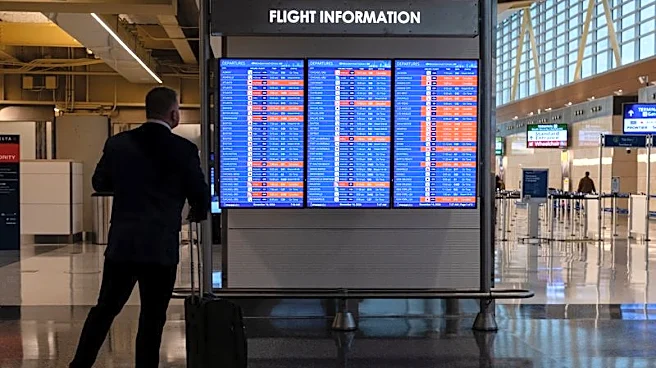








The nationwide FAA ground stop on Friday, Nov. 13, focused attention on FAA facilities in El Dorado, Arkansas, and Amarillo, Texas, which appear to have been the epicenter of the communication breakdown that forced the shutdown.
Transportation Secretary Sean Duffy said on Nov. 15 that officials are investigating whether problems at the two FAA sites in Arkansas and Texas were connected to Friday's nationwide ground stop.
According to the FAA, in an FAQ released on Sunday Nov. 15, "the initial investigation indicates that two potential locations as the reason for the excessive data flooding the systems: a radar site in Amarillo, Texas, and a radio communications site in El Dorado, Arkansas."
"L3 Harris, the FAA’s current network service provider,
had been doing work at the El Dorado site, including deployment of a new router. When these inconsistencies in the data happened, L3 Harris blocked those two locations and the network stabilized," the FAA said. "The broadcasting function was also disabled on all the new routers as a precaution."
What happened in El Dorado?
The FAA said that work was underway at an FAA radio communications site in El Dorado. FAA contractor L3Harris had been replacing aging telecommunications infrastructure and deploying a new router there.
After that work, the FAA network began receiving an extraordinary flood of traffic, about 1,000 connection attempts every four to five seconds. That destabilized the FAA telecommunications infrastructure, disrupting aircraft communications and radar feeds.
Investigators traced the excessive traffic to the radio site in El Dorado and a radar site in Amarillo. When L3Harris blocked those sites from the network, the network stabilized.
The FAA consequently imposed the nationwide ground stop at about 3:30 p.m. ET on Nov. 13 and resumed air traffic at 8:15 p.m. after determining the system was stable.
What happened at the Amarillo facility?
The Amarillo radar site was the second location identified in the FAA’s initial investigation as a potential source of the excessive data flooding its telecommunications network, along with El Dorado.
According to the FAA, investigators have not established whether Amarillo independently malfunctioned or whether its abnormal traffic was connected to the network problem involving El Dorado.
Routers examined
Duffy told CBS News' "Face the Nation" on Nov. 15 that the FAA and L3Harris are examining routers from both sites, and has them in a test lab in Florida.
"When we know what the root cause of this issue was – was it the install from L3Harris? Was it the router? – I'm going to tell you and the American people what we find," Duffy said.
This article originally appeared on USA TODAY: FAA ground stop puts Arkansas, Texas facilities under scrutiny