



The U.S. government gave tens of thousands of would-be immigrants one year to turn an extraordinary stroke of luck into a visa. Then, for most of that year, it stopped issuing the visas.
Families selected for the 2026 U.S. Diversity Immigrant Visa Program still organized their lives around the possibility that the process would resume. They sold homes, left jobs, gathered years of records and crossed borders for embassy interviews. Some spent thousands of dollars proving they qualified for visas the government would not issue.
In late August, two federal judges found the Trump administration’s pause unlawful and ordered the government to resume processing or reconsider affected cases. But by then, less than five weeks remained before the program’s
Sept. 30 deadline, and nearly two more passed before the State Department instructed embassies to restart processing, according to court records.
The State Department says it is complying with the orders. But attorneys for the applicants accuse the administration of slow-walking thousands of cases until time runs out. A federal judge is now weighing whether the government should be held in contempt or ordered to take further action.
Here's what to know about how the diversity visa lottery works, why the Trump administration paused it and the legal fight over what happens next.
What is the US Diversity Immigrant Visa Program?
The program is an unusual doorway into the U.S. immigration system. Most paths to a green card begin with a family relationship or a job offer. This one begins with a random drawing.
Its roots stretch back to the 1965 immigration overhaul, which ended quotas favoring Western Europe and centered the system on family and employment ties. As immigration from Asia and Latin America rose and arrivals from Ireland and some other European countries fell, Irish-American lawmakers pushed for another way in. They initially secured a temporary lottery for people from countries disadvantaged by the new system.
Congress transformed that idea into the modern diversity visa program through the Immigration Act of 1990, creating a worldwide lottery intended to broaden the geographic reach of American immigration. Today, the program makes up to 55,000 visas available each year to people born in countries that have sent relatively few immigrants to the United States.
For 2026, nearly 129,500 prospective applicants, spouses and children were randomly selected from a pool of more than 20.8 million entries. The government chooses far more people than it has visas because some will not continue, others will not qualify and many will run out of time.
How does the program work?
Each fall, millions of people submit online entries to the State Department. Entering in 2026 was free, though future applicants will have to pay a new $1 registration fee.
Then, in May, a computer at the Kentucky Consular Center draws names at random from regional pools. Entrants return to the program’s website, type in their confirmation numbers and learn whether they were selected. For those who see that winning message, the excitement can be enormous. But selection begins a process that is long, expensive and still uncertain.
Each selectee receives a case number that determines when the application can move forward. Lower numbers generally become eligible for interviews earlier, while people with higher numbers might wait months — or never receive an appointment before the program ends.
The Kentucky Consular Center schedules cases as their numbers become eligible, applications are completed and embassies have space. Once an interview is set, applicants must gather records from every country where they have lived, undergo medical examinations and pay $330 per person.
At the embassy, a consular officer can approve or deny the visas, or place the case in administrative processing for additional review. Those approved become permanent residents when they enter the United States and receive their green cards later. Selectees already living lawfully in the country can apply through a separate process without leaving.
No matter the route, every step — including any additional review — must be completed by Sept. 30.
Why did the Trump administration pause the program?
The immediate answer is the Brown University shooting. The longer answer begins years earlier.
President Donald Trump has opposed the diversity visa lottery since his first term, arguing the United States should prioritize immigrants based on skills and other measures of merit. After a diversity visa recipient killed eight people in a 2017 truck attack in New York City, Trump called on Congress to abolish the program. Congress did not.
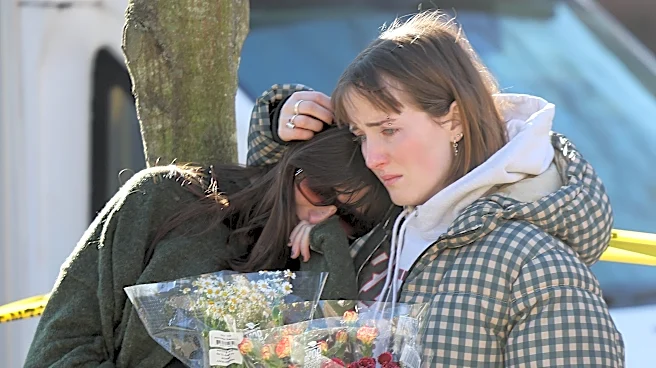
The issue returned in December 2025, after authorities identified the man suspected of killing two Brown students and an MIT professor as a Portuguese immigrant who had received a diversity visa in 2017.

Within days, the administration imposed two holds. U.S. Citizenship and Immigration Services paused diversity-based green card applications from selectees already living in the country. The State Department then stopped issuing diversity visas abroad while it reviewed the program’s screening and vetting procedures. Applicants could still submit forms and attend interviews, but consular officers could not give them visas.
A separate restriction followed in January, when the State Department suspended immigrant visa issuances for nationals of 75 countries, saying they faced a higher risk of relying on public benefits in the United States.
For diversity visa selectees from those countries, the policies overlapped. One blocked them because of the program through which they had applied; the other because of their nationality.
Who challenged the pause?
In March, 738 families joined Ivanov v. Trump in federal court in Washington. Three months later, 664 families brought Medani v. Trump in California, seeking relief not only for themselves but for broader groups of applicants affected by the pauses.
In their lawsuits, the families did not argue that selection entitled them to visas. They acknowledged the government could investigate their backgrounds, determine whether they qualified and deny individual applications. What they challenged were blanket policies that stopped the government from making those individual decisions.
The plaintiffs came from around the world and held different versions of the American dream. Some hoped to escape war or political repression. Others wanted to pursue degrees, build careers, reunite their families or give their children opportunities unavailable at home.

Among them was Ramy Eid, a 19-year-old from Egypt whose family sold their house and car while preparing to immigrate. Eid hoped to study computer science and build a life in which his mother would no longer work 12-hour days for low pay.
"When we grow up in the United States, the United States will grow up with us," Eid told USA TODAY.
What did the courts say?
This year, three federal judges ruled against the overlapping policies in the span of one week. On Aug. 21, U.S. District Judge Jeannette Vargas struck down the 75-country suspension. Four days later, U.S. District Judge Richard Leon found the diversity visa pauses unlawful because the government had not adequately explained such sweeping policies or considered the harm to people who had relied on the program. His order in Ivanov v. Trump, however, largely protected only the families who had sued.
The broadest relief came Aug. 28 in Medani v. Trump. U.S. District Judge Edward Davila certified three groups of affected applicants — extending his order beyond the named plaintiffs — and directed the government to resume ordinary processing.
But the rulings did not return the months applicants had lost. In August, the State Department paused immigrant-visa appointments worldwide as it underwent a "global training initiative." Nearly two weeks passed before it instructed embassies to restart diversity-visa processing, according to court records.
Applicants' attorneys say interviews and decisions have remained far below what would be necessary to resolve the pending cases by Sept. 30. Some people have been interviewed again only to be returned to administrative processing. Others have been told their cases were sent to a Visa Integrity Unit in Washington for additional review.
In their survey of some 650 selectees, the attorneys also found that more than half had never received an interview appointment and that the Kentucky Consular Center appeared to not have issued interview notices after Aug. 14. Some consulates told selectees they could only interview or process cases on lists they had received, the attorneys said. But it's unclear who created the lists or how applicants were chosen.
A State Department spokesperson told USA TODAY "limited information can be shared" given the ongoing litigation. In court records, the Trump administration said the State Department had "substantially complied" with the orders and was "working diligently" in good faith.
What happens after Sept. 30?
That remains unclear. Federal courts have generally declined to revive diversity visa cases after the program year ends, leaving applicants with an uphill legal battle, said Stephen Yale-Loehr, an immigration law expert and retired Cornell Law School professor.
"It’s going to be extraordinarily difficult," he said.
Applicants’ attorneys are asking the courts to act before then, potentially by reserving visas or otherwise preserving cases the government does not finish processing. Whether a judge can — or will — do so remains unsettled.
This article originally appeared on USA TODAY: Diversity visa lottery explained: Why thousands are still waiting for visas