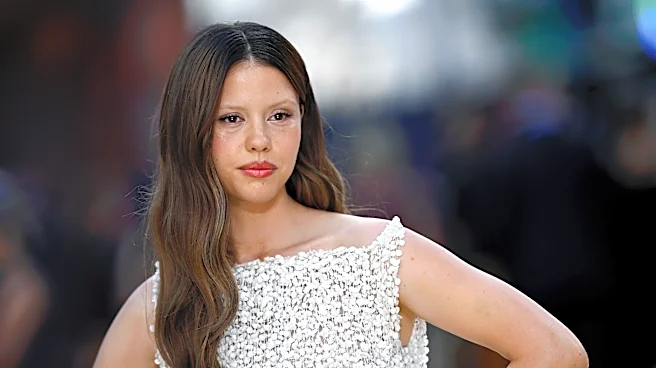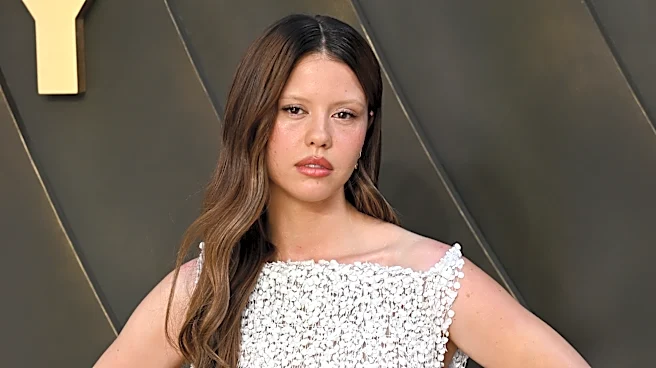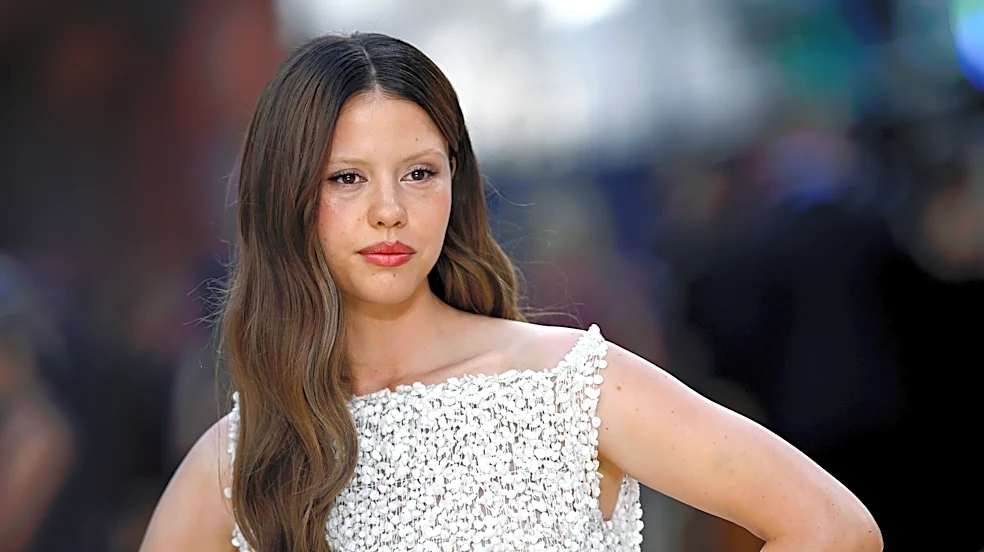




Days after the news broke that Mia Goth filed for divorce from Shia LaBeouf, a selfie-style image of the actress was posted to Instagram and quickly racked up hundreds of thousands of likes.
Goth wore a white T-shirt with the words “MY EX IS MY BIGGEST FAN” plastered across the front in bold capital letters. The message was clear, and seemingly directed toward LaBeouf.
But Goth hadn’t posted the photo. It wasn’t even really her in the selfie. According to her representatives, she doesn’t have ownership of, nor does she engage in, social media on any platform.

The selfie had been generated using deepfake technology, and was uploaded to Instagram by @miagoth_, a fan account with a blue Meta verification checkmark and more than 1 million followers.
But that didn’t stop it from spreading; even news outlets like People published an article that treated the selfie as an authentic image (the story was later retracted).
Deepfake images are flooding social media, and those depicted in the images struggle to get the inauthentic content taken down. When an image is removed from one platform, it often reappears elsewhere. If it’s hard for a celebrity to have a misleading, AI-generated image taken down – and so easy for so many people to believe it was real – this can happen to anyone. As AI-image software becomes even more accessible, ordinary users are already facing the same challenges: watching fake images and narratives of themselves spread online while struggling to stop it.
The account was removed approximately five to six days after the image was posted, after her representatives filed multiple complaints to Instagram. But the image is still spreading via continued news coverage of the incident and discussions on social media platforms like X.
How pesky deepfake posts continue to spread
The fan account’s verified status played a crucial role in helping the image travel.
Meta launched paid verification on Instagram and Facebook in 2023, meaning fan pages like @miagoth_ could secure blue checkmarks, even though they’re not the person depicted in the content. Previously, a verified badge signaled an authentic account, and was usually reserved for public figures and official organizations.
Goth’s PR team shared a statement with USA TODAY, written before the account was removed: “The fact that this fan account meets Instagram’s criteria to qualify for a 'blue check' is disconcerting on a fundamental level.”
The statement continued, “Beyond that, it is incomprehensible that Instagram evidently prioritizes the dissemination of forged and manipulated images over the protection and integrity of a public figure’s likeness.”
Meta, Instagram’s parent company, told The Verge that the account was removed for impersonating a public figure. However, Meta does not prohibit all AI-generated depictions of real people; it generally keeps synthetic content up unless it violates other policies like bullying, harassment or sexual content. USA TODAY has reached out to Meta for comment.
Taking the original post down isn’t the same as removing an image. Screenshots of the image can be uploaded elsewhere and presented as real to new audiences. People encountering the image later may never know that it originally came from an imposter account.
These fake images can have real-life consequences. Victims of sexualized deepfake abuse suffer reputational and emotional harm, and risk re-traumatization when photos reappear online.
Some OnlyFans stars have had imposter accounts use their likeness to scam their followers. One creator said a “fan” showed up at her house demanding answers after engaging with a fake account. Goth is hardly the first celebrity to be targeted by deepfakes, either. In 2024, President Donald Trump shared an AI-generated Taylor Swift endorsement to Truth Social (a pro-President Biden version of the image was originally posted in a Facebook group in December 2023), prompting the singer to endorse former vice president Kamala Harris in an attempt to "combat misinformation."
Fans also pointed out the potential impact of Goth's fake selfie. Some alleged that the account had a history of sharing AI-generated images of Goth, and others called it "gross and sinister" and feared for Goth's safety.
The @miagoth_ account may be gone, but the image − and its implications − aren't.
This article originally appeared on USA TODAY: A surprising photo of Mia Goth went viral. It wasn't real but it won't go away