







This reporting was supported by a grant from the Pulitzer Center.
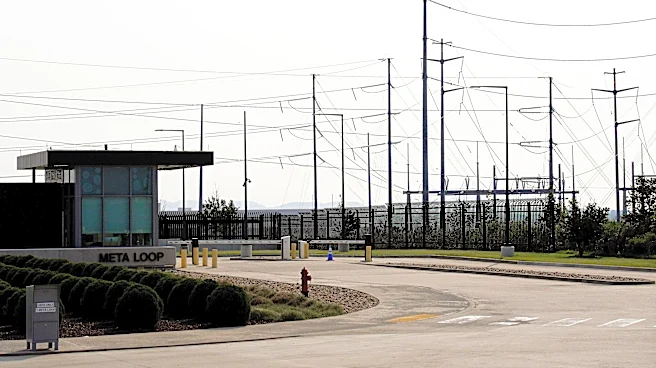
GALLATIN, TN − Gerry Dickson has watched one of Tennessee's largest data centers rise less than a mile from his home.
The sprawling development from tech giant Meta came with promises of hundreds of millions of dollars in investments and an economic boost for this fast-growing city of 52,000 people about 30 miles northeast of Nashville.
But Dickson said all he's seen so far is years of construction noise and a constant industrial hum in the once-serene neighborhood he has called home since 1989.
"They took our peace and they took our quiet," he said.
When Gallatin landed the Meta project in 2020, city leaders celebrated. They had offered substantial property tax incentives to secure
one of the largest economic development projects in the city’s history. At the time, the backlash now following data center development across the nation had yet to take hold.
Meta's Gallatin campus opened in November 2024 on more than 800 acres of former farmland. Meta, the parent company of Facebook, Instagram and WhatsApp, uses data centers to store and process the vast amounts of information that power its social media platforms and artificial intelligence services.
Plans call for up to 12 data halls spanning 1.5 million square feet and requiring about 300 megawatts of electricity, enough to power as many as 300,000 homes.
But now Gallatin is hitting the brakes. Six years after welcoming Meta, the city has imposed a six-month moratorium on new data centers, and officials are divided over how much the city is benefiting from the existing deal.

Gallatin is hardly alone. Tennessee has about 65 data centers of varying sizes, including major campuses operated by xAI in Memphis and Google in Clarksville, according to Data Center Map. More projects are being proposed in the artificial intelligence boom.
The industry promises billions in investment, jobs and tax revenue. But communities across the nation are questioning the costs, from demands on electricity and water to generous tax breaks negotiated with little public scrutiny. In this year's midterm elections, data centers lost big at the ballot box amid the backlash.
An investigation by The Tennessean, part of the USA TODAY Network, found that as data centers spread across Tennessee, basic details about their costs and impacts remain out of public view. Residents have struggled to obtain information about utility demands, financial incentives and the companies behind some projects. And even state officials cannot say how much tax revenue Tennessee is giving up to attract the industry.
Meta pays millions; Gallatin gets a fraction
Meta has poured more than $1.5 billion into its Gallatin data center campus. But when it comes to the millions the tech giant pays in lieu of property taxes, Gallatin gets a relatively small share, and city leaders have little say in how the money is divided.
Records obtained by The Tennessean show Meta paid $2.45 million during the 2025-26 fiscal year, up from $1.75 million the year before. About $1 million went to the local schools in Sumner County, $637,000 to Sumner County where Gallatin is located, and just $531,000 to Gallatin.
The payments are part of a tax incentive package approved in 2020 that provided Meta with an estimated $19.5 million in local tax breaks. Instead of paying conventional property taxes, Meta makes negotiated payments in lieu of taxes, known as PILOTs. Each qualifying building receives a separate 20-year tax abatement.
But the agreement contains no formula for dividing those payments among the city, county and schools.
Instead, the money goes to Gallatin's Industrial Development Board, which decides each year how much each receives.
That has frustrated Councilman Pascal Jouvence, who argues that Gallatin is getting far less than officials anticipated from a development of this magnitude.
"I still don't think we're getting a deal at all," Jouvence said.

Rosemary Bates, executive director of Gallatin's Economic Development Agency, disagrees. She points to funding for schools and community programs, along with Meta's donations of computers, internet hot spots and educational grants. The campus employs about 100 people, according to Meta.
"We are exponentially better financially because of them," Bates said.
Mayor Paige Brown remains supportive of data center development and praised Meta as a good corporate partner. Still, she acknowledged that Gallatin's approach to negotiating such deals has evolved since 2020.
"Certainly if (the deal) were done today, it would be negotiated very differently," Brown said.
The Tennessean reached out to Meta for comment.
Hitting the limits of data center growth
Beyond the financial debate, Meta's massive campus has raised questions about water use, electricity and Gallatin's capacity for future development.
Records obtained by The Tennessean show Meta used 53.4 million gallons of water in 2025, averaging about 4.5 million gallons a month. The water is drawn from Old Hickory Lake through Gallatin's municipal water system.
The campus accounted for roughly 2% of Gallatin's water sales during the 2025-26 fiscal year, consistently ranking among the city's largest water customers.
City officials say Gallatin has enough water to meet Meta's current needs. The company also paid for water and sewer improvements that benefit nearby customers.
Electricity is another matter.
Meta receives power directly from the Tennessee Valley Authority. But Bates said Gallatin already lacks the electrical infrastructure to support another large power user on a separate 600-acre tract being annexed for future industrial development. A new substation could take at least three years to build, limiting the city's ability to attract another major industrial customer.
"We can't really have another large electric user for several more years," Bates said.
For-sale signs have appeared in neighborhoods surrounding Meta's campus as some residents look to leave the area. One neighbor said homeowners have struggled to sell their properties.
Jim and Maria Joseph, whose backyard borders Meta's property, said construction brought noise and muddy runoff that left portions of their land persistently wet.
"Our back lot, since then, it's always muddy," Maria Joseph said, adding that Meta took steps to address neighbors' complaints.
The couple remember when deer and wild turkeys roamed the surrounding farmland. Now, Maria worries about what future development could mean for their property value.
"It's just hard not knowing," she said.

Tennessee can’t tally tax breaks
On the state level, Tennessee offers data centers substantial tax breaks. But officials can't say how much the incentives are costing taxpayers or publicly identify the companies receiving them.
The Tennessee Department of Revenue says 15 companies hold 25 active data center tax exemption certificates. Yet the agency does not track the total amount of tax revenue forgone through the program.
The benefit can be substantial. Data centers that invest more than $100 million and create at least 15 full-time jobs can avoid state and local sales taxes on computer equipment, repairs and backup power infrastructure. They also pay a reduced 1.5% state sales tax rate on electricity.
But the state won't disclose who is getting those breaks. The Department of Revenue declined to identify the companies or provide even a county-by-county breakdown, citing taxpayer confidentiality laws.
The agency said it audits companies for compliance and has found purchases that did not qualify for exemptions. But it did not say whether any certificates have been revoked or provide an assessment of what Tennessee is getting in return.
That lack of accounting is drawing scrutiny at the Capitol.
State Rep. Aftyn Behn, D-Nashville, has proposed legislation for 2027 that would freeze new data center tax exemptions for three years and require public reporting on their costs, recipients and compliance.
"We're handing multimillion-dollar corporations an exemption our Department of Revenue can't quantify due to inaction from the Legislature, while working people in this state are struggling to pay for groceries," Behn said in a statement.
Meanwhile, tech industries are expanding their political influence in Tennessee.
A Tennessean review of lobbying records found Anthropic registered six Tennessee lobbyists in 2026 after having none the previous year. OpenAI added three, the Data Center Coalition added one and DC BLOX, which is fighting Nashville over its proposed data center near the Nashville Zoo, registered three.
AI money is also flowing into political campaigns. Employees and executives affiliated with AI companies contributed at least $131,000 to Gov.-elect Marsha Blackburn's campaign, while Anthropic gave $250,000 to a political action committee supporting her, according to campaign finance records.

Big power demands, few answers in Nashville
In Nashville, battles over two proposed data centers have raised questions about how much electricity the facilities would use and how little information developers have made public.
One of the fiercest battles involves DC BLOX, an Atlanta-based developer seeking to build a data center on 23 acres next to the Nashville Zoo.
Records obtained by The Tennessean show Nashville Electric Service evaluated the project at up to 100 megawatts, which is double the roughly 50 megawatts described to the public and in city planning documents.
The utility said the higher figure was an early planning scenario, not the project's final expected demand. DC BLOX said its plans changed and that projected electricity use would be significantly lower, but declined to provide an updated figure.
The controversy helped fuel calls for tougher oversight, prompting Nashville to adopt new zoning restrictions and a temporary moratorium on data centers through Dec. 1.
DC BLOX fought back, suing the city in August and alleging that officials improperly blocked its project. A federal judge dismissed the company's lawsuit Oct. 6 but gave it an opportunity to amend its complaint. DC BLOX said it would continue pursuing its legal rights.
Across town, another proposed data center has drawn scrutiny from residents.
Fisk University's planned 30-megawatt facility is part of its $1 billion Quantum Leap development plan. University officials say they have not yet secured a company to operate or occupy the center, but some North Nashville residents remain skeptical.
They have questioned who might ultimately move in, how much electricity the facility would consume and what environmental impacts it could have on their neighborhood.

Lawrenceburg fights back
In rural Lawrenceburg, about 80 miles southwest of Nashville, horse-drawn buggies roll past farmland and homes that rely on private wells in one of the South's largest Amish communities.
Elle McCann hoped the quiet countryside would be her forever home. Now, a proposed data center two miles away has sparked a fierce battle over the community's future.
ScalePoint Infrastructure plans a 4.99-megawatt facility on about 6.5 acres along Flatwoods Road. That capacity is just below the Tennessee Valley Authority's 5-megawatt threshold for reviewing certain large power requests.
Local utility officials say that existing infrastructure can support the project and that a closed-loop cooling system would limit water use. But residents still don't know who will occupy the facility or whether it could expand.
In July, McCann presented Lawrenceburg's Planning Commission with a petition signed by more than 7,600 people demanding an 18-month moratorium.
"We are not anti-business," she told commissioners. "We just want to make sure the right process has been followed and that we're not going to harm Lawrence County for future generations."
But their pleas failed. The planning commission unanimously approved the site plans, and efforts to secure a moratorium went nowhere.
Unanswered questions remain. The Tennessean requested records of any nondisclosure agreements or discussions involving city officials and the developer, but Lawrenceburg said it found no responsive records.
Lawrence County Chamber of Commerce CEO Ryan Egly defended the project, saying the county offered no tax incentives and expects it to generate revenue without major demands on local infrastructure.
Despite winning approval, the developer has yet to break ground, leaving residents watching and waiting for answers.
This is the second in a three-part investigative series examining how the data center boom is reshaping Tennessee. The reporting was supported by a grant from the Pulitzer Center.

This article originally appeared on Nashville Tennessean: Data centers get big tax breaks. Communities are questioning the cost