





Even Barack Obama was skeptical that Scott Colom could pull it off.
"He said, 'listen, I thought you could get it close, but I didn't think you could win because it's Mississippi,'" Colom told USA TODAY in a one-on-one interview, recalling the post-victory congratulatory phone call that the former president — a history maker himself — made to him.
The surprise expressed by America's first Black president — and an icon for hope — reflects the shock that is being voiced around the country over Colom's stunning upset. The Mississippi Democrat is set to be sworn in as the state's first Black senator in 150 years.
Colom's defeat of Mississippi GOP Sen. Cindy Hyde-Smith capped a historic midterm election for Black Americans.
There will be a record seven
Black senators and five Black governors taking office next year. In the U.S. House of Representatives there will be two additional Black Democratic members next year and Democratic Rep. Hakeem Jeffries is poised to become the first Black speaker in history, taking the gavel in a building that was constructed by enslaved African Americans.
Black women won eight statewide offices in Georgia. Gov.-elect Keisha Lance Bottoms will be the first Black women governor in U.S. history.
With the Democratic takeover of at least one chamber in each state, both Georgia and Texas are set to elect Black women as speaker in their respective statehouses, as well. Florida Gov.-elect Byron Donalds, who is leaving Congress, will be the state's first Black governor in 180 years, and the first Black Republican chief executive in U.S. history.
But the Magnolia State's senator-elect said he isn't worried as much about what the history books will say about him as much as creating a footprint in the region for the next generation.
"My job is to make it easier for the next person in the here and now. I want the next African American boy or girl that has the vision, the values and the work ethic, and they want to be United States senator, I want it to be easier because of what I do," Colom said.
"I want people to say, you know, 'Scott didn't do anything to make it harder (for the next Black candidate). He started with integrity; he was transparent; he articulated his decisions in a way that even if we disagreed, we could understand where he's coming from,'" he added. "And for the next person to be judged by the content of their character, not the color of their skin. That's my goal."
'They came for us': Black voters motivated by anti-diversity agenda

Colom, then a district attorney, decided to run for Hyde-Smith's seat three years ago, after she blocked his nomination to serve as a U.S. District Court judge. He faced an uphill climb.
President Donald Trump won Mississippi by more than 23 points in 2024 and Hyde-Smith won her 2020 Senate race by 10 points. The state hadn't elected a Democrat to the U.S. Senate in 44 years.
Colom campaigned on lowering prices and improving health care access, and launched perhaps the most viral ad of the campaign cycle, lambasting Hyde-Smith for telling voters to "pick another protein." One of his campaign taglines was "Mississippi matters."
At the same time, larger forces were sweeping the nation.
Americans across the country were furious with Trump and Congress for failing to address rising prices, especially the spike in gas prices spurred by the Iran war — and Black Americans were no exception.
Experts and strategists who spoke with USA TODAY also cited policy moves that chipped away at Black history, fired federal workers connected to rising Black unemployment, and held back diverse military promotions.
Others pointed to racially offensive incidents such as Trump's social media page posting a video depicting the Obamas as apes and public spats with prominent Black officials, such as seeking to fire Federal Reserve Governor Lisa Cook and multiple attempts to indict New York Attorney General Letitia James.
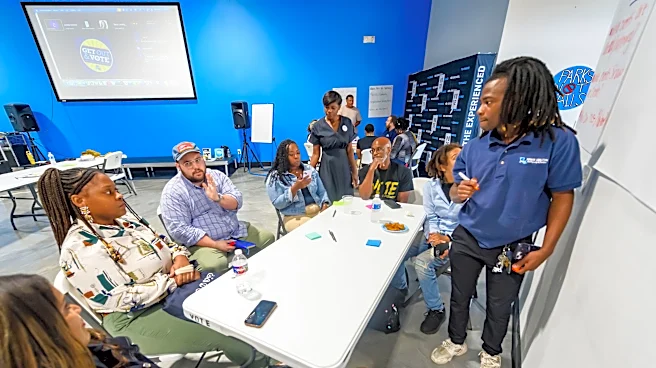
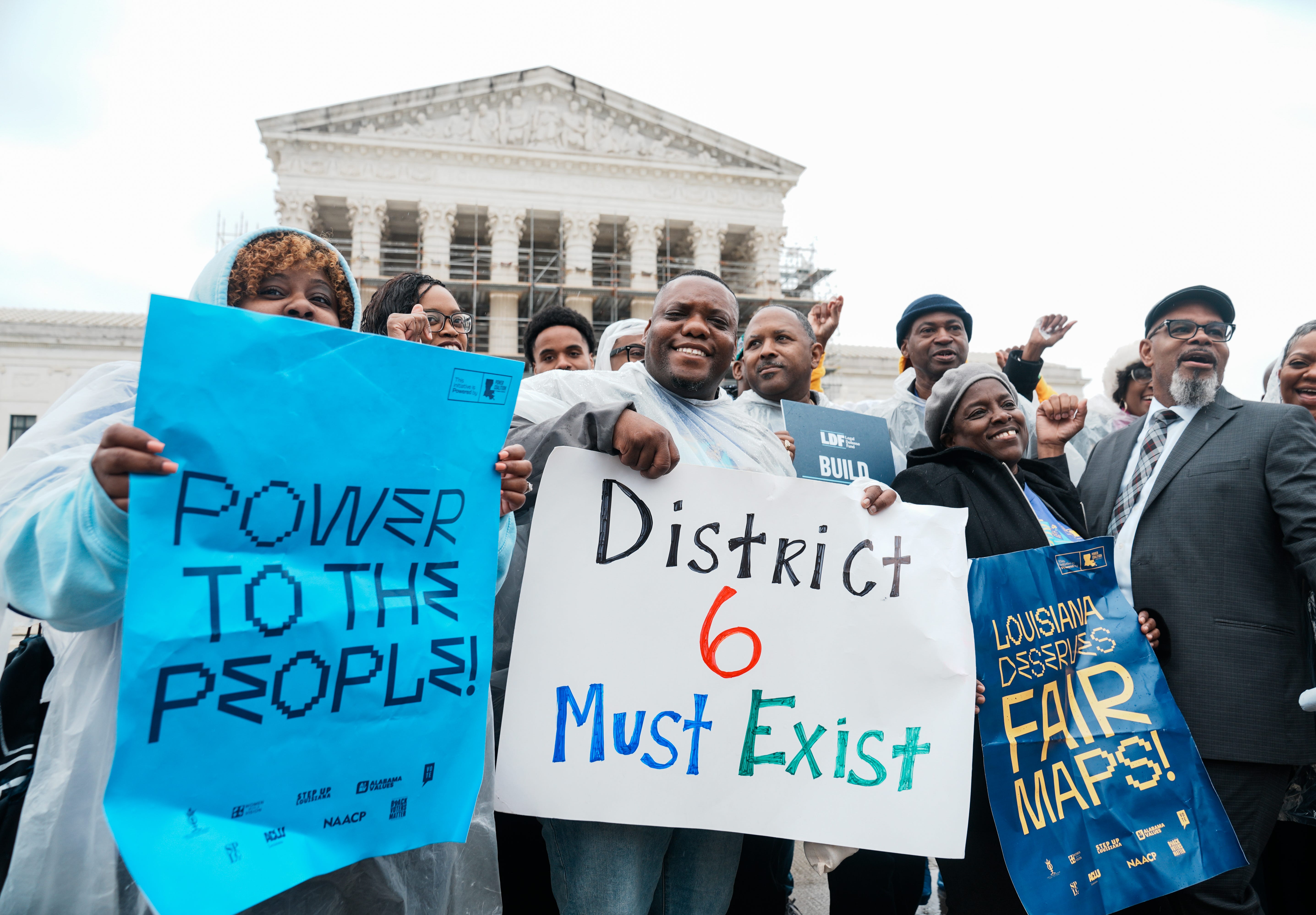
Voting rights activists say also pointed to the grassroots power of Black organizers determined to rebuke Trump's mid-decade redistricting plan and a backlash to Trump's aggressive anti-DEI crusade.
The president's attempt to create safer Republican districts was coupled with an April ruling by U.S. Supreme Court weakening the Voting Rights Act, which allowed state legislators to carve up many majority-minority districts — most represented by people of color — in at least six southern states this year.
But the efforts backfired. Many of the Black candidates whose districts were carved up nonetheless won, and Black turnout surged in the South.
"They came for us and this is our response," said LaTosha Brown, co-founder of the voting rights group Black Voters Matter.
Colom: Democrats must build on progress in South

At first, Colom's campaign largely went it alone. He was considered an extreme longshot. But as voter interest surged, so did interest from the Democratic Party. Obama cut a campaign for him in October. About a week later, Senate Majority PAC, which is aligned with Senate Democratic Leader Chuck Schumer, invested $1.2 million.
The swell in voter turnout that ended up propelling him to the Senate was matched in other southern states.
Roughly 56% of Black Americans live in the South, where they outpaced their 2022 midterm turnout in states overwhelmed by the so-called "blue wave," including a 20% spike in Georgia and 53% in Texas, the NAACP reported.
Mississippi's Senate race drew 45% voter turnout in a state that had only 32% turnout in 2022, the lowest in the nation, according to the University of Florida Election Lab.
The 43-year-old former prosecutor won with 91% of the Black vote and 25% of the white vote, The New York Times reported, ripping down a wall built by a century of state violence and Jim Crow policies aimed at stripping Black voters of their political power.
Colom urged the Democratic Party to continue to invest in the South. He pointed to Louisiana, where Democratic Senate candidate Jamie Davis, who is Black, lost by less than half a percentage point or about 26,000 votes to Republican Julia Letlow despite nonpartisan election handicappers rating the district as safely Republican for most of the year.
Asked if he plans to take a heavier role in help organizing southern states once seated in the Senate, Colom reiterated that local candidates must lead their own strategy and messaging. He noted the assistance from other Black elected officials in the region, such as Sen. Raphael Warnock, of Georgia, who said Democratic donors laughed when he asked them to take the Magnolia State race more seriously.
"You look at the results, you say, 'Holy moly! If that guy would have gotten a tenth of the resources that some of these other states got, he would have won," Colom told USA TODAY, about the results in Louisiana.
"I don't want to be a kingmaker," he added. "I just need to make sure (Davis) and others get the resources and the attention they need, and he can drive the message for those voters. I'll be a partner, but there's a lot of partners."
Jeffries' likely speakership underscores how Black firsts have changed

Of all the first-ever candidates swept into power by the 2026 midterms, the most powerful will be House Minority Leader Hakeem Jeffries, who is expected to be etched into the history books as the nation's first Black House speaker.
That is something top of mind among the Brooklyn-based congressman's supporters, who greeted him with chants of "Speaker! Speaker!" at an election watch party Nov. 3 in Washington.
"On the 250th birthday of America, we're gonna make history by electing Hakeem Jeffries as the first Black Speaker of the House," Rep. Ted Lieu, D-Calif., said at a Nov. 10 press conference. "And it's going to be phenomenal."
Jeffries' elevation would be a milestone in the Capitol building, which was constructed by enslaved African Americans and saw its first Black member elected more than 150 years ago. He will be second in line for the presidency, wielding the most powerful legislative gavel at a time when modern-day diversity initiatives and landmark civil rights gains have been struck down by the Trump administration.
Yet, he is facing significant criticism from the left.
During a Democratic retreat in Colorado this past weekend, protesters interrupted his sit-down discussion calling Jeffries a "liar" and a "traitor" to progressive causes. He has been skewered for opposing Medicare for all and being a supporter of Israel, a U.S. foreign ally that has become increasingly unpopular among Democrats for how its conducted the war in Gaza.

Stephen Graves, an Oklahoma State University political science professor at the Center for Africana Studies, said Black Americans are immensely proud of many trailblazers this year.
In the years since Obama's presidency, however, the demands for solutions by minority voters aimed at elected leaders from the same racial background have intensified.
Some political commentators, for instance, are slamming Bottoms and Jeffries' records as out of step with the community, in Bottoms' case for supporting a controversial 85-acre police training facility as Atlanta mayor and in Jeffries' case for backing Israel.
Others say celebrating these firsts lets Black elected officials off the hook for fixing systemic problems, such as reports showing median Black household wealth fell by 25% over the past three years.
"I think because of Obama, the skepticism of Black elected officials internally among the Black community is extremely high," Graves said. "This time around... it's a wait-and-see attitude with Black people. We've been down this road before."
Some Black leaders have already begun to push back on the political left, arguing Jeffries is being unfairly judged after a successful midterm in comparison to previous incoming Democratic speakers, such as outgoing Rep. Nancy Pelosi.
Rep. Shomari Figures, D-Alabama, who won reelection despite GOP efforts to redraw his majority-minority district, credits Jeffries for navigating the caucus through Trump's first two years and raising millions to flip the House.
"He just positioned us to take on a historic majority, the largest majority either party has had this century," Figures told reporters Nov. 13. "He just did that, and so to sit here and say that he should not be the leader is reckless and irresponsible. I think people are not paying attention... he should absolutely be speaker."
But there is a progressive push to recruit Rep. Ayanna Pressley, D-Massachusetts, who is also Black, as an alternative. An online petition reached about 136,500 signatures but the 52-year-old congresswoman hasn't declared an intention to seek the gavel.
Over the weekend, Pressley touted her support for Medicare for all, abortion rights, affordable childcare, paid leave and reparations for slavery, which is heavily supported by Black voters.
"We need to show people what Democrats can do with our majority," she said in Nov. 15 post on Facebook. "If Trump wants to veto any of this, then the people will know exactly where he stands. And we won’t stop fighting until we win."

Democratic strategist Nina Smith, a former senior adviser to Stacey Abrams' 2022 campaign for Georgia governor, said Colom's campaign benefited from nimble and creative digital messaging that reached voters ignored by the party and mainstream press.
"It's not about them; it's about the people, and holding onto that is going to be paramount in order for them to navigate expectations successfully," she said.
"That is the sort of innovation that these newly elected officials need to lean into, take the lessons that they learn from 2026 and build on it," she added. "They shouldn't go to D.C. or go to the respective state houses or offices, and forget about the people who helped them get to the door."
Contributing: Melina Khan, Jay Stahl, Sarah D. Wire
This article originally appeared on USA TODAY: Black victories, Red States: Scott Colom and new era of Black leaders