

A D.C. federal judge "reluctantly" dismissed a seditious conspiracy indictment, at the request of the Department of Justice, against members of the far-right group the Oath Keepers for the events at the Capitol on Jan. 6, 2021.
"This court does strongly disagree. But that alone is not a valid basis to deny the motion. The court must give way to the primacy of the Executive Branch in making charging decisions," Judge Amit Mehta for the U.S. District Court for the District of Columbia wrote in an Aug. 4 filing.
Mehta ended his filing, noting that the case was the final prosecution related to the events of Jan. 6, 2021, saying "that book is now closed."
"Today’s epilogue diminishes the gravity of that day, denigrates the work of the prosecutors and
law enforcement officers who secured these convictions, and excuses criminal acts that caused a centuries-long pillar of our democracy – the peaceful transfer of presidential power – to buckle," Mehta wrote.
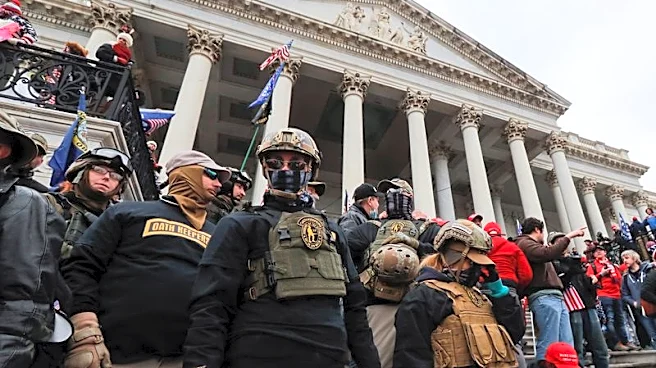
The case started in January 2022 when nine members of a group called the Oath Keepers were indicted on charges including "seditious conspiracy, conspiracy to obstruct an official proceeding, and conspiracy to prevent Members of Congress from discharging their duties," according to Mehta.
The group of defendants included the leader of the group, Elmer Stewart Rhodes III, and members Kelly Meggs, Kenneth Harrelson, Jessica Watkins, Thomas Caldwell, Roberto Minuta, Joseph Hackett, David Moerschel, and Edward Vallejo.
Between two trials, six members were convicted on charges of seditious conspiracy, another six on charges of conspiring to obstruct an official proceeding, seven for conspiring to prevent members of Congress from discharging their duties, and all nine on charges of obstruction of an official proceeding. Sentences ranged from 18 years for Rhodes to as little as three years. Defendants appealed their convictions.
"Contrary to what some believe, the jurors did not simply rubber stamp the government’s case," Mehta wrote in the Aug. 4 filing, pointing to jurors also finding various members of the group not guilty of various charges. He said that the jurors "performed an extraordinary service to the nation."
Developments outside the case during appeals
While defendants' convictions were being appealed, a 2024 Supreme Court decision, called Fischer, narrowed the obstruction statute used in many Jan. 6 proceedings.
Then, President Donald Trump took office on Jan. 20, 2025, and his sweeping Jan. 6 pardons on that first day excluded 14 individuals, and eight of the nine defendants in this case were among those named.
Trump still commuted the sentences of those 14 to time served, erasing the rest of their sentences, but keeping their convictions in place. Rhodes and others were released from prison. Defendant Caldwell, who was not otherwise named, was later pardoned on March 20, 2025, by Trump.
Fast forward to 2026
With appeals still pending, the Department of Justice asked the D.C. Circuit Court in April to vacate the defendants' convictions, which the court granted on May 21.
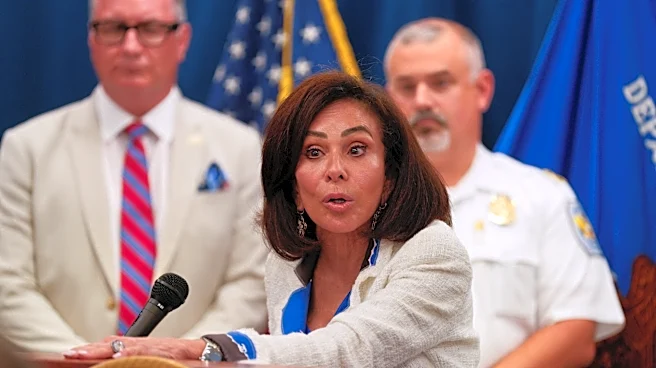
This sent the case back down to the district court, and the next day, U.S. Attorney for the District of Columbia Jeanine Pirro asked Mehta to drop the charges against the defendants, writing that dropping the indictment, thus preventing new trials on the charges, "is in the interests of justice."
Pirro's reasoning in her less-than-two-page filing did not sway Mehta, who "sought a more fulsome explanation" on the public interest of dropping the indictment.
On June 18, the government provided Mehta with supplemental materials in a 13-page document that asserted that the defendants already endured two "vigorously litigated" trials and that having new trials would constitute harassment.
Pirro said that combined with Trump's commutations and the Supreme Court's Fischer decision, the indictment should be dismissed. Pirro said having more trials would "needlessly consume scarce prosecutorial and judicial resources and would not advance the efficient administration of justice." She added that even if the defendants were convicted again, Trump's proclamation would commute any future sentences anyway.
Mehta, in his new filing, stressed that motions to drop the case did not characterize previous charges as legally flawed, evidence as insufficient for convictions nor identify any legal errors that yielded an unfair trial or wrongful conviction.
Mehta said it was "surprising" that the government took the position that the public interest has already been achieved through prior public trials and routine media coverage.
"The government is ordinarily of the view that accountability, not mere publicity, is what is in the public interest," Mehta wrote. He agreed that the dismissal would not erase public records but said that "it will, however, erase the legal judgments that these Defendants broke the criminal law."
In the end, Mehta dismissed the indictment, saying "this court must yield" to the assessment of the government. This closes years of United States criminal cases related to actions committed or allegedly committed on Jan. 6, 2021, Mehta said, and he commended police officers at the Capitol that day.
"Due to the extraordinary bravery and courage of law enforcement, Congress was able to reconvene later that night and certify President-elect Biden as the winner of the 2020 presidential election," Mehta wrote.
This article originally appeared on USA TODAY: Jan. 6 Oath Keepers seditious conspiracy case dropped by DC judge