







A complex mission lies ahead for investigators trying to determine why a Learjet dove into the ground and exploded in South Florida, killing nine people, including two children.
How did the pilots lose control of the aircraft? Did the jet go into a "Mach tuck," its nose suddenly pitching downward in a trajectory nearly impossible to recover from? What role did icing play in the fatal fall from the sky?
Investigators will scrutinize the towering and turbulent storm the jet encountered, every aircraft piece recovered and every word the co-pilot spoke to air traffic controllers in the final minutes of her life, expert pilots told USA TODAY. Those experts said pilots of the mid-sized high-altitude Learjet may have faced little margin for error in difficult
flying conditions, raising concerns about "Mach tuck," an infamous nose-down flying condition.
"Every single one of those pieces will be a clue in putting this whole picture together," said Hassan Shahidi, president and CEO of the Flight Safety Foundation.
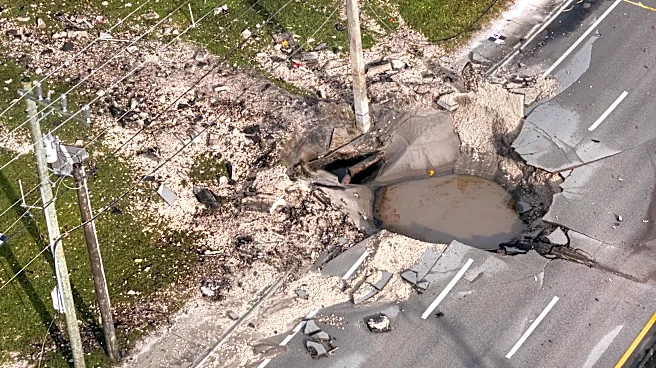
The Nov. 1 crash killed the pilot, co-pilot and seven passengers bound for the Bahamas when the Learjet 60 plunged to the ground at more than 300 mph and exploded into a fireball.
National Transportation Safety Board investigators are pleading with the public for recovery of any piece of the wreckage that’s found. Sometimes, the linchpin in an investigation can be just one screw.
Most of the Learjet 60’s left elevator – a movable control surface on the horizontal stabilizer – was recovered in three pieces within one to four miles of the crash site, the NTSB announced Nov. 3.
It was a "huge clue," said Robert Joslin, associate professor with Embry-Riddle Aeronautical University’s College of Aviation.
The pieces show at least one important part of the aircraft separated before impact. But investigators don’t know whether it separated before or after the loss of control of the aircraft, identified as N722BD.
High-flying aircraft can leave little margin for error
As co-pilot Nathalia Filguieras, 20, described what was happening inside the Learjet to air traffic controllers, she said they were experiencing "overspeed."
Investigators will try to decipher exactly what prompted the overspeed, a condition when an aircraft is moving faster than safe or faster than its certified maximum.
Joslin and the other professional pilots who talked with USA TODAY did not speculate about the specific circumstances. But they said Learjets in general are known for being challenging in certain situations.
Learjets are capable of flying in thin air, high above the altitudes inhabited by many other planes. In the high-speed, high-altitude environment the jets can fly in, they operate with narrower margins of error than other planes at lower altitudes, Joslin said.
A Federal Aviation Administration directive once noted a Learjet could have "marginal controllability" when reaching above maximum suggested speeds.
It’s too soon to say what sequence of events led to the overspeed and crash of N722BD.
In the narrow operating margin of high-speed, high-altitude flight, an aircraft could fly too slow and wind up in a dangerous stall, Shahidi said. Or flying too fast can produce aerodynamic instability that puts pressure on the structure of the airplane.
"This is something investigators will be looking at very closely," he said.
What is 'Mach tuck'?
One rare event that can occur is a "Mach tuck," when aerodynamic changes cause the nose to tuck down in a position that’s difficult, if not impossible, to come out of.
Another term popping up in conversations about the crash is "coffin corner." That’s the point at which there’s little leeway for pilots to operate and it’s a position pilots try to avoid, Joslin said. It’s the point in altitude when the difference between the slow speed at which a stall can occur and the maximum recommended speed approaches zero.
Joslin trained in the military to get out of a spin, but once an aircraft experiences an event that puts the aircraft nose down into a diving position, it changes the dynamics so much that it would be "very difficult to come out of," he said.
Safety advances have reduced the number of such events that occur, pilots said.

Weather can narrow safety margins
The weather remains a major question, Shahidi said. Turbulence, either in clear air or storms, can narrow a Learjet’s margin of error even further, by causing the aircraft to exceed its airspeed envelope.
The air ahead of this flight was anything but clear. The thunderstorm over Palm Beach County very rapidly reached a very high altitude, up to 40,000 feet, Shahidi said. Investigators will analyze what was happening with the turbulence inside that storm and whether it caused a loss of control in the aircraft.
Ice buildup reported on the aircraft also will be an important part of the investigation, because it could have contributed to the loss of control of the jet, Shahidi said.
A Learjet’s thin wings are more prone to ice buildup than some other aircraft, Joslin said. "So all these things make it very challenging and once you get up in that thin air, you don’t have the capability, because of its design, to maneuver without going outside the envelope."
Some previous nose-down crashes share similarities
Based on NTSB reports, two similar nose-down crashes occurred in 1980 and 1981, both after reportedly encountering clear air turbulence.
In May 1980, a Learjet 25D crashed into the Gulf, killing both people on board, after the pilot reported the aircraft was in a spin. The NTSB concluded the aircraft flying beyond its Mach limits contributed to the crash, describing the "Mach tuck" that can occur when the wing’s center of pressure moves and results in a nose-down pitching moment.
A Learjet 24 crashed near Felt, Oklahoma on Oct. 1, 1981, killing two people on board. The NTSB attributed part of the crash to the aircraft’s marginal controllability characteristics when flown beyond its Mach limits, resulting in a loss of control.
In an emergency 2003 airworthiness directive, the FAA said a Learjet Model 45 had experienced a severe vibration incident, followed by a sudden nose-down pitch. An investigation revealed a screw on the horizontal stabilizer actuator assembly had fractured and a threaded nut in a secondary retaining rod had worked off, resulting in the loss of control of the aircraft.
That structural failure could result in the loss of control of an aircraft, the FAA warned, advising immediate inspections.
An 'absolutely critical' piece of the investigation
NTSB investigations can sometimes be lengthy and it could be months before the world learns whether aerodynamics, the weather, a failed part or something else entirely played a role in the downward plunge of N722BD.
Every fatal crash is sad, but experienced pilots who have heard the air traffic control audio that went public describe it as one of the most harrowing they’ve ever heard.
"It’s just awful. When you hear the voice of the co-pilot doing her job very well under these circumstances, it’s just unbelievable," Shahidi said. "I can’t imagine anyone being able to perform as she did, absolutely flawless."
But, he added, the information she provided will be "absolutely critical."
Dinah Voyles Pulver covers climate change, disasters, environment and other news for USA TODAY. Reach her at dpulver@usatoday.com
This article originally appeared on USA TODAY: 'Huge clue'? Experts unravel a mysterious, tragic nose-down jet crash