
It looked like an uphill battle at the start of the campaign season, but Democrats now have a good chance of winning a majority in the Senate − and, with it, the power to sharply limit President Donald
Trump's agenda for the remainder of his term.
Republicans hold a 53-47 majority, but Democrats entered the midterm cycle with the political winds at their backs. The party out of power historically picks up seats during midterm election cycles, and Republicans are trying to outrun an unpopular president, rising gas costs fueled by the war with Iran and an electorate that blames Trump’s policies for higher expenses.
That environment has put the upper chamber in play, even as Democrats face a map where nearly all of their pick-up opportunities – and two seats they must defend – are in states that Trump won in 2024.
Republicans appear to have retreated in once-competitive races in North Carolina, a prime pickup target for Democrats, and Georgia, where Democratic Sen. Jon Ossoff is seeking reelection. Democrats are contesting GOP-held seats in Alaska, Texas, Ohio, Iowa, Florida and Kansas, where polls show close races. And after a messy process to replace Graham Platner in Maine, they are hoping to defeat five-term Republican Sen. Susan Collins.
But Republicans still see a path for themselves, too. In addition to Georgia, Democrats must hold onto seats in Minnesota, New Hampshire and Michigan, where Trump won by 1.4 percentage points in 2024. Trump has campaigned with vulnerable candidates in usually red states. And prominent figures like Elon Musk and super PACs such as MAGA Inc., have been spending aggressively to defend their majority.
Here are the 14 states that will determine control of the U.S. Senate:
Michigan
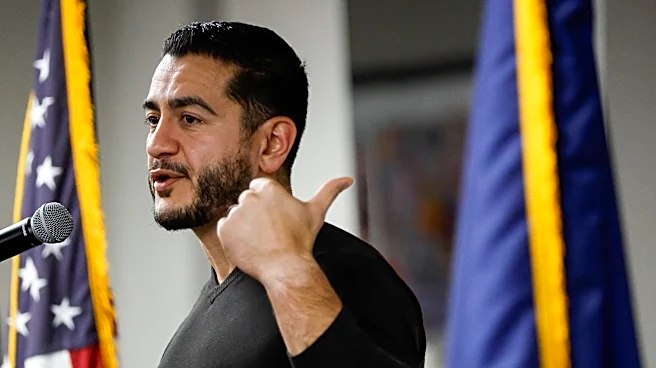
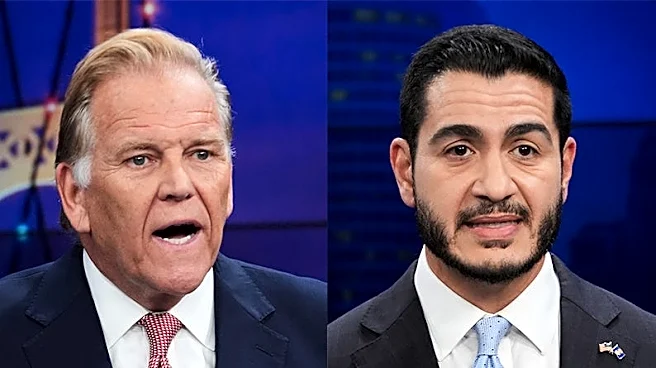
Former Wayne County health director Abdul El-Sayed, a progressive who supports Medicare for All and is sharply critical of Israel, has struggled to fully unify his party after defeating moderate Democratic Rep. Haley Stevens in a hard-fought primary.
El-Sayed, who has narrowly led recent polls, has hammered his Republican opponent, former Rep. Mike Rogers, over his past support for the war in Iran and Trump’s trade war with Canada. Rogers, a former FBI agent, has more recently called for an end to both the Iran conflict and the tariff dispute.

Maine
Five-term Republican Sen. Susan Collins faces Democratic challenger Troy Jackson, the former Maine state Senate president and fifth-generation logger. Jackson replaced the controversial former Democratic nominee Graham Platner after he stepped down from the race amid sexual assault allegations.
Collins has held her seat in a state that voted against Trump three times by sometimes breaking with her party, but she remains a top target for Democrats. Polls in the race have oscillated between showing Jackson or Collins with a slim lead, or even an exact tie.

Ohio
Democrats are looking hopefully to Ohio − a former bellwether state that has trended Republican in recent years − as former Sen. Sherrod Brown challenges Republican Sen. John Husted for the final two years of Vice President JD Vance's former Senate seat.
The close contest, in which Brown has maintained a narrow lead in polls, has led to campaign stops by Vance and Trump stumping for Husted, and former President Barack Obama on Brown's behalf.

Texas
National Republicans warned that the party would need to spend a significant sum to rescue Ken Paxton, the state’s scandal-plagued attorney general, if he defeated incumbent Sen. John Cornyn in the GOP primary. That has proven to be the case – Republican groups have spent more than $100 million trying to hold onto the seat. State Sen. Angela Paxton, who filed for divorce against the attorney general on “biblical grounds,” also released an ad that did not mention her estranged husband but called on Republicans to vote for the party ticket.
While Democrats haven’t won statewide in Texas in more than 30 years, they see an opportunity to win with state Rep. James Talarico, who has campaigned on his Christian faith and argued America is divided by the “top versus the bottom” not “left versus right.”

Kansas
Can a megachurch pastor win a Kansas Senate seat for Democrats for the first time in almost a century? That's the question as pastor Adam Hamilton challenges Republican Sen. Roger Marshall in an unexpectedly close race.
Kansas last elected a Democratic senator in 1932, the longest active losing streak in U.S. history, and Trump carried the state by 16 points in 2024.
But Hamilton, the founding pastor of the Church of the Resurrection, a United Methodist congregation with 24,000 members, has pulled ahead in some polls after Marshall, an obstetrician-gynecologist, was exposed for having sued hundreds of patients for unpaid bills.
Iowa
Two-term Iowa state Rep. Josh Turek could be the Hawkeye State's first Democratic senator elected since Tom Harkin won his fifth and final term in 2008. Turek would have to defeat Republican U.S. Rep. Ashley Hinson in a tightly contested race to replace current GOP Sen. Joni Ernst, who is not running for reelection.
Like Ohio and Florida, Iowa was once a swing state and was carried twice by former President Barack Obama, but it has become increasingly Republican, having been carried three times by Trump. Trump won the state by 13 percentage points in 2024.
Hinson, who is promising to be Trump's top ally in the Senate, now touts her bipartisan accomplishments in Congress and her work to lower costs for Iowans.
Turek's resilient backstory is resonating with voters. He was born with spina bifida, which his family believes was the result of his father John Turek's exposure to Agent Orange during his 22-month Navy deployment to Vietnam. He underwent 21 surgeries by the age of 12 and became a four-time Paralympian, winning gold medals in wheelchair basketball at the 2016 Rio and 2020 Tokyo Games.
He's promoting a moderate "common sense prairie populism" platform that includes "costs, corruption, kitchen table issues," a public health insurance option, and bipartisan cooperation.
Election analysts categorize the Iowa Senate race that also includes wildcard Libertarian Thomas Laehn as a "toss‑up." Polls have showed the race essentially tied.

Alaska
In Alaska, a consistently red state at the presidential level, Democratic nominee and former Rep. Mary Peltola is seeking to oust Republican Sen. Dan Sullivan, and polls have shown her with a very slim lead. Peltola, who would be the first Alaska Native to serve in the Senate, is backing the state's oil and gas drilling and fishing industries.
Two other candidates are on the ballot in the state's ranked-choice voting system, but Republican Gerald Heikes and another man by the name of Daniel J. Sullivan Jr., unaffiliated with a party, are unlikely to draw many votes. The other Dan Sullivan originally filed as a Republican, and the senator's team was unsuccessful in trying to oust the same-name candidate from the race.

North Carolina
North Carolina's open Senate race looks like Democrats' surest bet to pick up a Republican seat in the midterms. Republican Sen. Thom Tillis, an occasional Trump critic, did not run for reelection. The GOP nominee is Trump-backed former Republican National Committee Chair Michael Whatley, and polls indicate he will likely lose to the Democratic nominee, former Gov. Roy Cooper, in the state that went for Trump by 3 percentage points in 2024.

Georgia
Even though Georgia is one of two Senate seats Democrats are defending in states Trump won in 2024, along with Michigan, Democratic Sen. Jon Ossoff looks likely to fend off Republican Rep. Mike Collins, as some polls have Collins trailing by as much as 13 percentage points.
The race has nonetheless been hard-fought, featuring contentious debates in which the candidates hurled insults, such as Ossoff calling Collins a "bigot" for his associations with white nationalists and Collins accusing Ossoff of having a trust fund.
Widely considered a rising star and potential Democratic presidential contender, Ossoff has said he has "zero interest" in running for president in in 2028 and pledged to serve a full Senate term.

New Hampshire
Democrats are favored to hold onto this seat, but Republicans believe their nominee has a shot. Few Granite State Republicans have as much name recognition as John E. Sununu, a former senator whose father and brother have both governed the state. Sununu won the seat in 2002, but lost his 2008 reelection bid to former Gov. Jeanne Shaheen, who is now retiring.
The Republican nominee is seeking to distance himself from Trump, whom he once called a “loser.” But Sununu also received the president’s endorsement in his competitive primary against former Massachusetts Sen. Scott Brown.
Democrats have nominated four-term Rep. Chris Pappas, who would be the first openly gay man to serve in the U.S. Senate. The Democratic nominee is leading in recent polls, but he told told CBS News’ “Face the Nation” in an Oct. 11 interview that “We’re taking nothing for granted in this race because New Hampshire’s a purple state."
Minnesota
The Minnesota Senate race hasn’t garnered much attention, despite polling suggesting a close race. Democratic Lt. Gov. Peggy Flanagan defeated Rep. Angie Craig in the primary, using Craig's support for a controversial immigration enforcement law against her in the wake of two deadly shootings in the state by federal officers.
Republican nominee Michele Tafoya, a former sports broadcaster, has hit Flanagan over fraud in Minnesota's social service programs during Gov. Tim Walz’s administration, while pitching herself as a “pro-choice Republican” who’s “not afraid to stand up to my party,” in a campaign ad. Tafoya drew criticism for suggesting in a radio interview that Americans “be patriots” about the Iran war and “take one less trip to Starbucks" as gas prices rose.
Election forecasters say Democrats are favored in the race, Flanagan has led most surveys.
Nebraska
While polling suggests the race is competitive, election forecasters still believe Republicans have the upper hand. Republican Sen. Pete Ricketts, a former two-term governor from a wealthy family, faces independent Dan Osborn, who lost to Republican Sen. Deb Fischer by just 7 percentage points in 2024, even as Trump carried the state by nearly 21 points.
Osborn, an industrial mechanic and former union leader, has said he wouldn’t caucus with either party if elected, but he’s struggled to distance himself from the Democrats, whose nominee dropped out of the race.
Ricketts has spent millions boosting his campaign. Trump has campaigned with him, and groups such as the Senate Leadership Fund, a super PAC that supports Senate Republicans, have committed millions to support him in light of polls showing the race is competitive.
South Carolina
Republican Sen. Darline Graham was appointed to fill the seat long held by her brother Sen. Lindsey Graham after his death in July. With Trump’s support, she won a special election primary to replace her brother on the ballot in the general election, but her qualifications were questioned when, during a primary runoff debate, Graham stumbled over a question about Taiwan, saying “national security is not my thing.”
Her Democratic opponent, pediatrician Annie Andrews, has focused on health care costs and other affordability concerns. Though Republicans are still favored to win, there are signs that they’re concerned about the seat as polling has been surprisingly close for such a staunchly Republican state. GOP groups are spending on Graham’s behalf, and the president attacked Andrews on social media.
Florida
While Florida has been steadily Republican lately in statewide elections, Democrats are hoping to break their losing streak. Sen. Ashley Moody was appointed to her seat when former Sen. Marco Rubio left to serve as secretary of state, and now she seeks a full term against Democratic challenger, state Rep. Angie Nixon.
Nixon, who is a democratic socialist, would be the state's first Black U.S. senator if she wins in November and drew attention for winning the Democratic primary in an upset win over a better-funded opponent, but she trails Moody in polls.
This article originally appeared on USA TODAY: From Florida to Alaska, the 14 Senate races that will decide control