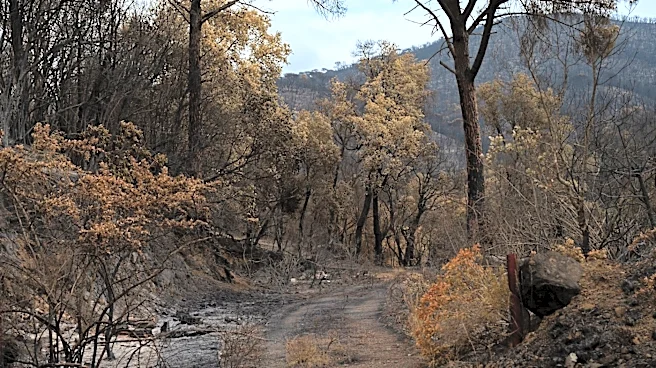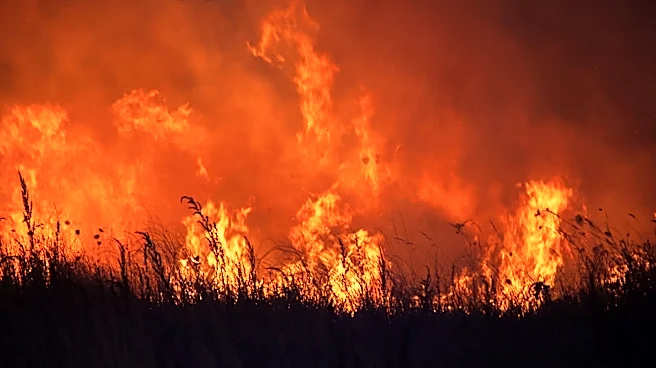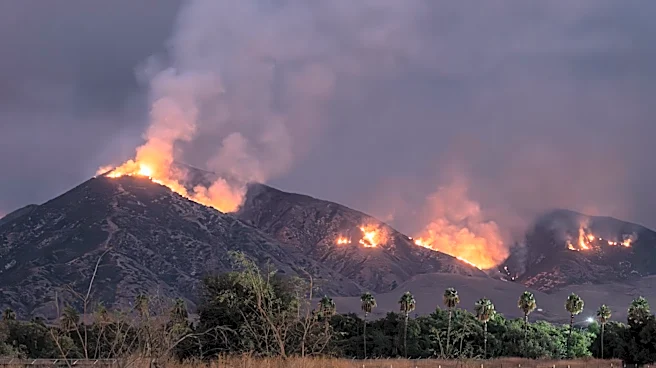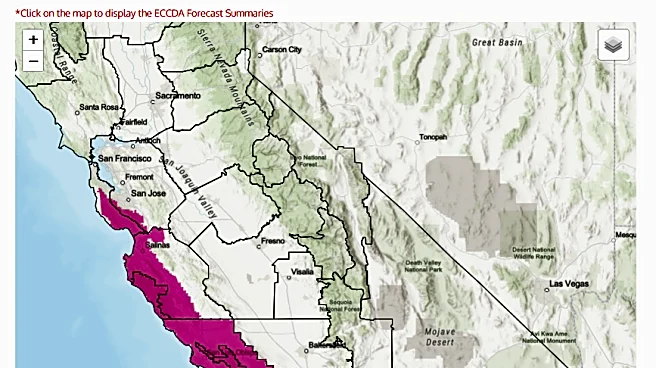

The National Weather Service has issued a massive Red Flag Warning along California's coastline on Aug. 28, as meteorologists are concerned that potential lightning storms could spark fires.
The warnings
were issued late Thursday and early Friday as meteorologists monitored lingering weather conditions along the coastline, stemming from remnants of regional tropical storms. As a precaution, meteorologists issued these warnings along the coastline from San Mateo County to the edge of Los Angeles County until 3 p.m. on Aug. 28.
Along the Northern and Central California coastline, meteorological models predicted that the region could be hit by isolated "dry lightning" storms, which are thunderstorms that produce little to no rain, creating ideal conditions for sparking a fire in flammable areas.

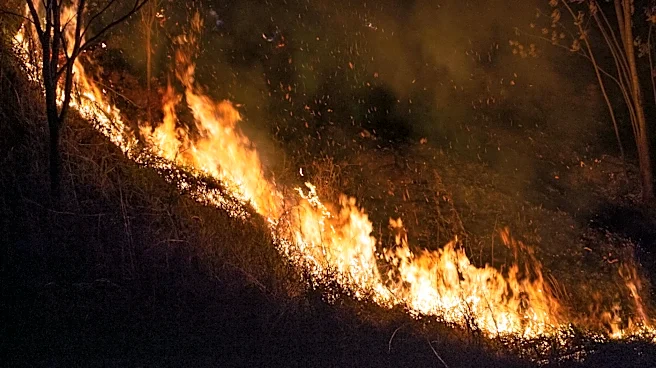
Notably, meteorologists are concerned about regions like Big Sur, which has been on fire for nearly three weeks now, as the Timber Fire has reached over 23,000 acres as of Aug. 28. The Timber Fire initially started in a remote area southeast of Loma Vista at about 9:40 p.m. on Aug. 8.
Rodge Gass, an NWS meteorologist, noted that although rain is predicted for much of the region, he expects most of Northern and Central California to receive about "a tenth of an inch of rainfall reaching the surface."
"We've only picked up around 500th of an inch or so of rain over the past 6 hours in the wettest spots," Gass said. "A good portion of the Santa Cruz Mountains and central coast have been seeing some rainfall, but not enough to put out any fires that are started by any lightning strikes."
Similar concerns have led the NWS to issue red flag warnings throughout Southern California's coast region, even as the chance of isolated "dry lightning" storms remains lower than in the northern region. But additional warnings were issued for Southern California's mountain ranges, as drier conditions throughout the week have made the region susceptible to flammable conditions.

"The warnings for the coastal areas are due to lightning, but for the more interior areas and mountain areas, those warnings are due to the hot, dry conditions," said Rose Schoenfield, an NWS meteorologist.
"Although we've got all this humidity, it doesn't always make it all the way to the mountains, and that's the case this time."
Meteorologists noted that temperatures are expected to drop starting this weekend, as remnants of the tropical storm systems dissipate. Regions along California's coastline are expected to cool off significantly.
Why has it been humid in Southern California?
Over the last few days in Southern California, residents have complained about the hot, humid conditions, which feel more appropriate for Florida than the Los Angeles region.
Regions like Ventura County hit record-high temperatures on Aug. 25, with Camarillo reaching 86 degrees and Oxnard topping out at 87. It's been more than 90 years since Camarillo and Oxnard recorded highs of 85 degrees, a record set in 1931, according to preliminary figures from the National Weather Service.
Much of this heat and humidity stemmed from remnants of a tropical storm building along the Gulf of California and the eastern Pacific, pushing an influx of moisture northward into Southern California.
The influx of moisture, in turn, caused the region's average dew point to rise to "really high" levels. The dew point indicated the temperature at which the air needs to be cooled, according to the NWS.
"The dew points are tied into the overnight temperatures we've been seeing," Schoenfield said. "Not only is it hot and muggy during the peak of the heat in the day, but it's carrying over overnight, so it's become noticeable for those of us without AC units."
Noe Padilla is a Northern California Reporter for USA Today. Contact him at npadilla@usatodayco.com, follow him on X @1NoePadilla or on Bluesky @noepadilla.bsky.social. Sign up for the TODAY Californian newsletter or follow us on Facebook at TODAY Californian.
This article originally appeared on USA TODAY: National Weather Service issues a Red Flag warning along California