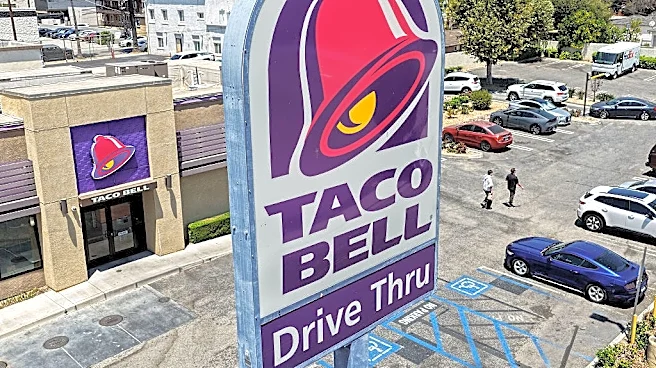









Taco Bell's U.S. sales are recovering after a multistate cyclosporiasis outbreak linked to lettuce served at some of its restaurants led to declining customer traffic over the summer.
Yum! Brands, Taco Bell's parent company, reported on Nov. 3 that the chain's same-store sales fell 4% in the third quarter, which covers July, August and September. It was Taco Bell's first quarterly decline in the metric in about six years and significantly worse than analysts had expected.
The outbreak prompted Taco Bell to temporarily remove certain ingredients from some restaurants as a precaution while health officials investigated. At the outbreak's peak, weekly foot traffic at Taco Bell locations fell 20%, according to Reuters.
But the company says customers
are returning. Taco Bell's U.S. same-store sales are up about 1% so far in the fourth quarter, and the chain has been outperforming the broader quick-service restaurant industry since the end of September.
"We're pleased with the recovery to date, but the team is leaning in and continuing to play offense through the end of the year and the beginning of 2027," Yum! CEO Chris Turner said during the company's Nov. 3 earnings call.

How Taco Bell is trying to win back customers
Yum! executives credited value offerings, loyalty-program promotions and partnerships with popular entertainers for helping bring customers back.
Taco Bell has emphasized affordable options, including its combo boxes, as consumers continue to contend with inflation. Turner said the deals have helped attract lower-income households.
Customers who have returned to the chain are also spending more. Turner said customers are spending 5% more and visiting 6% more frequently than the customers the chain lost during the downturn.
Taco Bell has also partnered with musical artists such as Olivia Rodrigo and Peso Pluma to encourage customer engagement and promote new menu offerings.
What happened to Taco Bell during the cyclosporiasis outbreak?
In July, federal health officials linked an outbreak of cyclosporiasis to shredded iceberg lettuce served at Taco Bell restaurants in Indiana, Kentucky, Michigan, Ohio and West Virginia.
The Centers for Disease Control and Prevention, Food and Drug Administration and state health agencies investigated the outbreak after thousands of people across the country reported infections. The FDA's traceback investigation traced the iceberg lettuce served at the affected Taco Bell locations to a single supplier in Mexico. Officials did not publicly identify the supplier.
Cyclosporiasis is a gastrointestinal illness caused by the parasite Cyclospora cayetanensis. The infection can cause watery diarrhea, nausea, stomach cramps, bloating and fatigue.
Taco Bell said it voluntarily and temporarily removed limited ingredients from select restaurants as a precaution while the investigation continued. At the time, the company said health officials had not confirmed a link to Taco Bell or any specific ingredient, supplier or restaurant.
Federal health officials declared the outbreak over in September.
What is Taco Bell's outlook for 2027?
Yum! executives said they expect Taco Bell to build on its recent momentum through the end of 2026 and into 2027.
Turner said the chain will continue focusing on affordable menu options and new products to attract customers across income groups.
"The magic formula is resonating with consumers as it always has," Turner said during the earnings call.
Contributing: Reuters
Reporter Anthony Thompson can be reached at ajthompson@usatodayco.com or on X @athompsonUSAT
This article originally appeared on USA TODAY: Taco Bell sales rebounding after cyclosporiasis outbreak, CEO says