




"Charley Pride opened the door, and he told me to kick it down."
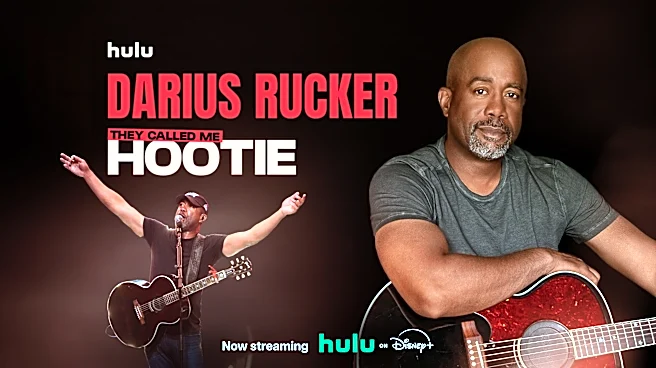
Those words from Darius Rucker in his new Hulu documentary, "Darius Rucker: They Called Me Hootie," describe the responsibility the "Wagon Wheel" singer felt when he became one of the few Black artists to find mainstream success in country music.
Pride was one of Rucker's childhood heroes who later encouraged him to make room for the next generation of Black country artists. And while Rucker sees the popularity of singers such as Kane Brown and Shaboozey as progress, he isn't convinced the door has come off its hinges.
"I couldn't kick it in, but I think I opened it enough that people will actually get through," Rucker said at a Nashville screening of the film. "That's good enough for
right now."

He recalled being asked before his first country record what he hoped to accomplish for other artists of color.
"The only thing I wanted was for someone to listen to a demo from a person of color instead of just throwing it in the garbage, just listen for a second," Rucker said.
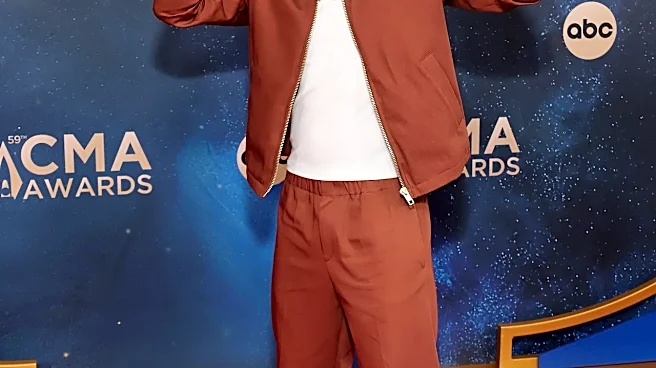
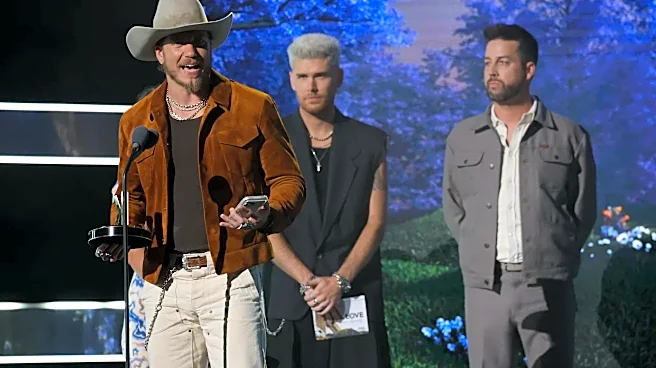
Nearly two decades after Rucker launched his country career, questions about racial representation persist. The 60th annual CMA Awards, taking place Nov. 18 in Nashville, have no nominees of color across 12 categories. It's the first entirely white field of nominees since 2017.
Those barriers are central to Rucker's 90-minute documentary, which traces his unlikely journey from rock frontman to country star. Yet behind his bright smile and distinctive laugh is a quiet confidence that sustained him through years of rejection.
"I try to stay humble. I try to live the life my mom wants me to live. But the one thing I tell you, I know I can sing," Rucker said. "People said 'No,' and I thought, 'I'm just going to keep singing. Somebody's going to say yes.' And they did."
Darius Rucker wishes his mom could have seen his success
Directed by Jason Bergh and executive produced by "Good Morning America" anchor Robin Roberts, "Darius Rucker: They Called Me Hootie" premiered Nov. 16 on Hulu.
The film follows the 60-year-old from his childhood in Charleston, South Carolina, through his rise to fame with Hootie & the Blowfish and his transition to country music. But behind the Grammy Awards and millions of records sold is a boy who grew up without a father and lost his mother, Carolyn, to a heart attack in 1992 before finding fame.
Rucker, whose easygoing demeanor rarely betrays the pain he carries, spoke tenderly about the woman who never saw the height of his success.
"I think I feel her every night when I go to bed," Rucker said. "I say my prayers and I'm sitting in that bed. I just, I think about my mom a lot. I just wish she saw it. I just wish she saw it."
The three-time Grammy winner initially resisted the documentary and the painful memories it would reopen.
"I always said if I did, I was going to tell the real story," Rucker said. "Everybody always knows the good parts, but the bad parts can be kind of hard to tell."
Roberts has known Rucker since the 1990s, when she worked at ESPN. Even she was struck by how much the usually guarded singer disclosed.
"I've known him all these many years through the ups and downs," the GMA anchor said. "But even watching the documentary and the filming of it, I'm like, 'Whoa, he went there.'"
Darius Rucker shares how his perspective on fatherhood has changed
In one of the documentary's most emotional stories, Rucker remembers being unable to attend his youth football team's father-son dinner because he had no father to accompany him.
After his team won the championship, a neighbor, Mr. Campbell, arrived at his door and offered to take him.
"He had his own family, two doors down, three kids, his wife, he had to take care of," he recalled during the screening's Q&A. "And he came down there and spent three hours with me. He didn't have to do that."
Other men in the neighborhood stepped in for a father who repeatedly promised to pick up Rucker, only to leave him waiting for hours. Among them was a Navy captain who insisted the aspiring singer attend college when he considered skipping it.
"You think you don't have a father? You got four," he recalled the man saying.
Rucker strived to be present for his three children, but his rising country career — including a CMA Award for New Artist of the Year in 2009 and Grand Ole Opry induction in 2012 — meant extensive touring and radio promotion that often kept him away from home.
"My old attitude was I was trying to work for us," he said.
His daughter, Daniella "Dani" Rucker, acknowledged struggling with her father's absence during her childhood.
"I think it gives me a new level of understanding of him as a person," she said. "I think as I've grown into an adult and we have an adult relationship, and me pursuing music now, I think we've really connected on another level."
Jack said the documentary opened conversations about experiences his father had rarely discussed.
"It's definitely something that I've never really experienced, but it's great to see," he said.
For Bergh, Dani and Jack's reactions mattered more than the film's potential reach.
"Forget like a global audience or whatever," the director said. "I don't think there's anything I've ever heard in my career that made me feel the way that they just made me feel."
Bryan West is a music reporter at The Tennessean, part of the USA TODAY Network. Follow him on Instagram, TikTok and X as @BryanWestTV.
This article originally appeared on Nashville Tennessean: Darius Rucker's Hulu documentary chronicles his historic country rise