







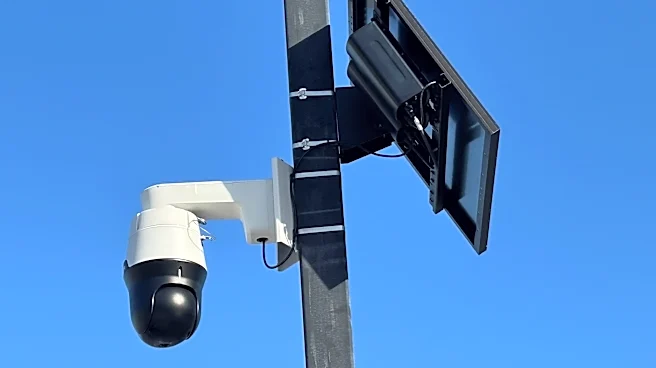
Atlanta-based Flock Safety is making company changes following a slew of police misconduct arrests and public controversy surrounding license plate reader cameras.
As many as two dozen law enforcement officers and officials in Georgia have been arrested in recent months after both internal and external audits discovered they were searching Flock camera databases for personal use and without investigatory need. While the details of many of the searches were not released, some searches were used to stalk and harass members of the public.
And Georgia isn't alone. Cases in Arizona, North Carolina and other states show those entrusted to keep communities safe may be abusing the very technology they enlisted for help.
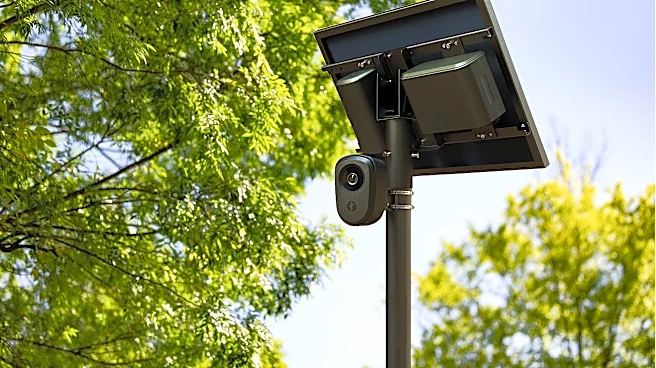
Flock Safety dominates the license
plate reader camera market, with more than 120,000 cameras installed across 49 states. Now, they are making changes to privacy settings and accountability checks in hopes of curbing officer misuse.
Flock decreases data retention period
In a release written by Flock founder Garrett Langley on Aug. 13, the company announced it would be changing its data retention default period from 30 days to 7 days, meaning any information collected by a Flock camera will only be held within the system for a week.
The company says most searches within the database happen in the first few days of an investigation, but law enforcement will still be able to preserve specific data to be used for an active investigation in "cold storage."
The change is a recommendation, Langley wrote, and many existing customers may choose to "keep their current, democratically approved retention periods."
Under their privacy settings, Flock is also adding "Offense filtering for sharing," meaning organizations can choose which type of data their Flock systems collect can be shared with other jurisdictions.
"For example, City A could allow City B to search its cameras only for a stolen vehicle, missing person, or violent crime while blocking searches related to immigration enforcement," Langley wrote. "This gives communities more control over data sharing while preserving collaboration where policies align."
The changes build on the rollout of the company's "Audit Assistance," which has helped agencies identify officers using the Flock system for personal searches. The company will now require that all customers adopt the audit program by the end of the year, Langley wrote.
In addition, the company is adding a "proactive lookout" feature that will monitor a user's activity and if it is deemed abnormal, will suspend the user's access to the system until it can be reviewed by an administrator.
"The goal is to intervene before misuse becomes recurring or widespread," Langley wrote.
What data do Flock cameras collect?
Unlike older automatic license plate recognition cameras, or ALPRs, Flock Safety "goes further," according to the company.
The cameras will read the numbers and letters of the license plate and the state registration, but they will also identify the vehicle's make, model, color and "notable features" like damage or alterations, ranging from dents to bumper stickers. This data is collected with time stamps and location trackers to help law enforcement with timely information.
Flock Safety denies using their cameras to create driver profiles or track individual people, but the company notes that data captured by a customer from an ALPR is owned by the customer and may be used by the customer in other ways.
Arrests rack up in Georgia
In a recent interview with USA TODAY, Langley said officer misuse of law enforcement tools didn't start with Flock cameras.
"It is, a cop checks his daughter's boyfriend's criminal record. It is, a cop checks ex-partner's location," he said. "It is typically taking the job and the power you're given and using it for personal gain."
In earlier statements Langley called recent police arrests "disappointing," but ultimately it showed that the internal audit tools were working and law enforcement was being held accountable.
Being the home state of Flock Safety, Georgia communities have been quick to partner with Flock, and Atlanta has one of the highest densities of ALPRs in the country.
This week, a former 911 Director in Dallas, Georgia became the latest official to join the growing list of law enforcement in the state to be found misusing Flock.
In June, an internal audit in Albany, Georgia, assisted by the Georgia Bureau of Investigation, found five Albany Police officers had been using the Flock license plate camera system for personal searches. Officers faced between two and 12 counts of misuse and were against officers between the ages of 23 and 32.
The same month, two supervisor-level officers with the Cherokee County Sheriff's Office were arrested and terminated for accessing the agency's Automated License Plate Reader system for non-investigation reasons. A deputy faced the same charges from the department earlier in the month and was also let go.
In July, a sheriff's deputy from Greene County faced the same charges for accessing the Flock system for personal reasons over a three-month period, the Greene County Sheriff's Office said.
Later in the month, a 17-year veteran of the DeKalb County Sheriff's Office was fired and arrested for misusing Flock license plate data, which was identified during an internal probe.
The GBI later announced charges against aninvestigator in the Ogeechee Circuit District Attorney's Office who was a former employee of the Effingham County Sheriff's Office. The investigator accessed the Flock system she still had access to more than 60 times over a period of a few weeks.
Four officers in Richmond County and three officers in Fayetteville all face similar charges in recent weeks. But misuse of license plate readers by law enforcement and other state officials in Georgia goes back even further.
In recent reporting from the Washington Post, the case of former Braselton Police Chief Michael Steffman was investigated further as his ex-girlfriend says "Have I been Flocked" data shows he searched for her vehicle tags, and those of her daughter, more than 600 times. Steffman was arrested on charges of harassment and stalking using license plate readers in November 2025.
Steffman's stalking victim told the news outlet she had mechanics check her car for trackers, installed cameras around her house and would receive messages from Steffman as if he knew where she had been. She said Steffman later admitted he was following her on Flock cameras.
Irene Wright is the Atlanta Connect reporter with USA Today’s Deep South Connect team. Find her on X @IreneEWright or email her at ismith@usatodayco.com.
This article originally appeared on USA TODAY: Atlanta-based Flock Safety changes data retention policy amid arrests