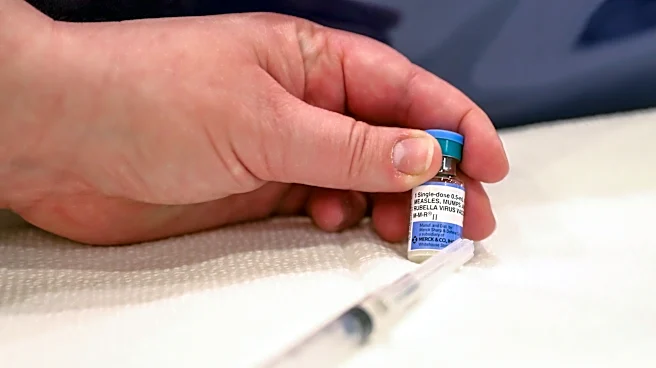







The number of measles cases confirmed so far this year in the United States – where the disease was declared eliminated in 2000 – reached 2,318, more than all of 2025 and the highest in 35 years.
Those numbers were released July 23 by the Centers for Disease Control and Prevention, whose data indicate that declining vaccination coverage is the primary driver of the increase, Reuters reported.
The CDC said 93% of new cases involved people who were unvaccinated or whose vaccination status was unknown.
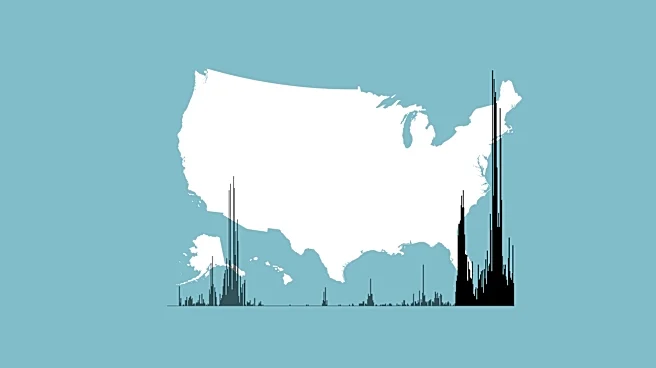
At least 2,302 cases came from 43 states, New York City, and the District of Columbia. At least 35 new outbreaks have been recorded so far in 2026. In 2025, 48 outbreaks were reported for the entire year.
Reported measles cases, 2018-2026
Can't see our graphics? Click here to reload
the page.
Measles cases are rising in the US
MMR vaccinations among kindergarten students, which prevent measles, mumps and rubella, have declined, according to the CDC. Officials aim for 95% coverage to prevent measles spreading. The rate for kindergarten coverage was 92.5% in the 2024-2025 school year.
The percentage of vaccine exemptions for kindergarteners – the share of those who were allowed to attend school without receiving at least one vaccine normally required – rose to 3.6% in the 2024-2025 school year, from 3.3% in 2023-2024.
About 91% of children are vaccinated by age 2, compared with roughly 93% of kindergartners, according to the CDC.
Where measles cases have grown
As more cases of measles are reported, a few biotech companies are developing treatments for the disease, according to Wired.
Invivyd, a biopharmaceutical company, began developing a treatment and post-exposure preventive medicine for measles in 2025.
NanoViricides, a nano-biopharmaceutical company, received FDA approval in May to continue development of a broad-spectrum antiviral candidate for measles treatment.
Vaccination coverage by state
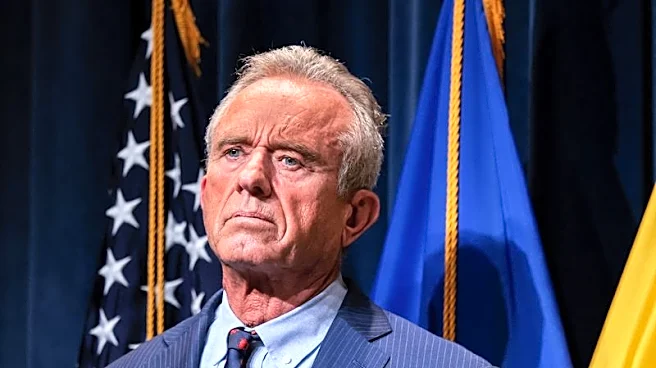
Declining protections have also been attributed to the growing anti-vaccine movement, which was bolstered by the confirmation of vaccine skeptic Robert F. Kennedy Jr. as health secretary, USA TODAY reported.
During the height of the 2025 outbreak, Kennedy somewhat pulled back from anti-vaccine messaging and encouraged inoculation against measles.
Why is measles considered dangerous?
Measles is regarded as dangerous because it’s a highly contagious airborne disease and can cause serious medical complications, including death.
The vaccine for measles was introduced in the United States in 1963. Before vaccinations were widely used, major epidemics occurred about every two to three years and caused an estimated 2.6 million deaths each year, according to the World Health Organization.
Contributing: Mary Walrath-Holdridge
Source: USA TODAY Network reporting and research; Reuters; Centers for Disease Control and Prevention; World Health Organization
This article originally appeared on USA TODAY: Measles cases reach highest level in 35 years. See the charts