








The mysterious death of Jackie, a beloved California bald eagle, has been blamed on complications from avian influenza, news that has left some experts puzzled.
"Nobody knew this was even a probability," said Dr. William Bowerman. "Her case gave us more science than we were expecting."
Among the oddities: The disease wasn't believed to be widely circulating, said Bowerman, a professor of wildlife ecology and environmental toxicology at the University of Maryland who has been studying bald eagles since the 1980s.
Officials announced Oct. 14 that a necropsy performed on Jackie, who died in August after a weekslong illness that mystified her doctors, revealed "Highly Pathogenic Avian Influenza (HPAI) as the primary underlying cause of her decline,"
said Steve Kubiski, director of disease investigations for the San Diego Zoo Wildlife Alliance.
Jackie lived in Big Bear Lake in Southern California and was about 14 years old when she died. For the past decade, a camera livestreaming her nest captured major moments in her life, including laying eggs, raising eaglets and coupling up with mate Shadow.
The result of the necropsy was a surprise to experts closely following Jackie's case, said Bowerman.
The highly virulent strain of bird flu H5N1, which spread around the world in birds among migratory pathways, was first documented to be wiping out American bald eagles in 2022, causing numerous deaths and nest failures. The virus is still circulating and can infect wild birds, including raptors like the bald eagle, but there isn't a widespread outbreak as of late 2026, Bowerman said. That's good news for bald eagles, but the toll from the outbreak on the overall population level of the once endangered species is still untold, he said.
Just how Jackie contracted HPAI is "another scientific mystery," Bowerman said.

How did Jackie get bird flu?
The reason it was so surprising that Jackie had bird flu is because her illness didn't present with typical symptoms, Bowerman said. Symptoms in an eagle might include walking in circles, holding and moving its head unnaturally, and being unable to fly, the National Park Service said.
"In an uncommon presentation of the virus, the infection caused a severe ulcer in her stomach that led to persistent internal bleeding, anemia, and the development of bacterial sepsis," Kubiski said in an Oct. 14 summary of Jackie's necropsy.
Also, there has been no active outbreak of bird flu in the area, according to Bowerman. Usually, obvious symptoms or multiple deaths of birds would be observed to signify H5N1 is sickening birds.
"When you take a look up in Southern California, there was no outbreak of bird flu this year that they were seeing. California in the spring declared that it was no longer an impact to the poultry industry. So you would not expect that bird flu would have been the cause for her decline just based on her symptoms," Bowerman said.
The necropsy would not have determined how she got it. Because it was an unusual presentation, it's not even clear when she may have been exposed. Bowerman said she could have gotten the virus in 2026, and a change in the disease progression caused it to appear differently, or she could have gotten it years earlier and it could have been lying dormant in her system until it flared up.
How does bird flu spread in bald eagles?
There are three main ways bald eagles and other raptors are thought to contract bird flu, according to Bowerman. They are:
- Drinking water containing bird poop with the virus.
- Spread between bald eagles in close proximity through inhalation.
- Preying on waterfowl such as duck and geese that are infected, or consuming birds that have died of it. This is thought to be a primary cause for bald eagles.
Jackie may have eaten an infected duck or goose at some point.
What Jackie's illness, death taught scientists
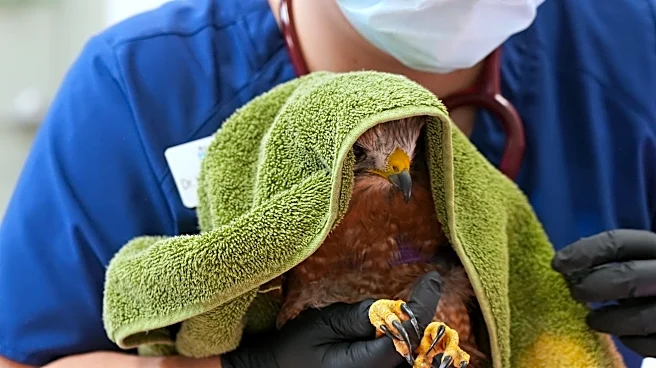
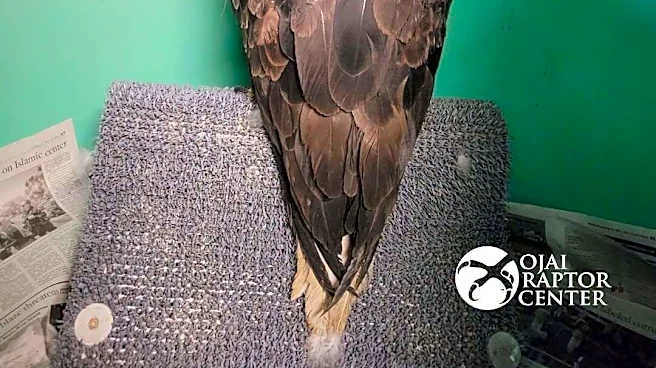
Jackie was first taken from Big Bear Valley for treatment at the Ojai Raptor Center in July after she was seen in an altercation with other eagles. She was in critical condition but staff didn't know why. She first appeared underweight, with severe anemia and inflammation affecting her kidneys.
Her medical team turned to several potential causes: lead poisoning, zinc toxicity, rodenticide poisoning, cancer. At one point she underwent a blood transfusion.
"You would not have suspected bird flu," Bowerman said.
In some ways, Jackie's unique illness and death has provided her medical team and scientists who study bird flu and bald eagles much more data to consider than any other eagle that has died from it, he said. That's because in a typical presentation of H5N1-caused demise, a bird would quickly be tested for the virus and immediately cremated upon a positive result. Though there hasn't been documented spread human-to-human, there is a chance the virus could mutate to enable such spread, so cremating the remains of infected birds ensures the risk of transmission is low.
But because H5N1 wasn't an immediate suspected cause, many other tests and treatments were performed on Jackie that would not have been done on other birds, Bowerman said.
Contributing: Michael Loria, USA TODAY
This article originally appeared on USA TODAY: Scientists stunned by Jackie the bald eagle's cause of death