


The Great Lakes region could face a warmer-than-usual winter with less snow in some areas, but the outlook is not unanimous. Three long-range forecasts offer different perspectives on how temperatures, precipitation and snowfall could shape the 2026-27 season.
The National Oceanic and Atmospheric Administration's winter outlook favors above-average temperatures across much of the Midwest as a strong El Niño influences weather patterns. The agency also favors drier-than-average conditions in parts of the Great Lakes region. The Old Farmer’s Almanac also anticipates a generally mild winter across much of the region, but its forecast calls for colder-than-normal conditions in the Ohio Valley.
The Farmers’ Almanac, meanwhile, expects temperatures
to average near normal across the Great Lakes and Upper Midwest, with quick cold snaps and brief periods of snow interrupting milder stretches.
The Old Farmer’s Almanac also anticipates a generally mild winter across much of the region, but its forecast calls for colder-than-normal conditions in the Ohio Valley.
Despite those differences, all three outlooks leave room for winter storms and periods of bitter cold.
Winter weather supplies to buy now
What does NOAA's winter forecast say about the Great Lakes?
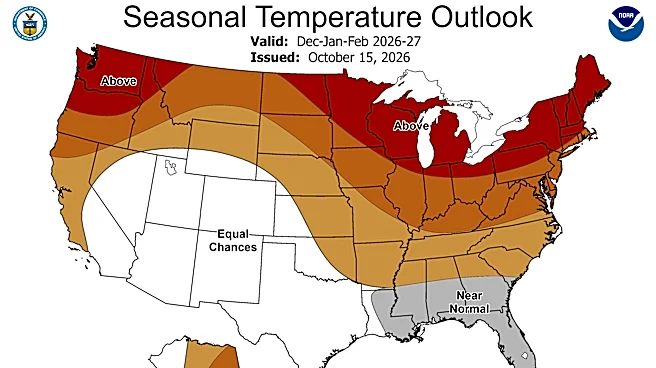
NOAA's winter outlook, released Oct. 15, covers December 2026 through February 2027. It favors above-average temperatures across much of the northern United States, including the Midwest, while its precipitation outlook favors drier-than-average conditions in parts of the Great Lakes.
The outlook describes the likelihood of broad temperature and precipitation patterns over several months. It does not predict exact snowfall totals or when individual storms will occur.
Meteorologist Jon Gottschalck discussed the potential for reduced snowpack across the Great Lakes region during NOAA's winter outlook briefing.
“The snow pack is likely to be less than normal, as I mentioned, across the interior northeast, Great Lakes region in general, including the Upper Midwest,” Gottschalck said.
Strong El Niño events can influence the winter storm track, potentially limiting snowfall in parts of the Great Lakes. Warmer temperatures also could reduce opportunities for lake-effect snow.
“With warmer temperatures as well, during the El Niño events, there's the potential for less lake effect snow,” Gottschalck said.
NOAA does not issue an official seasonal snowfall outlook as part of its winter forecast. The snowpack expectations discussed during the briefing reflect typical El Niño patterns, not a direct prediction of how many inches of snow each state will receive.
What does the Farmers’ Almanac predict for the Great Lakes?
The Farmers’ Almanac expects near-normal temperatures across the Great Lakes, Upper Midwest and northern Plains during winter 2026-27.
However, that forecast does not mean the region will avoid harsh winter weather.
"Fast-moving clippers, sudden cold snaps, and brief snowy periods are likely, although milder breaks may frequently interrupt the wintry weather," the forecast states. "Farther north, the Plains, Midwest, and Great Lakes could experience sudden snow squalls, blustery winds, and bursts of bitter cold."
The Farmers’ Almanac also expects the northern Plains and Upper Midwest to turn drier at times as an active storm track favors the southern United States.
Its outlook differs from NOAA's emphasis on above-average temperatures. Rather than a consistently warmer winter, the Farmers’ Almanac describes a season marked by swings between milder weather and short bursts of cold.
What does the Old Farmer’s Almanac predict for the Great Lakes?
The Old Farmer’s Almanac expects a mostly mild winter nationally, but its regional forecasts show important differences across the Great Lakes and surrounding states.
For the Lower Lakes, the publication predicts above-normal temperatures, above-normal precipitation and near- to below-normal snowfall. It identifies early and late January and early February as potential snowier periods.
In the Upper Midwest, the forecast also favors above-normal temperatures and near- to below-normal snowfall. Precipitation could be above normal in the eastern part of the region and below normal in the west.
"Expect milder months in the Upper Midwest to transition to colder-than-normal temperatures as winter continues. While snow will be near to below normal, there are many chances for flakes to fly in the new year," the forecast states.
The Ohio Valley stands out as a colder exception. The Old Farmer’s Almanac expects below-normal temperatures and slightly below-normal snowfall, with precipitation above normal in the east and below normal in the west.
Could the Great Lakes still see major snowstorms and extreme cold?
Yes. A warmer seasonal outlook does not eliminate the possibility of significant snowstorms, dangerous cold or disruptive lake-effect snow.
“We have to remember that a strong El Niño is not necessarily related to the severity of the impacts,” National Weather Service Director Ken Graham said during NOAA's media briefing. “It doesn't erase the risk.”
Gottschalck also emphasized that a strong El Niño does not mean winter weather will disappear.
“(El Niño) doesn't mean during the winter that we're not gonna have winter, meaning snowfall is gonna occur,” he said. “You're gonna have cold air outbreaks. You can still get snowstorms.”
Individual storms will depend on their tracks, available moisture, wind direction and the temperatures in place when they arrive. Communities near the Great Lakes could still experience lake-effect snow when the right atmospheric conditions develop.
The three outlooks offer a broad sense of possible seasonal patterns, but they cannot determine the timing or severity of individual winter storms months in advance.
Farmers’ Almanac vs. Old Farmer’s Almanac: What’s the difference?
Although their names are similar, the Farmers’ Almanac and The Old Farmer’s Almanac are separate publications with different histories and approaches to long-range weather forecasting. Both use proprietary forecasting methods, but their predictions can differ significantly by region.
The Farmers’ Almanac was founded in 1818. It says its forecasting formula considers recurring natural cycles, solar activity, lunar influences and historical weather patterns, alongside modern meteorological data and forecasting tools.
The Old Farmer’s Almanac dates to 1792. Its forecasting approach draws on solar science, climatology, meteorology, historical weather patterns and large-scale climate signals.
Neither publication provides the same type of seasonal outlook as the National Oceanic and Atmospheric Administration, which uses climate data and scientific forecasting methods to estimate the likelihood of broad temperature and precipitation patterns. NOAA's outlook does not predict exact seasonal snowfall totals.
The almanacs offer another perspective on the coming winter, but their long-range forecasts should not be treated as guarantees of specific weather conditions. Residents should follow NOAA and National Weather Service forecasts for updated information as individual storms approach.
Brandi D. Addison covers weather nationwide as the Weather Connect reporter for the USA TODAY Network and contributes to Texas Connect coverage statewide. She can be reached at baddison@usatodayco.com. Follow her on Facebook here.
This article originally appeared on USA TODAY: El Niño could shape Great Lakes winter. How 3 forecasts compare
Our editors independently choose our recommendations. Some content is produced with paid support from a third party, however our editorial decisions remain independent. If you buy through our links, the USA TODAY Network may earn a commission. Prices and availability may change.