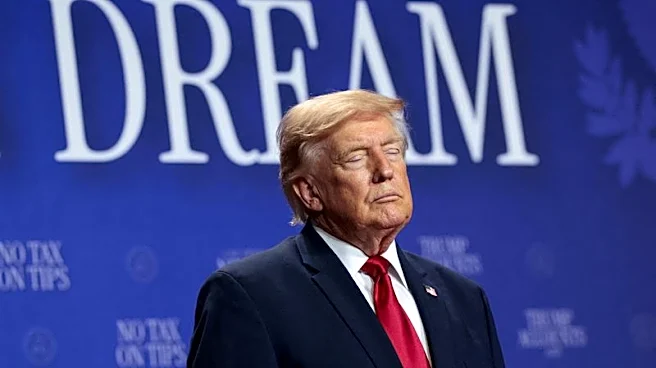


President Donald Trump is making a second major attempt to limit birthright citizenship in the United States, following a U.S. Supreme Court decision in June that prohibited him from doing it.
Trump's latest
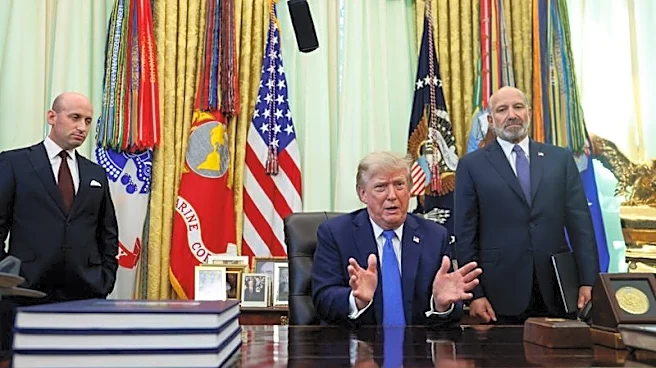
bid comes from two executive orders issued Aug. 6. The first targets births inside the United States while the second prevents people from traveling to the United States for the purpose of giving birth on U.S. soil.
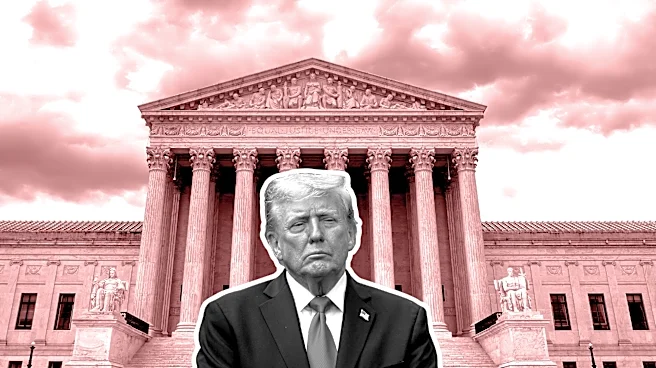
The Supreme Court's 6-3 ruling in Trump v. Barbara on June 30 rejected the Trump's 2025 executive order that all children born in the United States to undocumented immigrants or temporary visa holders are ineligible for birthright citizenship.
Trump's new orders to deny citizenship to some children born in the United States is more narrowly tailored and would impact fewer people, USA TODAY reported.
What would Trump's latest executive orders do?
The first order replaces the previous group of all children of immigrants and visa holders with narrower categories of children whom the administration says are not entitled to birthright citizenship.
The order applies when neither parent is a U.S. citizen and at least one parent is classified as a designated "alien enemy," including certain individuals with terrorist designations; works for a foreign government or qualifying international organization; or participates in a commercial arrangement, including surrogacy, intended to secure birthright citizenship.
The second order says it ends “birth tourism,” defined as travel to the United States to give birth to a child and obtain U.S. citizenship for the child. The order limits U.S. entry through restriction of visas and entry permits by the State Department and Homeland Security. It also denies citizenship recognition to children deemed ineligible for it.
Trump's 2025 order would have denied recognition of birthright citizenship to U.S.-born children under two circumstances:
- The mother was lawfully but temporarily present, including being on a tourist, student or work visa, and the father was not a citizen or green card holder.
- The mother was unlawfully present in the country, and the father was not a citizen or green card holder.
The orders would limit the 14th Amendment’s birthright-citizenship guarantee that gives citizenship to nearly anyone born in the United States. That includes children born in the United States to foreign nationals living legally in the country, or unauthorized immigrants.
How many people gain citizenship through birthright?
According to estimates from the Migration Policy Institute and Penn State’s Population Research Institute, ending birthright citizenship would result in an average of 255,000 children being born in the United States without citizenship each year and would increase the number of unauthorized people living in the United States by 2.7 million by 2045 and 5.4 million by 2075.
Can't see our graphics? Click here to reload the page.
The Pew Research Center found in 2022 that about 4.4 million U.S.-born children under 18 live with an unauthorized immigrant parent.
How many unauthorized immigrants live in the U.S.
The number of unauthorized immigrants in the United States has increased from the 1990s. It peaked at 12.2 million in 2007, according to estimates from the Pew Research Center.
Where does the foreign-born population live in the United States?
In 2022, nearly a quarter of the U.S. foreign-born population lived in California. Foreign-born populations made up more than 20% of New Jersey, New York, California and Florida's total populations, according to the Census Bureau.
Foreign-born residents are anyone who was born outside the United States, including naturalized U.S. citizens; lawful permanent residents; temporary migrants, such as international students; humanitarian migrants such as refugees; and unauthorized migrants.
In almost every state, the foreign-born population was larger in 2022 compared with 2010. Delaware,North Dakota, South Dakota and West Virginia experienced the largest increases of foreign-born populations from 2010 to 2022, a bump of 40% or more in each state.
The foreign-born population in the United States has increased over the past five decades. In 1970, 4.7% of the U.S. population was born outside the country. By 2022, 13.9% of the U.S. population was foreign-born.
Where are foreign-born U.S. residents immigrating from?
More than half of foreign-born residents in the United States immigrated from countries in Latin America, according to the Census Bureau. Close to a third of residents immigrated from Asia.
What is naturalization?
The Council on Foreign Relations describes naturalization as the process in which a non-U.S. citizen can apply for citizenship after meeting specific requirements, such as passing a civics test, demonstrating basic English proficiency and living in the United States over a continuous period of time.
Which countries grant birthright citizenship?
According to a Pew Research Center analysis, 32 other countries around the world, most of them in the Western Hemisphere, have birthright citizenship laws that are substantially similar to those of the U.S.
Trump has sought to restrict birthright citizenship as part of a sweeping, hardline immigration agenda centered around mass deportations. He campaigned on overturning the constitutional provision and attended Supreme Court oral arguments in the case.
NOTE This story updates a previous report with new information.
CONTRIBUTING Zac Anderson, Lauren Villagran, Maureen Groppe and Bart Jansen
SOURCE USA TODAY Network reporting and research; Reuters; U.S. Census Bureau
This article originally appeared on USA TODAY: How Trump is making second attempt to restrict birthright citizenship