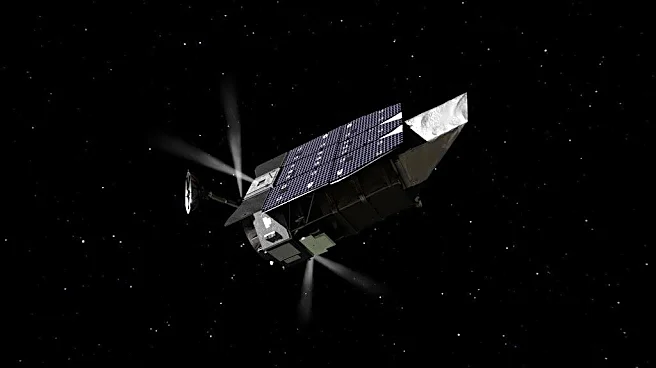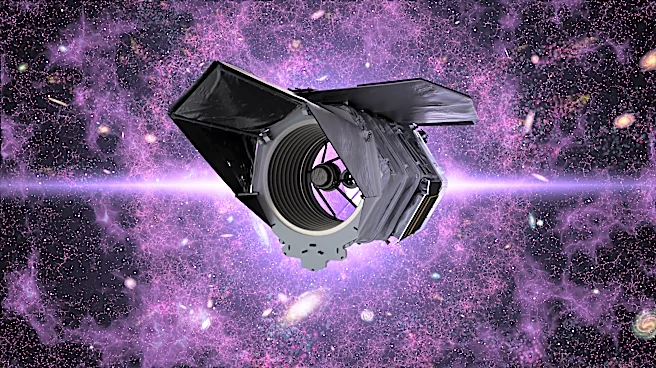





NASA's Nancy Grace Roman Space Telescope – the space agency’s newest orbital observatory – promises unprecedented wide-angle views of the cosmos, including distant galaxies, black holes and planets that may resemble those in our own solar system.
Roman, as it’s called, will launch from Florida’s Kennedy Space Center on Aug. 30.
Like its predecessors the Hubble and James Webb space telescopes, Roman will try to solve some of astronomy's biggest questions. It will examine the nature of dark energy, the distribution of dark matter and how common planets are throughout the Milky Way.
What makes Roman unique is its wide-angle vision and powerful infrared instruments that give it an extraordinary field of view. It will capture images with Hubble-like
sharpness, but its primary camera can observe an area of space at least 100 times larger than Hubble can see in a single image.
The telescope is named after Dr. Nancy Grace Roman, NASA’s first chief astronomer and a pioneering scientist often called the "Mother of Hubble." She championed large space-based observatories decades before the Hubble launched and helped lay the foundation for modern space astronomy.
Where will the Roman orbit in space?
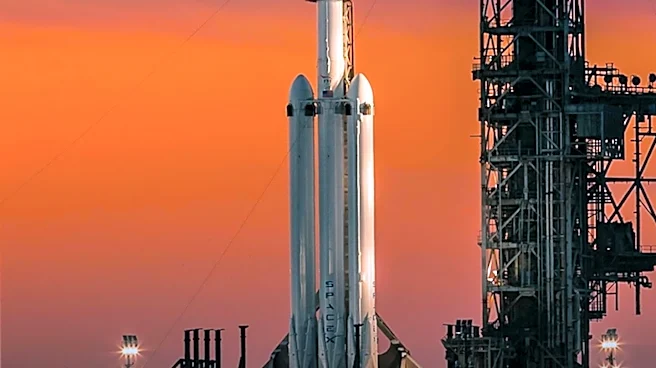
Roman will lift off from Launch Complex 39A at Kennedy Space Center aboard a SpaceX Falcon Heavy rocket.
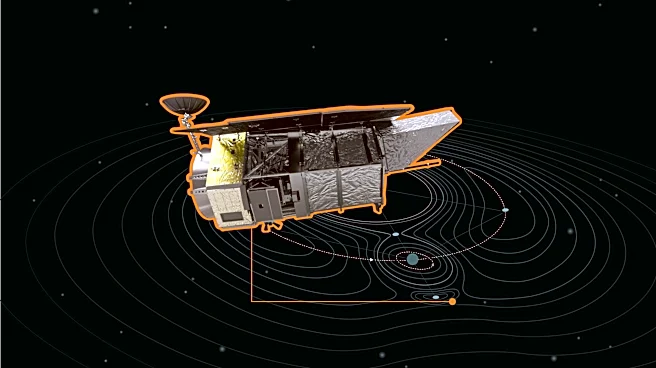
Instead of orbiting Earth, Roman will operate near a point in space known as the Sun-Earth L2 (Lagrange Point 2). That’s located about 930,000 miles beyond Earth on the side opposite the sun.
L2 is one of five special locations where the combined gravity of the sun and Earth allows spacecraft to maintain a stable orbit with minimal fuel for course corrections. It’s an ideal location for space telescopes because it provides a cold, stable environment and an unobstructed view of deep space.
Roman will join a small group of spacecraft already operating near L2, including the James Webb, the European Space Agency's Euclid mission and XRISM, an X-ray observatory led by JAXA with international partners.
Only a handful of active scientific spacecraft occupy the L2 region, making it one of the most valuable locations in space for astronomy.
How does this the Nancy Grace Roman telescope compare to the Hubble and James Webb?
The Hubble Space Telescope functions like a zoom lens, allowing us to closely examine small parts of the universe.
The James Webb Space Telescope can be compared to a deep infrared night-vision telescope.
In contrast, Roman acts like a wide-angle panoramic camera, which is designed to capture large portions of the universe without losing much detail.
During its mission, Roman could measure light from more than a billion galaxies and discover thousands of new worlds beyond our solar system.
Both the Hubble and Roman telescopes feature primary mirrors that are 7.9 feet in diameter. As a result, their image sharpness is quite similar, but the Roman telescope boasts a significantly larger camera and field of view.
What instruments does the Roman have?
The primary mirror will send light to Roman’s two science instruments:
The Wide Field Instrument is a 300-megapixel infrared camera. It allows scientists to look very far back in time because the light captured by the camera has been traveling for billions of years before reaching the instrument. Seeing the universe in its early stages will help unravel how it has expanded throughout its history. This will give scientists hints about how the universe may continue to evolve.
The Coronagraph Instrument uses technology that blocks the glare from a star. This lets astronomers see planets in orbit around it. This instrument is the most powerful coronagraph ever flown in space. It will allow astronomers to see planets that are almost a billion times fainter than their host star.
How will Roman view the universe?
Roman’s images will have the same crisp resolution as Hubble’s, but each one will capture a patch of sky at least 100 times larger. Over the first five years of observations, Roman will capture more than 50 times as much sky as Hubble covered in 30 years.
As the universe expands, light from distant galaxies is stretched to longer wavelengths. Many objects that originally emitted visible light are now brightest in the infrared. Roman's infrared capability will let it see very distant galaxies, stars hidden by dust clouds, exoplanets and dark matter.
Who is the Roman telescope named after?
Born in 1925, Dr. Nancy Grace Roman, was an American astronomer known as the "mother of the Hubble Space Telescope" and a pioneer of modern space-based astronomy. Grace Roman died in 2018.
From an early interest in stargazing, she pursued a career in astronomy, earning a Ph.D. from the University of Chicago and conducting important research, including notable observations of stars.
Despite facing gender barriers in the field, she became a leader in radio astronomy before joining NASA in 1959 as its first female executive and first Chief of Astronomy, where she played a crucial role in developing space astronomy programs and securing approval for the Hubble Space Telescope.
Through her work planning missions and supporting the astronomical community, she helped establish space telescopes as vital tools for understanding the universe, leaving a lasting legacy honored by NASA’s Roman Space Telescope.
How to watch the Roman telescope launch
Launch coverage begins at 6:20 a.m. NASA and SpaceX are targeting Roman’s liftoff for no earlier than 7:26 a.m. ET Sunday, Aug. 30.
You can watch the launch coverage of NASA’s Roman Space Telescope on X, Discovery+, Amazon Prime, YouTube and NASA+.
CONTRIBUTING: George Petras; Eric Lagatta
SOURCE: USA TODAY Network reporting and research; NASA, Goddard Space Flight Center
This article originally appeared on USA TODAY: What is the Nancy Grace Roman Space Telescope? NASA's new observatory