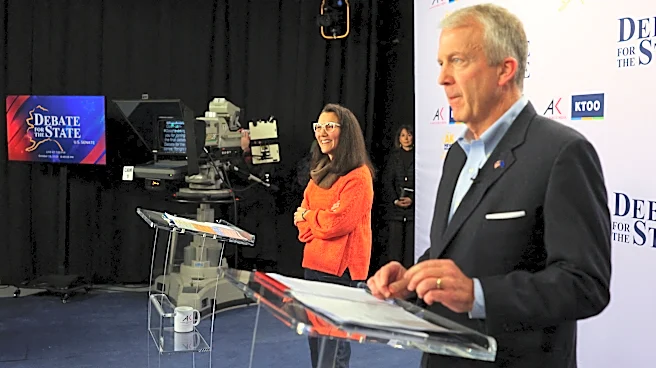




The presence of two "Dan Sullivans" on Alaska's Senate ballot has spurred questions about whether the state's election results could get messy and mired in litigation as Republicans and Democrats vie for control of Congress.
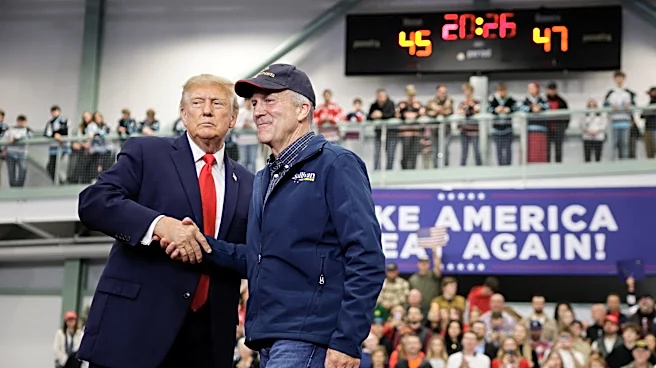
In June, Alaska's Supreme Court ruled that both Dan Sullivans – the Republican incumbent senator and a retired teacher – would remain on the ballot, despite Republican concerns that the second Dan Sullivan was a plant meant to pull votes away from the first. Which party wins Alaska's senate seat could determine which party controls the Senate.
Since then, the U.S. Justice Department has filed a lawsuit seeking to block certification of election results "that may be impacted by voter confusion," pending an investigation.
A New
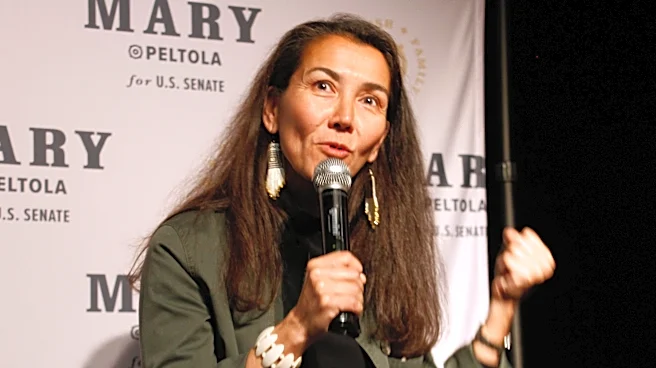
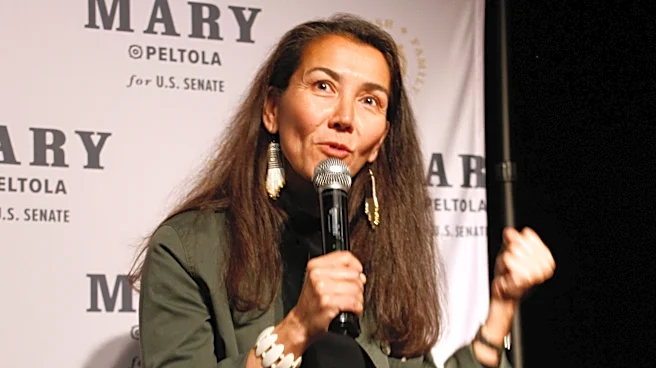
York Times report suggested Democratic Senate candidate Mary Peltola's campaign was involved in recruiting the second Dan Sullivan to run – a claim her campaign has denied. Neverthless, Alaska U.S. Attorney Michael J. Heyman said Oct. 30 the DOJ is a conducting civil and criminal investigations. Alaska Republican Gov. Mike Dunleavy has also ordered an investigation.
Peltola dismissed the New York Times report and said she wasn't aware of any recruitment effort.
"This is just another distraction. It's another diversion," she told reporters at a campaign stop. "This is all stuff to sell newspapers. This is all stuff to get subscriptions."
The result is a lot of noise about potential chaos in the final days of the election. However, Alaska's specific voting system makes it less likely that a "Dan Sullivan" mix-up will impact the election's results. And even if the issue did alter the contest's outcome, election law experts told USA TODAY there's no clear path for a court to later upend that outcome.
"The labels on the ballot are fairly clear. I think it's going to be pretty straightforward," Justin Levitt, a Loyola Marymount law professor who researches election issues, told USA TODAY.
"Even if Alaska voters were confused, the structure of the ballot in Alaska makes it uniquely hard for this type of scheme to do any work in Alaska," Levitt added.
The ongoing state and federal investigations - as well as the governor's threat to withhold certification of the race - show how the dispute could become the next front in the fight for Senate control.
Here's a breakdown of how the two-Dan-Sullivans controversy could come into play as Alaska's election approaches:
Why a 'Dan Sullivan' mixup matters less under Alaska's ranked choice voting system
The ballot in Alaska has already been written up in a way that makes clear which Dan Sullivan is the Republican incumbent senator. Next to his name, "Sullivan, Dan S.," the ballot says "(Registered Republican) Incumbent."
By contrast, the other Sullivan is simply listed as "Sullivan, Daniel J. Jr."
But even if Alaska voters nonetheless confuse the two, the state's ranked-choice voting system makes sure that voters get a second shot at voting for the incumbent if Peltola doesn't win an outright majority of votes.
Here's how that works: Voters in Alaska are given the chance to rank the candidates, instead of simply voting for one candidate. Once counting begins, if any candidate is ranked first by more than 50%, that candidate wins the election.
But if no candidate gets a majority, votes for the least popular candidate shift to those voters' second-choice candidate - assuming they ranked a second choice. The state counts the votes again and repeats the process of eliminating the least popular candidate and shifting those votes until there are just two candidates left, at which point the candidate with the most votes wins.
What that means is that if Alaska voters rank the non-incumbent Dan Sullivan first but also rank Sen. Dan Sullivan second, their votes will shift to Sen. Dan Sullivan if no one gets an outright majority of first-choice votes.
"It's one of the advantages of ranked choice voting, that it negates the risk of a spoiler problem, and this kind of scheme exists to try to create a spoiler effect," Edward Foley, director of Ohio State University’s election law program, told USA TODAY.
"It's particularly bizarre that this kind of scheme happened in the context of ranked choice voting, to be perfectly honest," Foley said.
What if the second Dan Sullivan affected results?
Even if votes for the two Dan Sullivans, taken together, would switch the election's outcome, it's not clear that will be enough for a successful legal or procedural challenge for Peltola.

Alaska's highest court already ruled that both Dan Sullivans could remain on the ballot, and the latest reporting that Peltola's campaign may have been involved in recruiting the second Sullivan to run doesn't appear to upend that ruling, according to Levitt.
"That doesn't change the nature of the analysis, where the Alaska state court said, 'There's no cause under state law to kick them off the ballot,'" Levitt said.
Still, Alaska election officials are responsible for certifying the results.
Earlier this week, Republican Alaska Gov. Mike Dunleavy announced he has ordered an investigation into whether Peltola’s campaign was involved in recruiting another candidate with the same name as Republican incumbent Sen. Dan Sullivan.
"We're going to investigate it. We're going to follow the law," Dunleavy said, adding that any findings of illegal conduct "may in fact impact whether somebody is seated in the U.S. Senate."
Certifying the winner of a House or Senate race is done in two steps. State election officials verify local vote tallies and identify the winner. Then the governor is obligated under federal law to send that certificate to the president of the Senate.
The governor’s role is ministerial, Foley said. “The governor is obligated by law to transmit to the Senate the result of that official count.”
If he refuses, as some county clerks and boards have done in recent years, there will be “ugly litigation” forcing him to comply with federal law, according to Foley.
“I really don't think the governor has any discretion to make a judgment, even if the governor thinks the outcome was fraudulently produced or wrong. And I don't think the governor has a role to play in exercising a kind of veto power over the certification process. I think that's pretty clearly established under law,” he said.
What if there's a certification fight?
David Becker, a former DOJ voting rights lawyer who runs the Center for Election Innovation & Research, said in a call with reporters Oct. 30 that he's confident any litigation over the Alaska result would be resolved "well before" Jan. 3.
"I remain 100% confident that whoever gets the most votes on election, in this election in Alaska for the U.S. Senate race, that they will take office on January 3rd," Becker said.
However, if certification has not been received by Jan. 3, the seat could remain open during litigation. That happened in the historic, months-long recount and legal battle between Democrat Al Franken and Republican incumbent Norm Coleman that resulted in Franken being sworn in.
Ultimately, the Senate has the authority under the Constitution to judge the election of its own members. After the Franken race, the Senate decided not to seat either of the candidates until the legal challenges resolved.
"That was appropriate," Becker said. But if there is a clear winner and authorities are refusing to certify that winner, it's conceivable the Senate could seat the winner anyway, Becker added.
On Jan. 3, before new senators are sworn in, the senators assessing that question will be the incumbent senators who weren't up for reelection this cycle. A majority of those senators are Democrats.
"If the certification authority decides not to certify, there clearly would be litigation about that. I'm sure it would be resolved well before January 3rd, but regardless, the Senate's going to decide its own membership," Becker said.
This article originally appeared on USA TODAY: Does 'Double Sullivan' mean double trouble for Alaska and Congress?