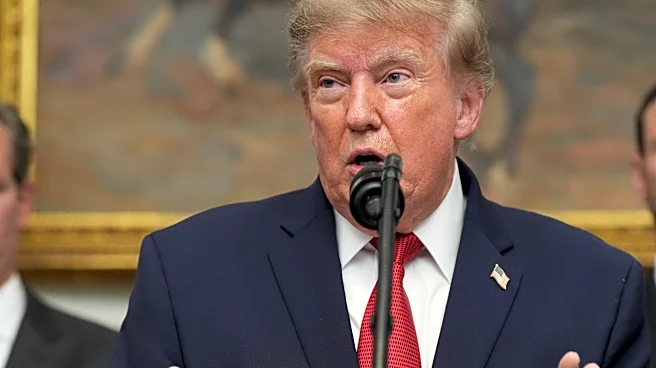


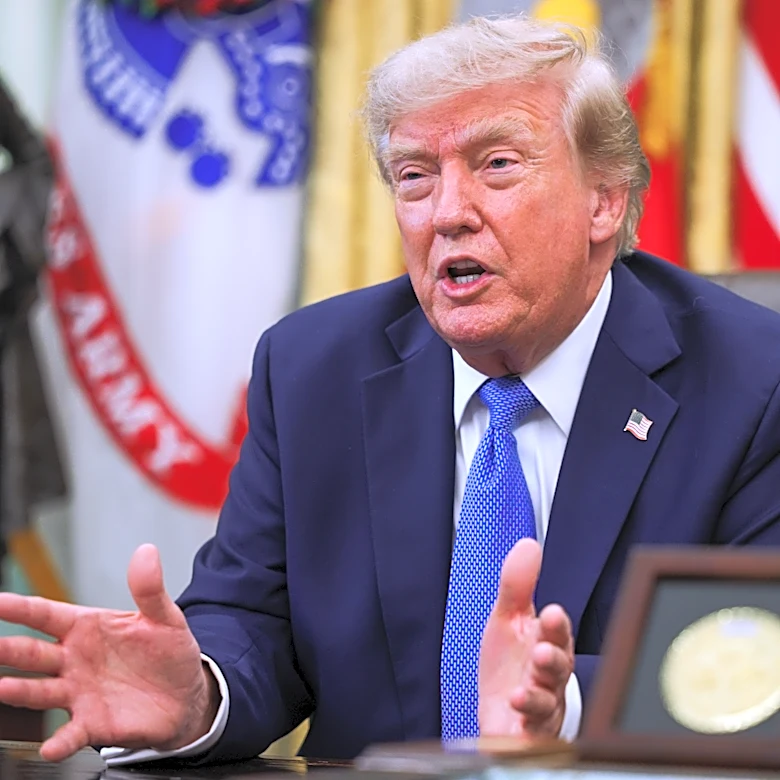



President Donald Trump said communities rejecting data centers are "making a mistake" in an interview that aired Aug. 23.
Data centers have become a political flashpoint in local elections across the country, and Trump has defended them while touting their benefits. Proponents praise their economic benefits and role in technological innovation, while critics warn of environmental impact. While speaking with his former lawyer and fixer Michael Cohen, Trump touted his achievements as president before touching on the AI race with China.
"I'm letting them build their own power plants," Trump said in the interview taped Aug. 20. "Frankly, communities that don't take a data center, they're making a mistake because there's plenty of communities that want
them. Because it means jobs, and it means tremendous tax revenue coming into the towns and cities that take them. So you know, it's like the smart ones are saying, 'I want them so badly.'"
But data centers have received opposition from communities around the country, including Palm Beach County, Florida, where Trump calls home.
What is Donald Trump's stance on data centers?
Trump has defended data centers, touting their potential economic benefits.
After New York Gov. Kathy Hochul issued a one-year pause on data center construction in July, Trump took to Truth Social to call them "one of the biggest Driving Forces in the Future for Jobs ... They are big, strong, bold, and Money Machines for the State in which they are built."
The following week, Trump touted his Ratepayer Protection Pledge, which 23 Republican governors signed, aiming to protect households from increased utility costs associated with data centers.
"You have to convince your community how great these things — You can't fight it, you have to go with it, and you're going to have all that protection," Trump said of data centers at the July 23 event. "You're going to make a tremendous amount of money, you're going to reduce taxes, and you're going to have something that, if you don't have it, everybody else wants it."
Trump told reporters Aug. 21 he will not hold it against a Republican candidate who opposes data centers, saying they may not be right for every location. He also told Cohen, as an aside to their benefits, that there are guardrails.
Poll shows majority of Americans oppose data centers for AI
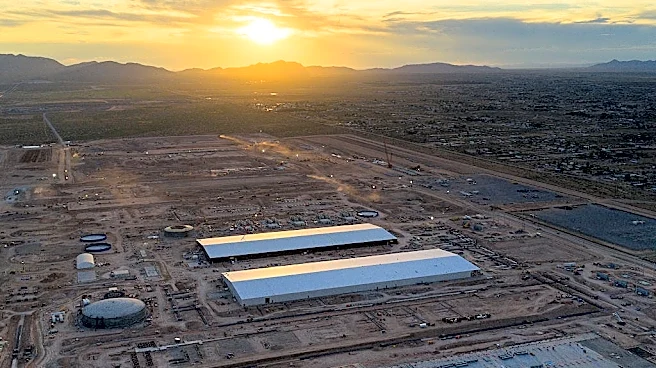
Data centers, the physical infrastructure behind the internet, house the servers and networking equipment that powers artificial intelligence and other digital services. While they are rapidly expanding across the country, so is the opposition. A Gallup survey released in May found 70% of Americans oppose building data centers in their communities, including 48% who said they strongly oppose them.
Environmentalists and anti-AI activists argue data centers consume large amounts of water and energy, generate noise and electronic waste and create relatively few longterm jobs. Some states and local governments are responding by proposing new rules and oversight efforts. (See USA TODAY Network reporting on local data center controversies from Indiana, Ohio, Kentucky, Florida and Iowa.) Industry advocates, however, say data centers are essential infrastructure for the AI era, supporting technological innovation, creating high-paying jobs and generating tax revenue for local communities.
As of Aug. 19, there were more than 4,700 data centers across the United States, according to the global data center directory Data Center Map.
On April 27, environmentalist Erin Brockovich launched a website called Brockovich AI Data Center Reporting, which allows Americans to report issues they encounter with data centers in their communities. Since its launch, more than 9,000 AI data centers have been cataloged on the website's interactive map, which depicts operational facilities, those under construction and those that have been proposed.
What state has the most data centers?
Deemed the "data center capital of the world," Virginia is home to the most data centers in the United States, with more than 600 in operation, according to Data Center Map. Texas follows, with more than 500.

How do data centers affect the environment?
Environmental organizations have pointed out numerous ways data centers affect the communities around them:
Energy and water consumption
In 2023, data centers consumed 176 terawatt-hours of electricity in the United States, accounting for more than 4% of the country's total electricity consumption that year, according to the U.S. Department of Energy’s Lawrence Berkeley National Laboratory. For reference, 176 terawatt-hours could power 16 million average American homes for a year, according to SolarTech, an El Cajon, California-based solar energy company.
When it comes to water, data centers require a lot to keep them cool. Large data centers can consume up to 5 million gallons of water in one day, according to the Environmental and Energy Study Institute. This is equivalent to the water use of a town populated by 10,000 to 50,000 people.
The water used to keep data centers from overheating can come from various sources, including surface water and groundwater, municipal water and purified reclaimed water, according to the Environmental and Energy Study Institute. About 80% of the water that data centers withdraw evaporates, with the remaining water discharged to municipal wastewater facilities, per the institute.
Electronic waste
Data centers create a sizeable amount of electronic waste, or e-waste. When computer hardware is replaced, the old technology should be recycled; however, according to the technology social enterprise Human-I-T, only 22.3% of the world's e-waste is properly collected and recycled.
E-waste is toxic and not biodegradable. Electronic waste may expose humans and the environment to lead, mercury, arsenic, flame-retardant chemicals and other contaminants, according to the Geneva Environment Network.
Noise pollution
Data centers are also noisy. Humming cooling systems, rumbling diesel generators and whirring fans can be heard hundreds of feet around them 24/7, according to the Environmental and Energy Study Institute.
Folks who live close to data centers have reported headaches, vertigo, nausea, sleep disturbances, ear pain and hypertension, the institute website says.
How many jobs does a data center create?
The amount of permanent, non-construction jobs created by a data center depends on a facility's size. From 2017 to 2023, data center employment increased by more than 50%, PwC, a national auditor, reported for the Data Center Coalition.
A 2025 review of more than 1,200 U.S. data centers by Business Insider found that, on average, a data center employs 150 workers. Some have as few as 25 employees. And the pay can be quite lucrative, with technical salaries ranging anywhere from $78,000 to $134,000, according to Indeed.
An influx of jobs means a direct impact on local economies. Making money at the local, state and national levels, the data center industry's contribution to government finances increased by 146% from 2017 to 2023, according to the PwC report.
Contributing: Bart Jansen, Joey Garrison, Mike Snider, USA TODAY
Greta Cross is a national trending reporter at USA TODAY. Story idea? Email her at gcross@usatoday.com.
Kinsey Crowley is the Trump Connect reporter for the USA TODAY Network. Reach her at KCrowley@usatodayco.com. Follow her on X (Twitter), Threads, Bluesky and TikTok.
This article originally appeared on USA TODAY: Trump calls it 'a mistake' for communities to reject data centers