



A federal judge dismissed a lawsuit that sought to have the court declare President Donald Trump’s Religious Liberty Commission to have an illegal lack of diversity through only having Christian and Jewish members.
A multifaith group of organizations – Interfaith Alliance, Muslims for Progressive Values, the Sikh American Legal Defense and Education Fund and Hindus for Human Rights – sued the administration in February over what they alleged was an illegal lack of religious and ideological diversity on the commission. Americans United for Separation of Church and State and Democracy Forward represented the groups in the case.
The groups also accused the commission of disregarding “basic transparency requirements” that allow the public “to follow
and understand the Commission’s work.” The administration notified the court in late April that it had publicly posted commission records, including transcripts, meeting minutes and hearing recommendations. Rachel Laser, president and CEO of Americans United for Separation of Church and State, said at the time that the files “only confirm for all to see the fatal flaw at the core of this commission: its Christian Nationalist bias.”
The administration has rejected such notions. In response to the case’s dismissal, White House spokeswoman Taylor Rogers called the lawsuit “meritless, and a poor attempt to thwart the Trump Administration’s effort to promote religious liberty” in a July 28 statement to USA TODAY.
“The Religious Liberty Commission’s important work will continue, and President Trump will always vigorously defend religious liberty for all Americans,” Rogers said.
Laser said the groups behind the lawsuit were “disappointed” by the dismissal and “respectfully and strongly disagree that the Religious Liberty Commission's members represent a fair balance of viewpoints.”
“We are reviewing next steps with our co-counsel and plaintiffs,” she said in a statement to USA TODAY.
Judge says commission is fairly balanced, made records available
Trump established the commission through an executive order in May 2025. The group was tasked with publishing a report on the history and state of religious liberty in the nation by July 4, 2026.
The group included Protestant, Catholic and Jewish people, but no Muslims or members of other minority religions. The February lawsuit accused the commission’s members of pushing “the view that America is a 'Judeo-Christian' nation with limited, if any restrictions, on infusing their religious values into government."
The lawsuit pointed to the Federal Advisory Committee Act, which requires such groups to be "fairly balanced in terms of the points of view represented."
U.S. District Judge John P. Cronan, whom Trump appointed in 2020, wrote in his July 27 opinion that the law does not clearly define what constitutes “fair balance” and that courts have historically been “’highly deferential’ in reviewing a committee’s composition.”
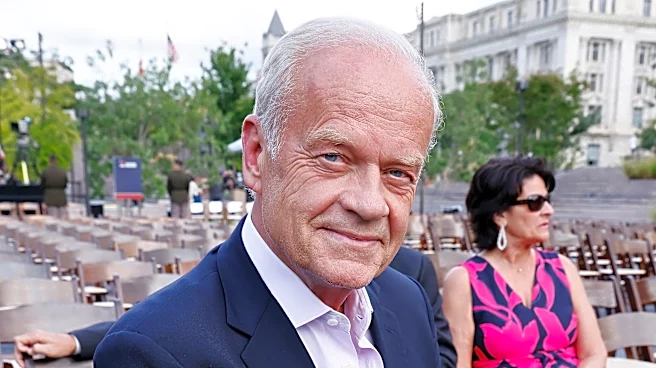
“Under this deferential standard, the RLC’s membership is fairly balanced,” Cronan wrote. "Its members include workers in the public, private, and nonprofit sectors, have widely varying life experiences – from a former host of a popular television show to a State Lieutenant Governor, are religious leaders as well as rank-and-file congregants, and – to the extent that it matters – encompass adherents of at least five different religions.”
In response to the plaintiffs’ argument that only having Christian and Jewish commissioners is unlawful, Cronan said commissioners’ religious beliefs are “not relevant to the Commission’s function.” He also disagreed with “the premise that there is a single ‘Judeo-Christian’ viewpoint.”
“Given the wide diversity of Christian and Jewish beliefs, there is no reason to think that an Evangelical member would ’balance out’ a Catholic member any less than a Buddhist member would,” Cronan’s opinion said.
He also rejected the multifaith organizations’ allegations related to transparency requirements, saying the law does not have a deadline for making records available.
“Accordingly, a committee does not violate FACA by failing to make documents available while its work is ongoing,” Cronan said.
A spokesperson for the commission told USA TODAY that the group was “pleased with the dismissal of the case and remain(s) focused on the important work of advancing religious liberty.”
BrieAnna Frank is a First Amendment reporter at USA TODAY. Reach her at bjfrank@usatoday.com.
USA TODAY's coverage of First Amendment issues is funded through a collaboration between the Freedom Forum and Journalism Funding Partners. Funders do not provide editorial input.
This article originally appeared on USA TODAY: Judge tosses challenge to Trump's Religious Liberty Commission