






ALDIE, VA – On an overcast morning in late September, two dozen women gathered for their weekly pickleball game at a $91 million recreation complex in this leafy suburb outside the nation's capital.
Wearing fitness watches and moisture-wicking skirts, they laughed and cheered over the sound of paddles and wiffle balls. Nearby, children scrambled up a shiny rock wall and ran through a colorful splashpad while parents watched from shaded benches.
Officials say the sprawling park, with its athletic fields, pavilions and tennis courts, is among the many projects built with the help of tax revenue from an industry that has transformed Loudoun County over the past decade: data centers.
Just beyond the park's borders, evidence of that transformation is
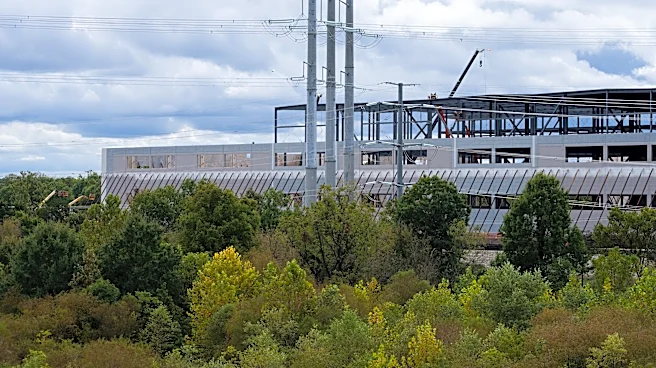
everywhere. A forest of transmission lines towers over nearby homes, and several hyperscale data centers are under construction.

No place has embraced the digital economy more than Loudoun County, long-known as the wealthiest county in the United States thanks to its proximity to Washington, DC and major government contractors.
The region is home to more than 230 data center buildings, what the county describes as the largest concentration of computing hubs on the planet. Together, the facilities occupy more land than New York City's Central Park and consume enough electricity to power more than 2.2 million homes.
"The growth there has been staggering," said Terry Clower, a professor of public policy at George Mason University.
The county steadily became a leader in the global data center boom over the past decade as companies flocked to the area for its extensive fiber network and fast-track approval process.
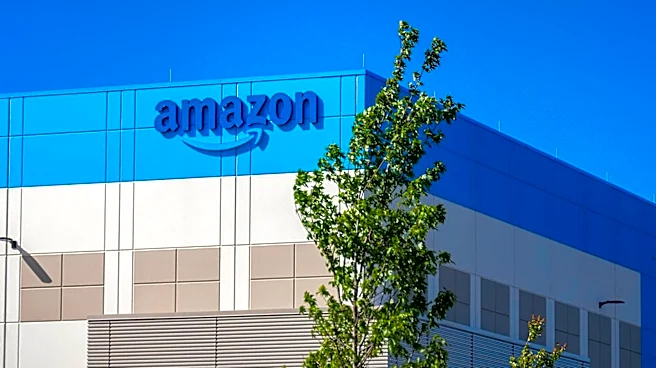
In turn, the local government has collected billions of dollars in tax revenue from facilities backed by companies including Amazon and Microsoft. The windfall has helped fund new parks, schools and other public services while allowing officials to substantially reduce property tax rates.

Yet, the same industry that funded those amenities is drawing increasing backlash from many Loudoun residents who are troubled at the rate of construction and worry the county is too reliant on the money they bring in. Some also raise concerns about noise, pollution and their property values.
"I don't think we need any more data centers," said Sam Lechman, 35, who brings his three young children to the large recreation center in Aldie. "There are other ways to pay for these nice things."
The opposition, which mirrors a broader national backlash against data centers, recently led Loudoun's Board of Supervisors to support a one-year pause on new project applications, a remarkable shift for a county long regarded a nonstop green light for data center development.
"Our residents have had enough," said Juli Briskman, a member of the Loudoun County Board of Supervisors who has called for a moratorium on the computer warehouses. "It’s gone too far."

How did Loudoun County become the data center capital of the world?
Loudoun's rise was the result of both geography and policy, local officials say.
The county sat atop some of the nation's most important internet infrastructure. Local officials then spent years making it easier for technology companies to build there than almost anywhere else in the country.
In the mid-1990s, America Online (AOL) and UUNet, one of the world’s largest internet providers, established their global headquarters in Loudoun, spurring a wave of development in the early days of the internet boom. Within a few years, half the world’s web traffic moved through Loudoun County, estimates suggest.
But after the dot-com bubble burst, warehouses once planned to be data centers sat empty. A few years later, the county’s balance sheet took a major hit during the housing crash and officials scrambled to fill the gap.
Buddy Rizer, a former DJ turned head of the county’s economic development agency, saw an opportunity in data centers. He flew back and forth to Silicon Valley and Seattle, courting the likes of Amazon and Google.
The plan worked, and over the next 10 years the county saw the world’s largest surge in data center development. "It really got momentum pretty quickly and we had a lot of success," said Rizer, who's referred to in industry circles as the "king of data centers."

To quicken the pace of development, officials backed a move to centralize several permitting processes in Rizer’s office. Companies also seized on the area’s zoning rules, which allowed them to build data centers "by right" wherever office buildings were permitted, even if they were close to residential neighborhoods. The rules also allowed developers to skirt approvals from the board of supervisors.
"There were no shortcuts when it came to permitting," Rizer said, "but we did have a fast-track program that allowed us to do quicker reviews and to get businesses to market as fast as possible, which was good for both them and good for the county."
In recent years, construction exploded amid increased demand for cloud computing and artificial intelligence.
Most data centers in Loudoun County were built between 2019 and 2024. In 2025 alone, the county issued building permits for over 10 million square feet of data center space, the highest one-year number in the county’s history. Together, Loudoun's data centers occupy 3% of the total land in the county, Rizer said.
'It's a love-hate relationship'
As some of the world's wealthiest companies built large hubs in Loudoun, the county raked in massive sums of money.
In fiscal year 2026, data centers produced $1.2 billion in property tax dollars, nearly 40% of the county’s overall budget. A decade ago, the industry brought in $150 million.
The wealth has allowed officials to lower property taxes every year over the last 10 years. Tax rates on vehicles were also slashed.
Meanwhile, the county built a pair of new schools over the last two years, and another is under construction. A new recreation center fitted with a spa and an Olympic swimming pool opened last year in Ashburn. A $261 million recreation center on the other side of the county is currently in the planning stage.

Joan Price, a longtime Loudoun County resident, said the biggest benefit is the lower property tax rate.
"That is the good side of it," she said, adding that she finds data centers unsightly and has concerns about their potential health impacts. "It’s a love-hate relationship."
Lechman, who has lived in Loudoun County for over a decade, said there’s "pros and cons" to the area’s embrace of data centers. He said he enjoys amenities like parks and new schools, including one his daughter attends, but he believes the construction has happened too quickly.
"I think they need to slow down and see what the repercussions are going to be," he said.
Like Price, most of his concerns are visual.
"If they hid them, like put them behind trees, I’d probably be fine with it," he added. "I just don’t like how it’s popping up so quickly. It just looks bad."

'We’ve been screwed'
For some living close to the data centers, the projects have upended their lives.
When Greg Pirio moved to Loudoun County in 2010, he enjoyed long walks through the woods near his townhome. Most mornings, he would lead his dog to a nearby pond and pick wild berries.
"It was lovely, rural nature," he said.
But that all changed in 2025, when a massive data center a block from his home came online.
He says he struggles to ignore the mechanical whirring of turbines and generators. He can sometimes feel the emissions from the building’s gas power plant in his chest and throat.
"It sounds like a jet engine," Pirio, 76, said. "Not a moment goes by when I don’t think about it."

Vantage Data Centers, which operates the VA2 facility, has said it built a power plant on-site because it could not connect to the region’s strained power grid.
The data center was built "by right" without either board approval or community input, officials said. Local council members said they were also not notified when Vantage changed its site plans to include gas turbines.
A study commissioned by the Piedmont Environmental Council found that emissions from the power system could lead to tens of millions of dollars in health-related damage to people living nearby. The analysis also said pollution from the facility could cause 3.4 to 6.5 premature deaths per year.
Vantage Data Centers has said the study used "worst-case assumptions" and that state environmental regulators determined emissions levels at the VA2 data center are within safe, legal limits.
Since the data center went up, Pirio formed a local group to oppose the project and others like it in development.
He said he would sell his house but he doesn't think anyone would buy it. One family on his block sold their home well below market value, he said. Another house has been on sale for over three months.
"Who wants to live near a data center?" Pirio said. "We’ve been screwed."
A changing tide in Loudoun County – and elsewhere

The growing backlash has led to several large changes at the local government level.
A quarter century after the county categorized data centers as office space, the board of supervisors last year adopted new zoning language to ensure future projects come before the board for a vote.
Then in September, the board voted to pause all new data center applications for one year as it finishes a review of the county’s policies and regulations. Members of the board have also pushed back against Amazon’s controversial plan to build several data centers at a former campus of George Washington University.
This mirrors a national trend that has seen a growing number of local and state officials implement pauses and moratoriums on data centers. In September, Virginia Gov. Abigail Spanberger unveiled a framework aimed at putting guardrails on one of her state's most booming industries.
Meanwhile, some Loudoun residents say they're still battling projects that could reshape communities across the county.
Among them is the valley north transmission line, a project that would connect substations in West Virginia and Maryland through large power lines running along a corridor of western Loudoun County.
While the board approved a resolution against the project, the project’s fate lies with the State Corporation Commission, which approves the location and construction of high voltage transmission lines.

Before the board voted against the proposal, two dozen residents spoke against the project, citing environmental and health concerns. Many said it would destroy the natural beauty of western Loudoun County, which is dotted with famous wineries, farms and quaint, historic towns.
Susan Hubbuch told the council at a public meeting that the power lines would run within 200 feet of her home, which is close to a conservation easement.
"It’s devastating," she told the board members. "Please fight for us."
In the eighth inning
Loudoun County is further along in its relationship with data centers than any other community in the country.
"If it’s a baseball game, we’re in the eighth inning," said Rizer.
He and other officials say the county is running out of viable land upon which to build the gargantuan facilities. His office is increasingly focused on ways to diversify the local government’s revenue streams, about half of which is reliant on data centers.
"You start to reach a point where you’ve grown more than people anticipated, and frankly more than we anticipated," he said, adding that he shares many of the concerns of residents.
"We made some mistakes along the way," he continued. "There are homes that are too close to data centers. … Today, I think we’d make different decisions. But you can’t go back in time."
Briskman, the county supervisor, said she urges other local governments to learn from Loudoun County and start to work up rules and regulations before data center projects are seriously considered.
"We’re a cautionary tale," she said.
Christopher Cann is a national reporter for USA TODAY. Reach him at ccann@usatoday.com.
This article originally appeared on USA TODAY: 'We’ve been screwed': A wealthy county is overrun with data centers