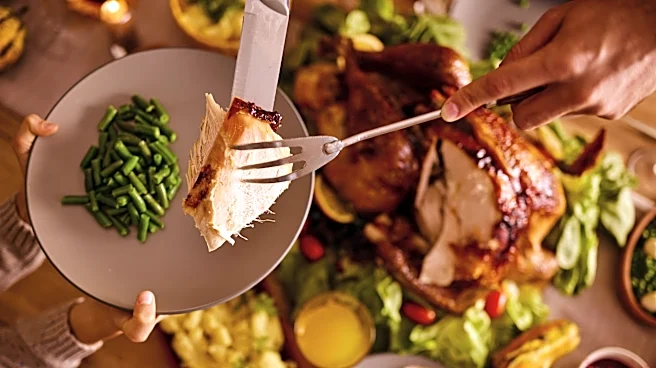

You've dished out a pretty penny on groceries and spent the entirety of your day cooking a feast fit for a king − only to have your guests on weight loss medication barely touch their plate. This is the basis
of posts all over social media with Thanksgiving day around the corner.
In a world of GLP-1s, some people's holiday helpings look a lot different than before, but experts say there are still ways to navigate the event for everyone.
About 11% of Americans use GLP-1s for weight loss, according to a 2026 Gallup survey. And use among men and women more than doubled last year, as the drugs become a preferred method for weight loss.
As GLP-1s go mainstream, it's more likely than not someone at your Thanksgiving table will look or eat differently, according to Sabina Hemmi, co-founder of GLP Winner, a GLP-1 watchdog. And it can be easy for us to feel upset or offended if someone is not eating the day's special dishes.
"(Food) is its own cultural language, so when you have a medication that disrupts people's relationship with food, it can feel kind of sad," Hemmi says. "Thanksgiving can be stressful for anyone who has a family that encourages overeating or food as a way of showing love, adding to the pressure. If someone sits down with a smaller plate serving, it's probably not helpful to make a comment."
Instead, Hemmi says to treat this Thanksgiving as an opportunity to cherish new memories and provide supportive environments for those who have gone through big changes this year.
"Holidays are still special," she says. "Those meals just might look a little different."
How GLP-1s work and why it'll impact Thanksgiving feasts
GLP-1 agonists are injectable or pill-form drugs that work by mimicking the natural hormone that makes us feel full, delaying hunger. GLP-1s are also known by specific drug names like Ozempic, Wegovy and Mounjaro, to name a few. The drugs affect every person a little differently, Hemmi says, but in general, people can't eat as much, even if an extra apple pie slice seems appealing.
"It can be difficult to overeat on these medications," Hemmi says. "It's far worse than other people overeating ... If you overeat, it can cause discomfort and nausea."
That lasting fullness means GLP-1 users might not get the same enjoyment out of Thanksgiving indulgence.
"It can influence the motivation or rewarding aspects of food," says Steven Munger, who researches the neurobiology of smell and taste at the University of Virginia. "The best thing a host can do is just be aware and accommodating about the fact someone's preferences and amounts may have changed."
It's also important to remember people take GLP-1s for a variety of chronic health issues besides weight loss.
"You don't have access to someone's medical history when you open their fridge," Hemmi says. "I would not jump to judgment about someone being on the medication ... it's far more complicated."
GLP-1s and alcohol
Don't be surprised if someone raises a water for your Thanksgiving toast (even though that's traditionally seen as bad luck). As they do other foods, GLP-1s change how our bodies absorb alcohol, explains Dr. Krystal Green, a primary care physician with Inspira Health.
Since these meds slow gastric emptying of both solids and liquids, it delays how quickly alcohol enters the bloodstream, which can make people feeling less intoxicated early on, she explains.
Plus, many people taking GLP-1s notice a decrease in their desire to drink, Green adds.
"For someone who normally enjoys a few glasses of wine at Thanksgiving dinner, they may find that one glass feels like enough, or that they're simply not as interested in drinking as they were before," she says.
Those drinking should also be mindful that alcohol can worsen some of the stomach side effects associated with GLP-1s like nausea, vomiting and acid reflux, Green added.
How to recreate savory moments in the Ozempic era
If your Thanksgiving palate has changed post-GLP-1, Munger suggests experimenting with alternatives and communicating needs to your hosts or guests ahead of time.
"You need to explore and listen to your body and rediscover what might be the types of foods that give you pleasure," Munger says. "Don't feel like you have to ignore the signals your body is telling you just because you're in a holiday situation."
And if someone arrives looking markedly thinner, Hemmi says Thanksgiving is not the venue to comment on their slim-down.
Whether you or a loved one is on a GLP-1, Munger says keep in mind something quintessential to the Thanksgiving tradition: Give each other grace.
This article originally appeared on USA TODAY: Say goodbye to gravy? Welcome to the Ozempic era of Thanksgiving