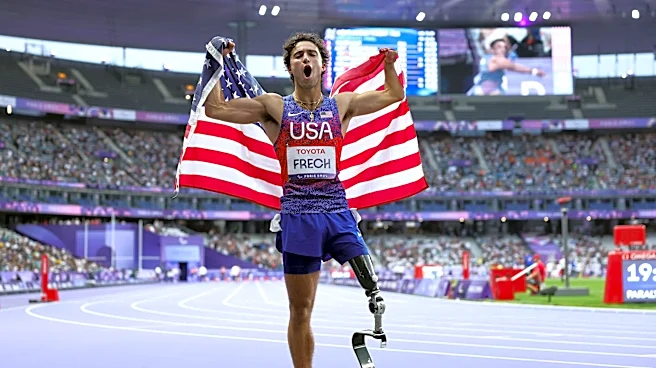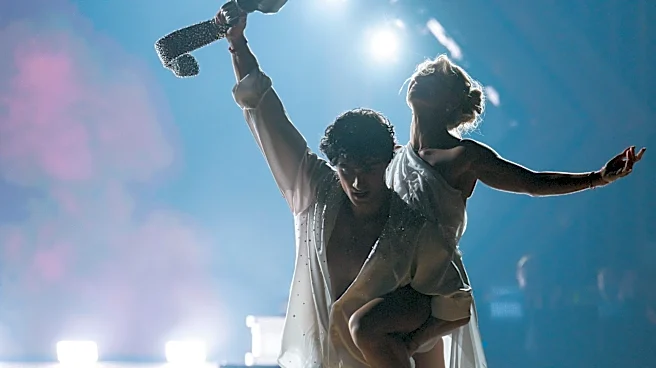






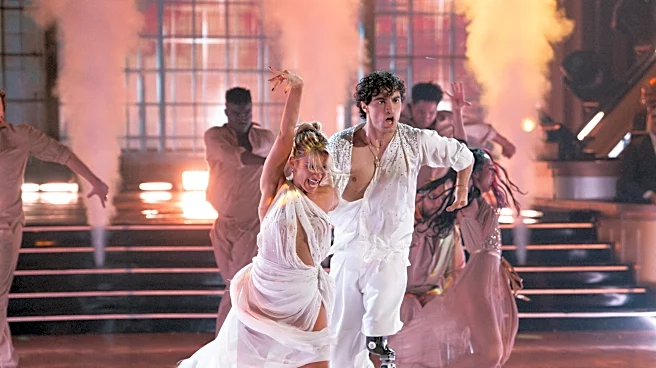
When Ezra Frech’s prosthetic leg came off during his Nov. 24 finale performance on “Dancing With the Stars,” the Paralympian didn’t miss a beat. He continued dancing alongside his professional dance partner Daniella Karagach, at one point lifting her while balancing on one leg, as the other professional dancers around him adapted in real time to what was happening on the ballroom floor.
By the end of the night, Frech was crowned the winner of Season 35 of the reality competition series. But the real victory wasn’t just the trophy. Frech had made it his mission all season long to give people with disabilities a chance to see themselves represented on one of television’s biggest stages and to encourage them to take pride in what makes them different.
"If one person with a disability feels more confident and holds their head up high because of this show, then I've done my job,” he said after winning.
He accomplished just that. Following Frech’s performance, videos circulated on social media of children with limb differences watching Frech compete, their families emphasizing how much his time on the show has meant to them.
“I think for so many people, disability is a bad word, and he's really flipped that on its head,” Amelia Schulte, whose 5-month-old son was born with limb differences, tells USA TODAY.
For families of children with disabilities, Ezra Frech became more than a contestant

For Schulte and her husband, Trent, who live in Austin, Texas, watching Frech compete on “Dancing With the Stars” every Tuesday night came at a particularly meaningful time in their lives.
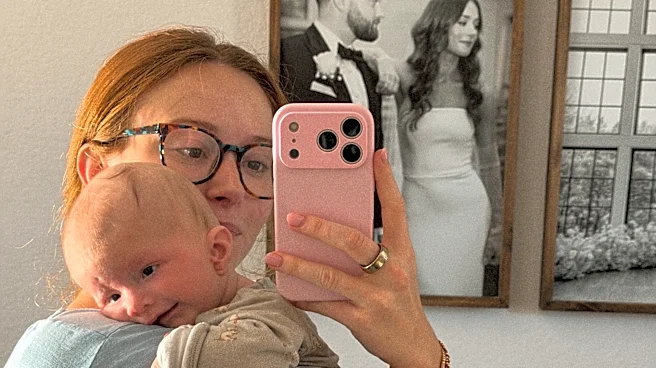
Their son, Lucas, was born with limb differences that neither they nor their doctors had seen before, an experience Amelia describes as isolating for the first-time parents.
“It was really cool that while we were in our postpartum fog, ‘Dancing With the Stars’ came on, and we see this young kid who not only has a limb difference but is so proud of it and turned it into his whole mission and his whole platform,” she says.
“Every single week we loved getting to watch Ezra and feel inspired by the fact that being different doesn't mean that you have to be held back. That's what we want to instill in our son.”
Danny Jordan, a reality TV producer and author of “The Capables,” a children's book series inspired by his 8-year-old daughter Emerson, who has limb differences, says his family was similarly invested in Frech's journey. Emerson met Frech before the season began at a youth event hosted by his nonprofit organization, Angel City Sports, making watching him on television all the more special.
Jordan points to former “Dancing With the Stars” contestant and Paralympian Amy Purdy as someone who helped pave the way for athletes with disabilities like Frech. But he says his daughter is now at an age where she's becoming increasingly aware of her differences and how other people perceive her.
“As a parent, you do your best to empower your children, to educate them, to lift them up, to let them know they're enough and that they're safe, and they're loved. But I've never lived a day in Emerson's body. I don't know what it's like to navigate the world with her body, and to live in a world that's not always made for you,” Jordan tells USA TODAY. “It's imperative for her to have individuals like Ezra who she can look to.”
Frech's impact also extended beyond the United States. Jill Smith, domestic director of the Limb Kind Foundation, a nonprofit that provides free prosthetic care as well as support and community to children, introduced a group of kids in Zambia to Frech’s performances on a recent trip. The organization’s mentors who also have limb loss even recreated Frech's blade stand with the children, showing them how their physical differences could be a source of pride, creativity and joy.
“For them to see that Ezra is not only thriving but is really living his life and being celebrated for his accomplishments and dancing, it was a huge eye opener for them,” Smith tells USA TODAY.
Why Ezra Frech losing his prosthetic leg made his finale performance more powerful
The most powerful moment of Frech’s time on “Dancing With the Stars” came unexpectedly during his finale performance, when his prosthetic leg came off and he had to adapt his routine in real time without stopping the dance.
Jordan, who has worked behind the scenes in reality television, was particularly moved by how Karagach and the other professional dancers responded, continuing their choreography and helping clear the dance floor without interrupting the performance.
“Reality TV is at its best when it's real, and last night was the most real thing that could have possibly happened on that show,” Jordan says.
Throughout the season, viewers watched Frech and Karagach figure out how to adapt dance routines traditionally choreographed for able-bodied people but during the finale, Jordan says, millions of people got to see what navigating an unexpected challenge as a person with a disability can look like in real time.
“It says to Emerson: There's going to be times where things aren't going to always go smoothly. There's going to be things that are going to be hard for you to navigate in life, but you don't give up. You find your way and you navigate it,” Jordan says. “It was the perfect representation of humanity.”
Kenzie Reeder is the mom of a 6-year-old son named Blaise who was born with spinal muscular atrophy, a rare genetic disease that she says has left him using a wheelchair. Reeder and her son bonded over watching this season of “Dancing With the Stars” together. They both especially loved the part of Frech’s finale performance when two other dancers came on stage in wheelchairs.

“I just love that Blaise was able to see that,” Reeder tells USA TODAY. “So often we see disability represented in sports and stuff, which is great, but to even see it in a softer form like that was really, really beautiful.”
Learning about Frech’s mom, Bahar Soomekh, also resonated with Reeder. She appreciated how the show highlighted her journey and the lengths she went to in order to support Frech from a young age.
“She instilled in him to never let his disability stop him,” Reeder explains. “It's so important as parents to disabled kids to show them that representation and to show them, ‘This is what you can do.’ The sky is the limit.”
What Ezra Frech's victory means for disability representation on TV
Over the course of the season, the Schultes became so interested in Frech beyond “Dancing With the Stars” they found themselves listening to all of his interviews, eager to learn more about his upbringing and how his parents raised him.
“I just am so inspired and motivated to raise Lucas to be as resilient and confident and capable as Ezra,” Trent says.
Watching the public rally behind Frech also gave Amelia hope about how the world might treat him.

“Seeing all of the support and excitement for Ezra and his success, I hope that as Lucas grows up that the world will be kind to him in the same way,” she says.
Nicole Marti, the events support manager at the national nonprofit Amputee Coalition, says watching Frech compete on national television was also a reminder of how much disability representation has evolved over the past decade.
Marti, who was crowned Miss Iowa in 2013 and competed in the 2014 Miss America pageant, understands the pressure of representing the disability community on a national stage, but says her approach to publicly navigating her disability was markedly different from Frech's.
“I had been taught my whole life not to highlight my disability and my goal in competing on that national stage was to ‘blend in’ as much as possible,” Marti tells USA TODAY. “To watch Ezra show up on the national stage brimming with disability pride shows a stark difference in our experiences in such a big, beautiful way.”
For Marti, the significance of Frech's time on the show doesn’t just demonstrate what people with disabilities are capable of physically; it also challenges the cultural perception that disability is something to be ashamed of or concealed.
“It allows us to be reminded that we can find joy in our disability experiences and, most importantly, it reminds us we belong in all spaces…even national TV shows. That's powerful.”
On Tuesday night, Jordan let Emerson stay up past her bedtime to watch Frech win the Mirrorball. Seeing his daughter's hero win a competition that wasn't specifically designed for people with disabilities was a powerful affirmation of where she belongs and what she's capable of achieving.
“She was so excited, she didn't want to go to sleep. She wanted to dance around her bedroom, and I was just holding her and sobbing because I knew it was something that meant a lot to her, and was something that is going to reverberate through her life forever.”
This article originally appeared on USA TODAY: What Ezra Frech’s ‘Dancing With the Stars’ victory means for the disability community